


Role of BC loop residues in structure, function and antigenicity of the West Nile virus envelope protein receptor-binding domain III
- PMID: 20447672
- PMCID: PMC2897250
- DOI: 10.1016/j.virol.2010.03.038
Role of BC loop residues in structure, function and antigenicity of the West Nile virus envelope protein receptor-binding domain III
Abstract
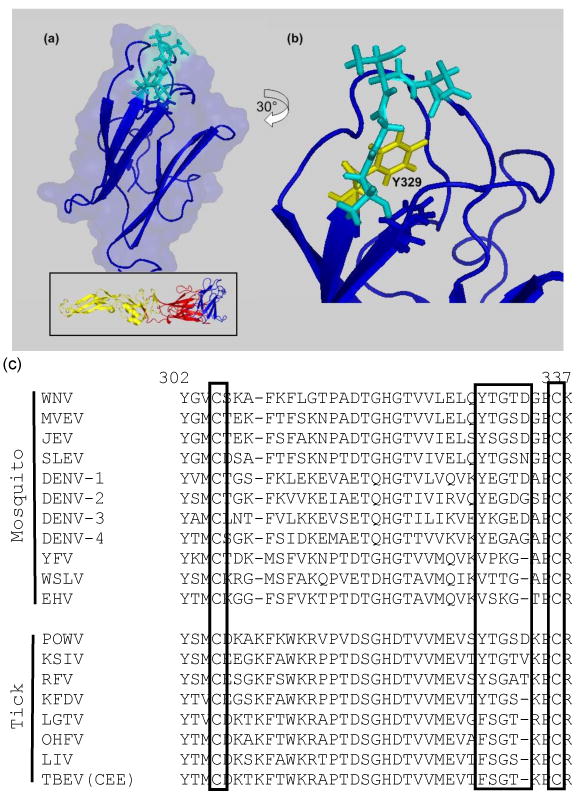
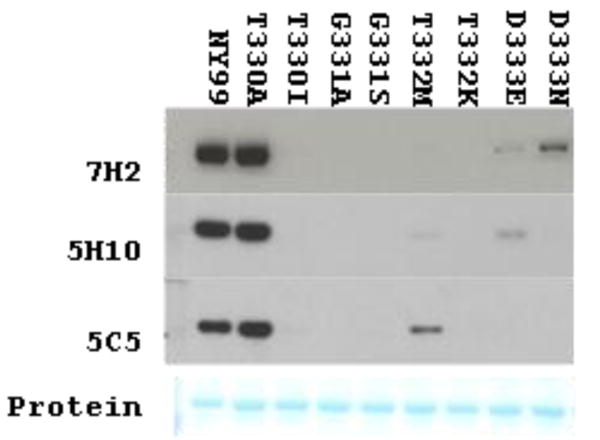
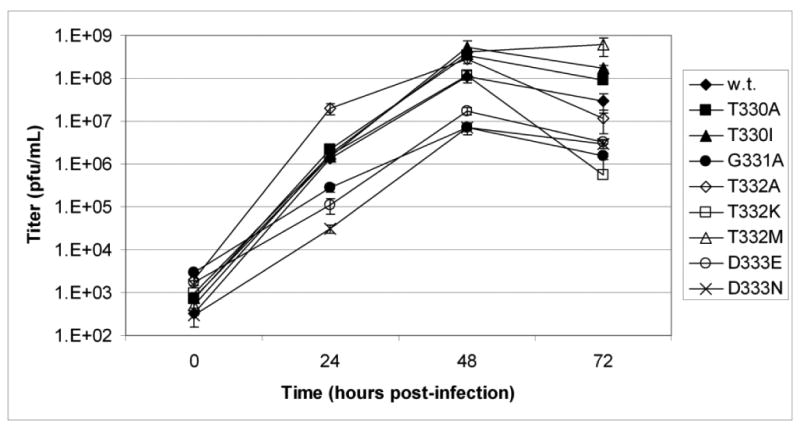
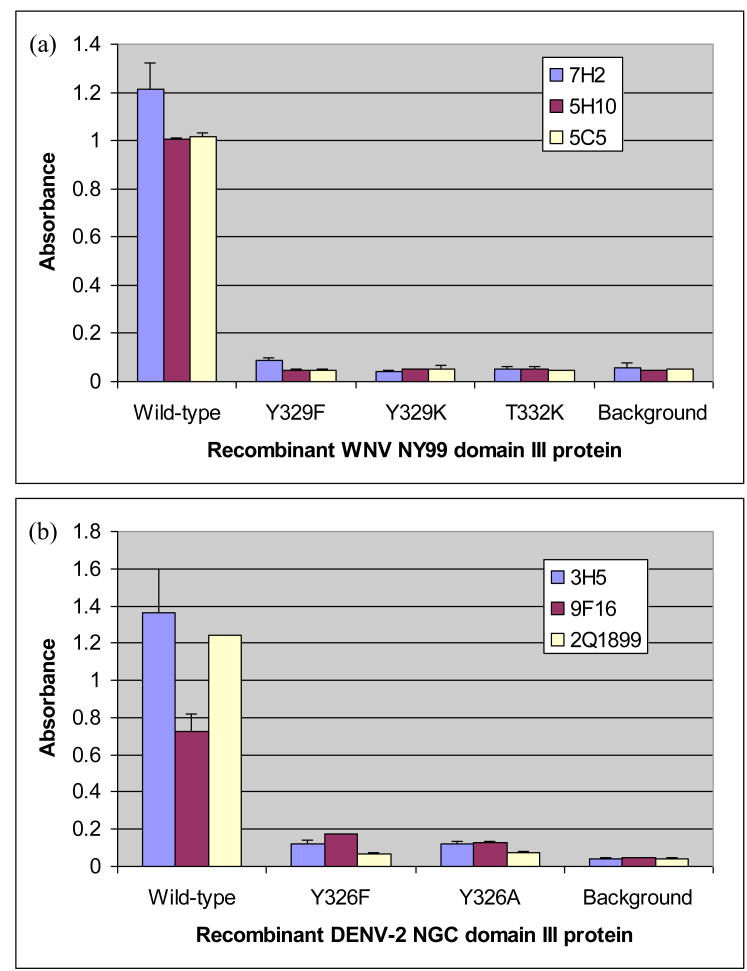
Site-directed mutagenesis of residues in the BC loop (residues 329-333) of the envelope (E) protein domain III in a West Nile virus (WNV) infectious clone and in plasmids encoding recombinant WNV and dengue type 2 virus domain III proteins demonstrated a critical role for residues in this loop in the function and antigenicity of the E protein. This included a strict requirement for the tyrosine at residue 329 of WNV for virus viability and E domain III folding. The absence of an equivalent residue in this region of yellow fever group viruses and most tick-borne flavivirus suggests there is an evolutionary divergence in the molecular mechanisms of domain III folding employed by different flaviviruses.
Copyright 2010 Elsevier Inc. All rights reserved.
Figures
References
-
- Beasley DW, Li L, Suderman MT, Barrett AD. Mouse neuroinvasive phenotype of West Nile virus strains varies depending upon virus genotype. Virology. 2002;296(1):17–23. - PubMed
-
- Chin JF, Chu JJ, Ng ML. The envelope glycoprotein domain III of dengue virus serotypes 1 and 2 inhibit virus entry. Microbes Infect. 2007;9(1):1–6. - PubMed
-
- Choi KS, Nah JJ, Ko YJ, Kim YJ, Joo YS. The DE loop of the domain III of the envelope protein appears to be associated with West Nile virus neutralization. Virus Res. 2007;123(2):216–8. - PubMed
Publication types
MeSH terms
Substances
Grants and funding
LinkOut - more resources
Full Text Sources
