


Participation of the endogenous opioid system in the acquisition of a prenatal ethanol-related memory: effects on neonatal and preweanling responsiveness to ethanol
- PMID: 20451537
- PMCID: PMC3045264
- DOI: 10.1016/j.physbeh.2010.04.033
Participation of the endogenous opioid system in the acquisition of a prenatal ethanol-related memory: effects on neonatal and preweanling responsiveness to ethanol
Abstract
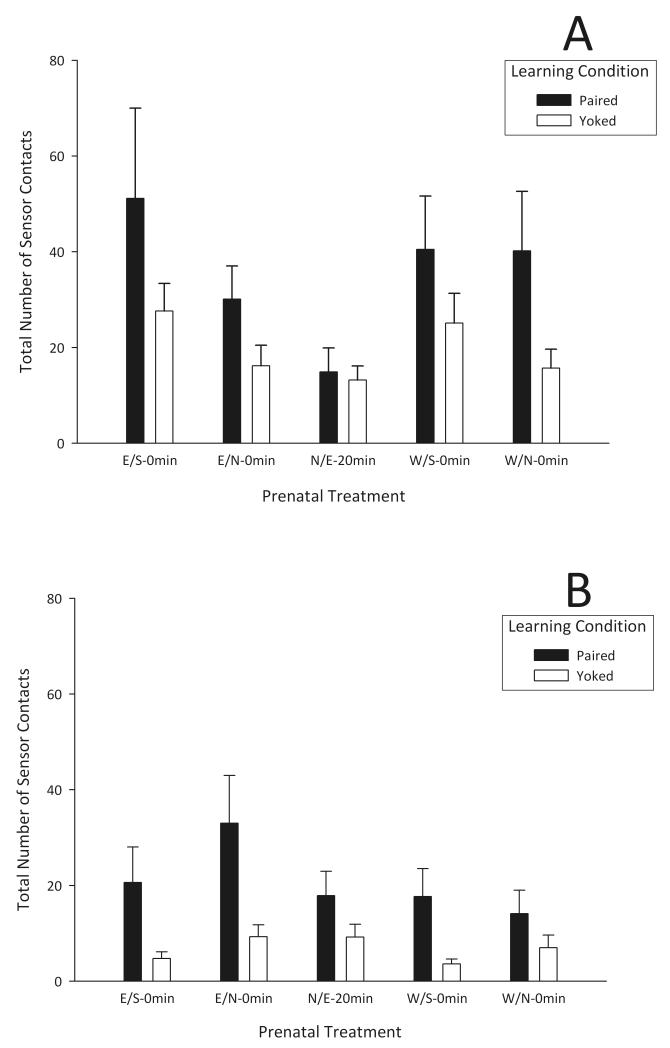
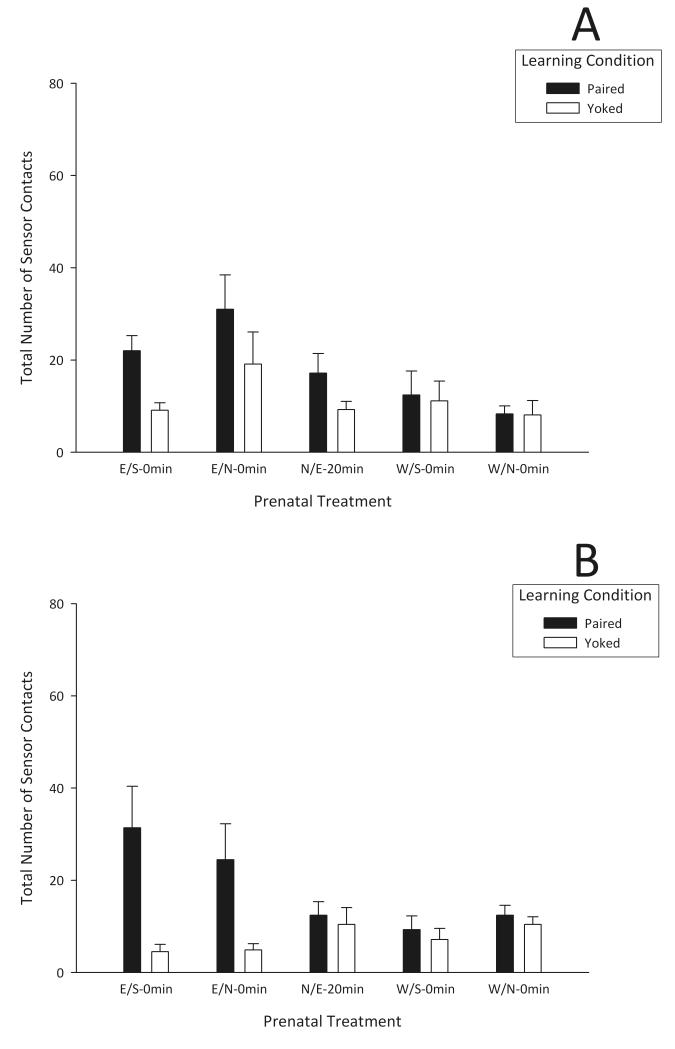
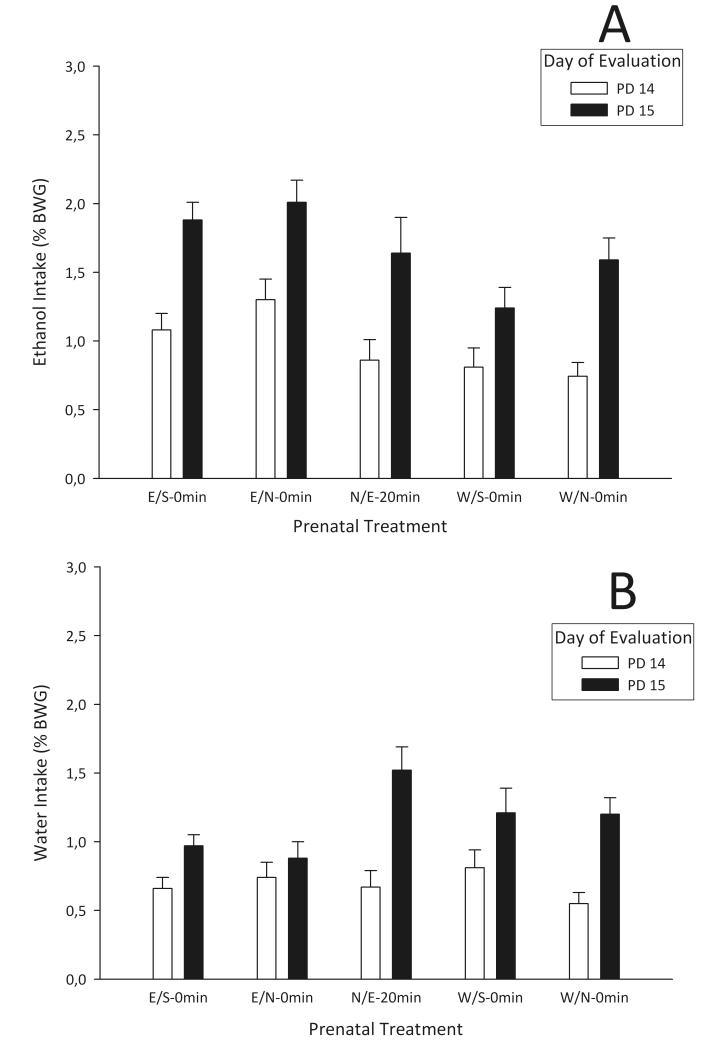
The present study tested the involvement of the opioid system in the acquisition and expression of prenatal ethanol-related memories. We evaluated how this prenatal experience modulates ethanol self-administration in newborn rats, and preweanling's ingestion of the drug. During Gestational Days (GDs) 17-20, four groups of dams were treated with ethanol (2 g/kg) or water, followed immediately by naloxone (10 mg/kg) or saline administration. A fifth group received a similar dose of naloxone 20min before ethanol administration. On PD 1, pups were tested on an operant learning procedure to obtain milk or 3% ethanol. One hour later, an extinction session was performed. At Postnatal Days (PDs) 14 and 15, preweanlings representing each prenatal treatment were evaluated in an intake test with infusions of 5% ethanol or water. Prior to the intake test on PD14, preweanlings were administered naloxone (1 mg/kg), saline or remained untreated. In both tests, animals representative of both genders were utilized. One-day-old pups rapidly learned the operant behavior to gain access to milk. In contrast, only pups prenatally treated with ethanol (administered immediately before naloxone or saline injection) increased operant responding to gain access to ethanol. On an intake test at PDs 14 and 15, those animals prenatally exposed to naloxone 20 min before ethanol administration consumed significantly lower ethanol levels than the remaining prenatal ethanol groups. Postnatal treatment with naloxone diminished intake of all solutions at PD14. These results suggest that prenatal ethanol exposure facilitates neonatal operant learning reinforced by intraoral administration of ethanol and increases ethanol consumption during PDs 14-15. The endogenous opioid system apparently is involved in the acquisition of prenatal ethanol memories, which can modulate the reinforcing attributes of the drug in neonatal and preweanling rats.
Copyright 2010 Elsevier Inc. All rights reserved.
Figures
References
-
- Chotro MG, Arias C. Ontogenetic difference in ethanol reinforcing properties: the role of the opioid system. Behav Pharmacol. 2007;18:661–6. - PubMed
-
- Spear NE, Molina JC. Fetal or infantile exposure to alcohol promotes ethanol ingestion in adolescence and adulthood: a theoretical review. Alcohol Clin Exp Res. 2005;25:909–29. - PubMed
-
- Samson HH, Pfeffer AO, Tolliver GA. Oral ethanol self-administration in rats: models of alcohol-seeking behavior. Alcohol Clin Exp Res. 1988;12:591–8. - PubMed
-
- Lee JS, Crawford J, Spear NE. Characteristics and consequences of free-feeding ethanol ingestion during the first two postnatal weeks of the rat. Alcohol Clin Exp Res. 1998;22:1615–22. - PubMed
Publication types
MeSH terms
Substances
Grants and funding
LinkOut - more resources
Full Text Sources
Miscellaneous
