


Comparative efficacy and durability of continuation phase cognitive therapy for preventing recurrent depression: design of a double-blinded, fluoxetine- and pill placebo-controlled, randomized trial with 2-year follow-up
- PMID: 20451668
- PMCID: PMC2936266
- DOI: 10.1016/j.cct.2010.04.004
Comparative efficacy and durability of continuation phase cognitive therapy for preventing recurrent depression: design of a double-blinded, fluoxetine- and pill placebo-controlled, randomized trial with 2-year follow-up
Abstract
Background: Major Depressive Disorder (MDD) is highly prevalent and associated with disability and chronicity. Although cognitive therapy (CT) is an effective short-term treatment for MDD, a significant proportion of responders subsequently suffer relapses or recurrences.
Purpose: This design prospectively evaluates: 1) a method to discriminate CT-treated responders at lower vs. higher risk for relapse; and 2) the subsequent durability of 8-month continuation phase therapies in randomized higher risk responders followed for an additional 24 months. The primary prediction is: after protocol treatments are stopped, higher risk patients randomly assigned to continuation phase CT (C-CT) will have a lower risk of relapse/recurrence than those randomized to fluoxetine (FLX).
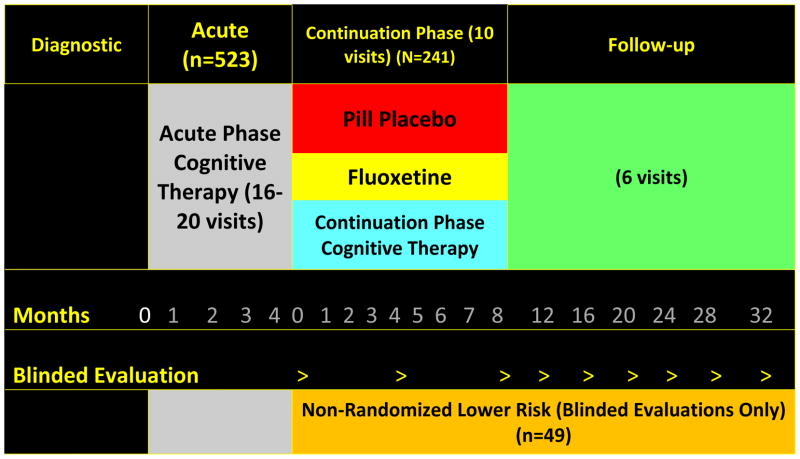
Methods: Outpatients, aged 18 to 70 years, with recurrent MDD received 12-14 weeks of CT provided by 15 experienced therapists from two sites. Responders (i.e., no MDD and 17-item Hamilton Rating Scale for Depression <or=12) were stratified into higher and lower risk groups based on stability of remission during the last 6 weeks of CT. The lower risk group entered follow-up for 32 months; the higher risk group was randomized to 8 months of continuation phase therapy with either C-CT or clinical management plus either double-blinded FLX or pill placebo. Following the continuation phase, higher risk patients were followed by blinded evaluators for 24 months.
Results: The trial began in 2000. Enrollment is complete (n=523). The follow-up continues.
Conclusions: The trial evaluates the preventive effects and durability of acute and continuation phase treatments in the largest known sample of CT responders collected worldwide.
Figures
References
-
- Paykel ES, Hart D, Preist RG. Changes in public attitudes to depression during the Defeat Depression Campaign. Br J Psychiatry. 1998;173:519–22. - PubMed
-
- Crisp AH, Gelder MG, Rix S, Meltzer HI, Rowlands OJ. Stigmatization of people with mental illnesses. Br J Psychiatry. 2000;177:4–7. - PubMed
-
- Roper . Roper Report. New York: Roper Organization; 1986.
-
- Seligman MEP. The effectiveness of psychotherapy: The consumer reports study. Am Psychol. 1995;50:965–74. - PubMed
-
- Clarkin JF, Pilkonis PA, Magruder KM. Psychotherapy of depression: Implications for reform of the health care system. Arch Gen Psychiatry. 1996;53(8):717–23. - PubMed
Publication types
MeSH terms
Substances
Grants and funding
LinkOut - more resources
Full Text Sources
Medical
