


Suffering, hope, and entrapment: resilience and cultural values in Afghanistan
- PMID: 20452111
- PMCID: PMC3125115
- DOI: 10.1016/j.socscimed.2010.03.023
Suffering, hope, and entrapment: resilience and cultural values in Afghanistan
Abstract
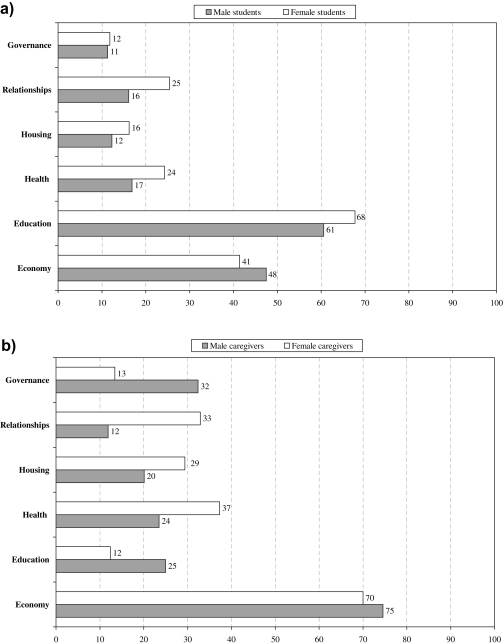
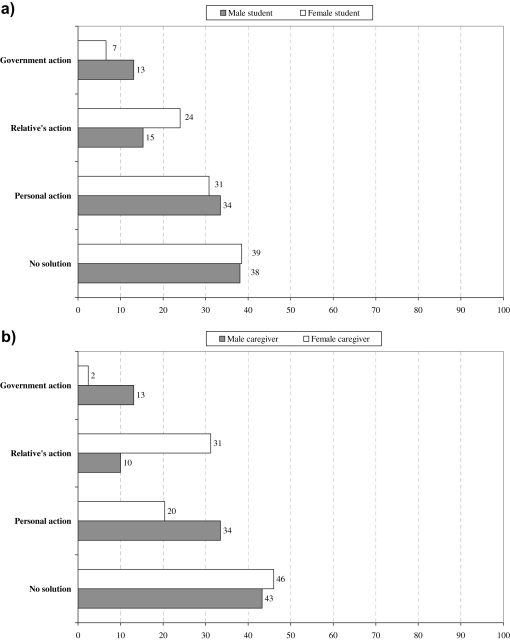
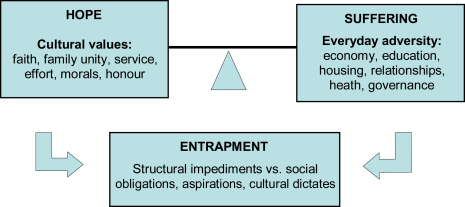
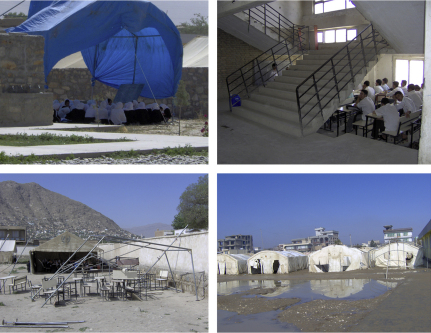
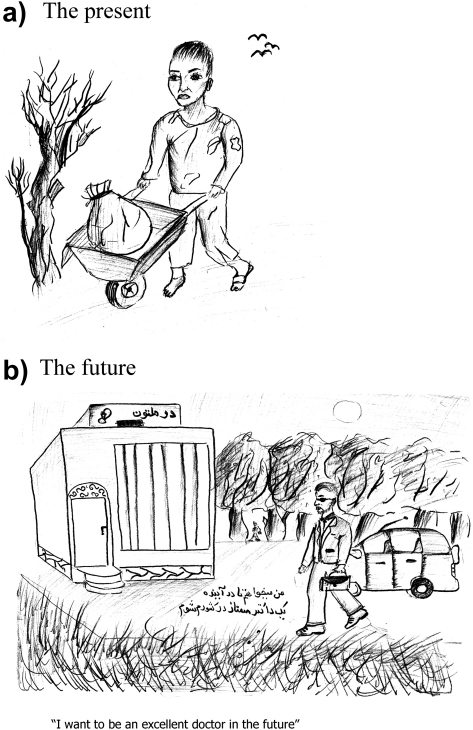
A critical health-related issue in war-affected areas is how people make sense of adversity and why they show resilience in a high-risk environment. In Afghanistan, the burden of poor mental health arises in contexts of pervasive poverty, social inequality, and persistent violence. In 2006, we conducted face-to-face interviews with 1011 children (age 11-16) and 1011 adult caregivers, randomly selected in a school-based survey in three northern and central areas. Participants narrated their experiences as part of a systematic health survey, including an open-ended questionnaire on major life stressors and solutions to mitigate them. Responses were analysed using an inductive thematic approach and categorised for quantitative presentation, producing a conceptual model. For adults, the primary concern is repairing their "broken economy," the root of all miseries in social, educational, governance, and health domains. For students, frustrations focus on learning environments as well as poverty, as education is perceived as the gateway to upward social and economic mobility. Hope arises from a sense of moral and social order embodied in the expression of key cultural values: faith, family unity, service, effort, morals, and honour. These values form the bedrock of resilience, drive social aspirations, and underpin self-respect and dignity. However, economic impediments, social expectations, and cultural dictates also combine to create entrapment, as the ability to realise personal and social aspirations is frustrated by structural inequalities injurious to health and wellbeing. This study contributes to a small but growing body of work on resilience in public health and conflict settings. It demonstrates that culture functions both as an anchor for resilience and an anvil of pain, and highlights the relevance of ethnographic work in identifying what matters most in formulating social and public health policies to promote a hopeful future.
Copyright (c) 2010 Elsevier Ltd. All rights reserved.
Figures
References
-
- Aggarwal N.K. Exploring identity, culture, and suffering with a Kashmiri Sikh refugee. Social Science & Medicine. 2007;65(8):1654–1665. - PubMed
-
- Almedom A.M., Glandon D. Resilience is not the absence of PTSD any more than health is the absence of disease. Journal of Loss & Trauma. 2007;12(2):127–143.
-
- Almedom A.M., Summerfield D. Mental well-being in settings of complex emergencies: an overview. Journal of Biosocial Science. 2004;36:381–388. - PubMed
-
- Bakhshi P., Trani J. Handicap International; Lyon: 2006. Towards inclusion and equality in education? From assumptions to facts. National disability survey in Afghanistan 2005.
-
- Barber B.K. Contrasting portraits of war: youths’ varied experiences with political violence in Bosnia and Palestine. International Journal of Behavioral Development. 2008;32(4):298–309.
MeSH terms
LinkOut - more resources
Full Text Sources
Medical
