


Peripheral nerve and brain differ in their capacity to resolve N,N-diethyldithiocarbamate-mediated elevations in copper and oxidative injury
- PMID: 20452388
- PMCID: PMC2900428
- DOI: 10.1016/j.tox.2010.04.018
Peripheral nerve and brain differ in their capacity to resolve N,N-diethyldithiocarbamate-mediated elevations in copper and oxidative injury
Abstract
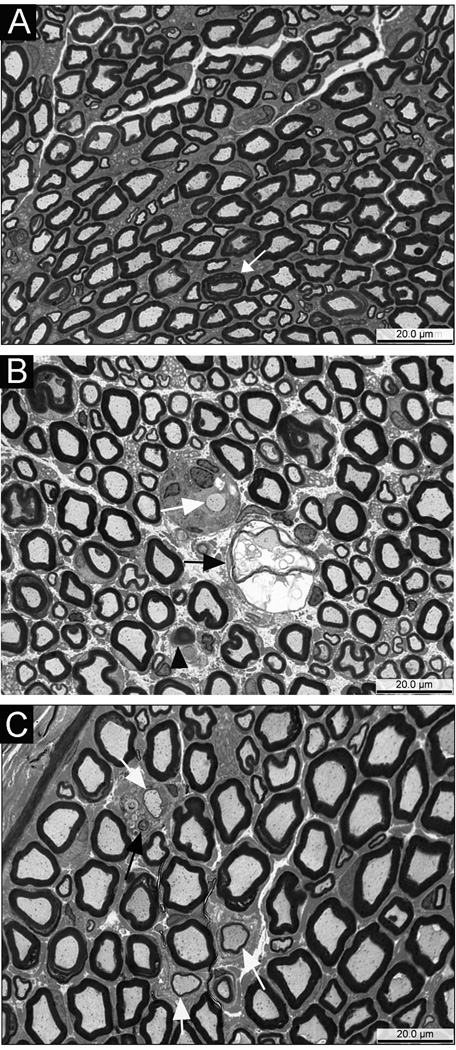
Previous studies have demonstrated that N,N-diethyldithiocarbamate (DEDC) elevates copper and promotes oxidative stress within the nervous system. However, whether these effects resolve following cessation of exposure or have the potential to persist and result in cumulative injury has not been determined. In this study, an established model for DEDC myelin injury in the rat was used to determine whether copper levels, oxidative stress, and neuromuscular deficits resolve following the cessation of DEDC exposure. Rats were exposed to DEDC for 8 weeks and then either euthanized or maintained for 2, 6 or 12 weeks after cessation of exposure. At each time point copper levels were measured by inductively coupled mass spectrometry to assess the ability of sciatic nerve, brain, spinal cord and liver to eliminate excess copper post-exposure. The protein expression levels of glutathione transferase alpha, heme oxygenase 1 and superoxide dismutase 1 in peripheral nerve and brain were also determined by western blot to assess levels of oxidative stress as a function of post-exposure duration. As an initial assessment of the bioavailability of the excess copper in brain the protein expression levels of copper chaperone for superoxide dismutase 1, and prion protein were determined by western blot as a function of exposure and post-exposure duration. Neuromuscular function in peripheral nerve was evaluated using grip strengths, nerve conduction velocities, and morphologic changes at the light microscope level. The data demonstrated that in peripheral nerve, copper levels and oxidative stress return to control levels within several weeks after cessation of exposure. Neuromuscular function also showed a trend towards pre-exposure values, although the resolution of myelin lesions was more delayed. In contrast, total copper and antioxidant enzyme levels remained significantly elevated in brain for longer post-exposure periods. The persistence of effects observed in brain suggests that the central nervous system is more susceptible to long-term cumulative adverse effects from dithiocarbamates. Additionally, significant changes in expression levels of chaperone for superoxide dismutase 1, and prion protein were observed consistent with at least a portion of the excess copper being bioactive.
2010 Elsevier Ireland Ltd. All rights reserved.
Conflict of interest statement
The authors declare that there are no conflicts of interest.
Figures


References
-
- Aaseth J, Soli NE, Forre O. Increased brain uptake of copper and zinc in mice caused by diethyldithiocarbamate. Acta Pharmacol Toxicol. 1979;45:41–44. - PubMed
-
- Aschner M. The functional significance of brain metallothioneins. Faseb J. 1996;10:1129–1136. - PubMed
-
- Awasthi YC, Ansari GA, Awasthi S. Regulation of 4-hydroxynonenal mediated signaling by glutathione s-transferases. Methods Enzymol. 2005;401:379–407. - PubMed
-
- Betz WC, Goldstein GW, Katzman R. In: Blood-brain-cerebrospinal fluid barriers. Siegel GJ, Agranoff BW, Albers RW, Molinoff PB, editors. New York: Basic Neurochemistry, Raven Press, Ltd; 1994. pp. 681–699.
-
- Calviello G, Filippi GM, Toesca A, Palozza P, Maggiano N, Nicuolo FD, Serini S, Azzena GB, Galeotti T. Repeated exposure to pyrrolidine-dithiocarbamate induces peripheral nerve alterations in rats. Toxicol Lett. 2005;158:61–71. - PubMed
Publication types
MeSH terms
Substances
Grants and funding
LinkOut - more resources
Full Text Sources
Research Materials
