


Gait retraining to reduce the knee adduction moment through real-time visual feedback of dynamic knee alignment
- PMID: 20452595
- PMCID: PMC2914211
- DOI: 10.1016/j.jbiomech.2010.03.040
Gait retraining to reduce the knee adduction moment through real-time visual feedback of dynamic knee alignment
Abstract
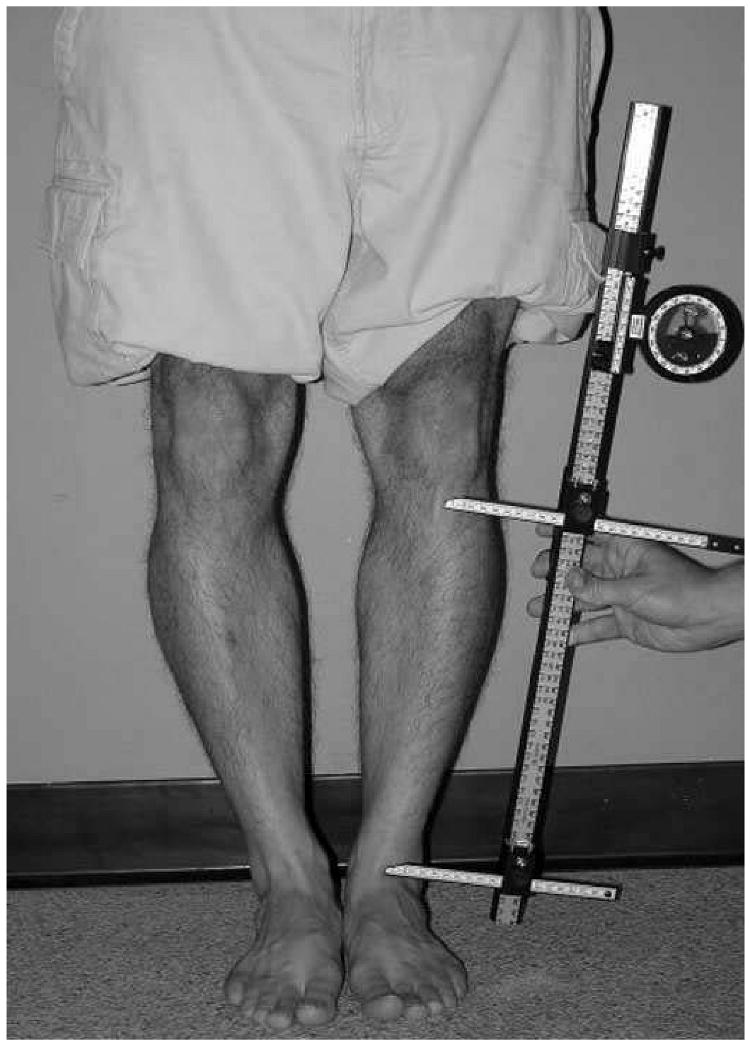
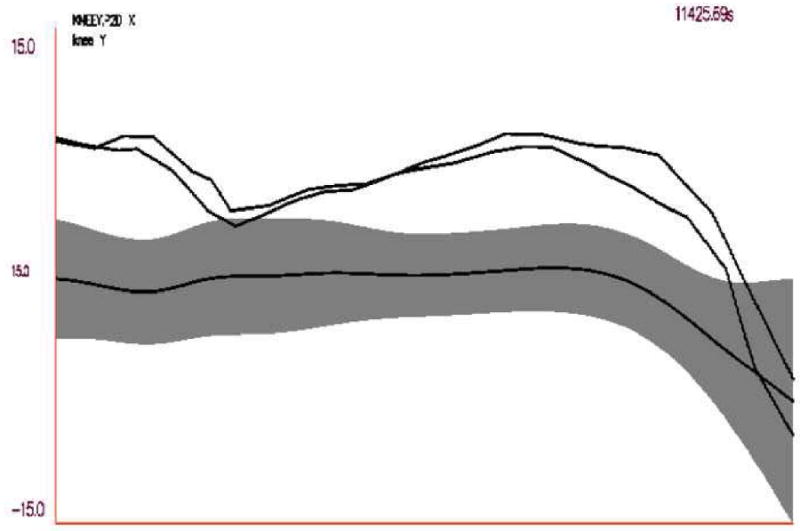
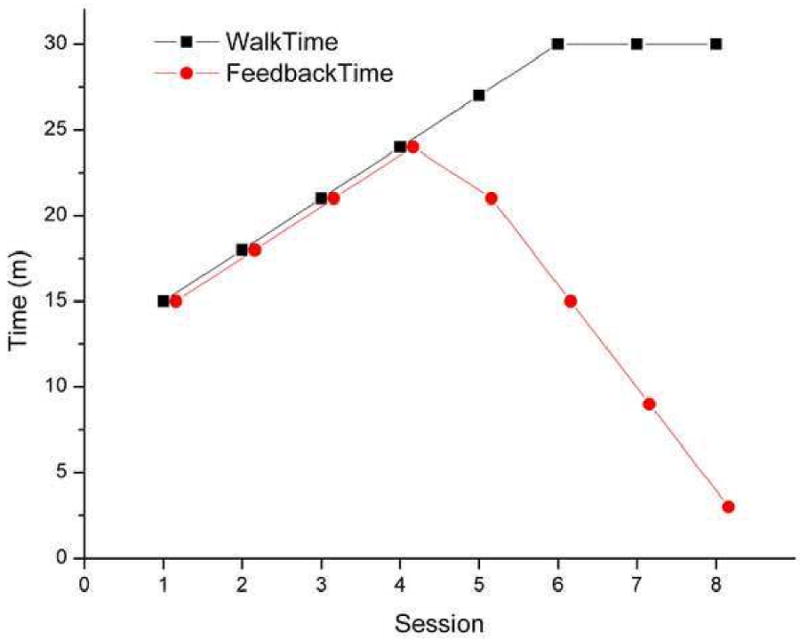
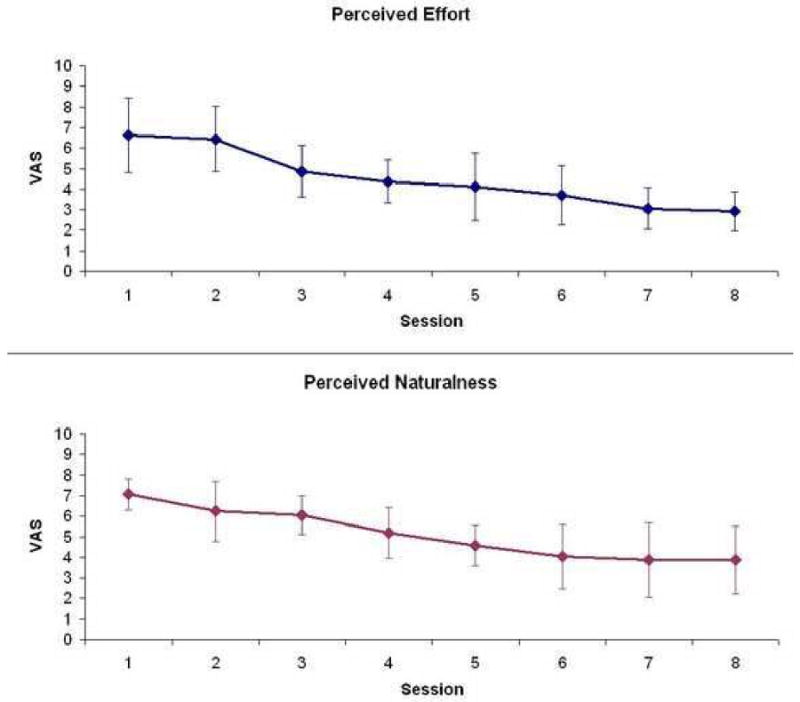
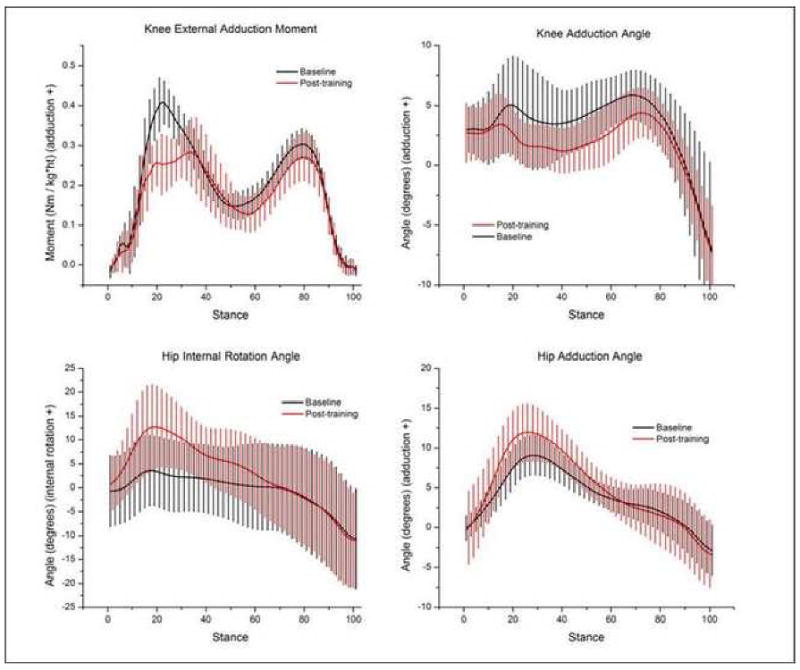
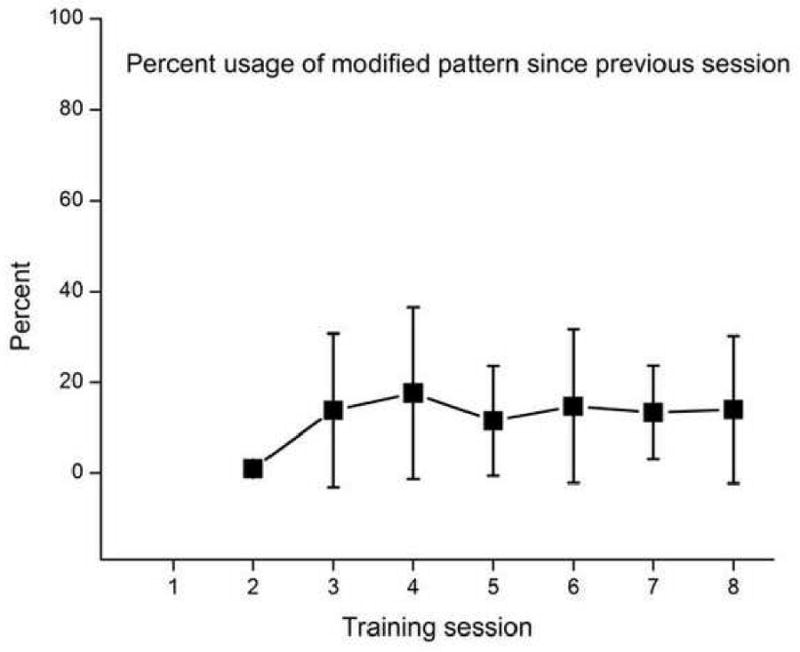
Varus knee alignment is a risk factor for medial knee osteoarthritis and is associated with high knee adduction moments. Therefore, reducing the knee adduction moment in varus-aligned individuals with otherwise healthy knees may reduce their risk for developing osteoarthritis. A gait modification that improves dynamic knee alignment may reduce the adduction moment, and systematic training may lead to more natural-feeling and less effortful execution of this pattern. To test these hypotheses, eight healthy, varus-aligned individuals underwent a gait modification protocol. Real-time feedback of dynamic knee alignment was provided over eight training sessions, using a fading paradigm. Natural and modified gait were assessed post-training and after 1 month, and compared to pre-training natural gait. The knee adduction moment, as well as hip adduction, hip internal rotation and knee adduction angles were evaluated. At each training session, subjects rated how effortful and natural-feeling the modified pattern was to execute. Post-training, the modified pattern demonstrated an 8 degrees increase in hip internal rotation and 3 degrees increase in hip adduction. Knee adduction decreased 2 degrees , and the knee adduction moment decreased 19%. Natural gait did not differ between the three visits, nor did the modified gait pattern between the post-training and 1 month visits. The modified pattern felt more natural and required less effort after training. Based on these results, gait retraining to improve dynamic knee alignment resulted in significant reductions in the knee adduction moment, primarily through hip internal rotation. Further, systematic training led to more natural-feeling and less effortful execution of the gait pattern.
Copyright 2010 Elsevier Ltd. All rights reserved.
Conflict of interest statement
Conflict of Interest Statement: There are no financial or personal relationships with other people or organizations that could inappropriately bias this work.
Figures
References
-
- Brouwer GM, van Tol AW, Bergink AP, Belo JN, Bernsen RMD, Reijman M, Pols HAP, Bierma-Zeinstra SMA. Association between valgus and varus alignment and the development and progression of radiographic osteoarthritis of the knee. Arthritis & Rheumatism. 2007;56:1204–1211. - PubMed
-
- Andriacchi TP. Dynamics of knee malalignment. Orthopedic Clinics North America. 1994;25:395–403. - PubMed
Publication types
MeSH terms
Grants and funding
LinkOut - more resources
Full Text Sources
Other Literature Sources
Medical
