


Posttraumatic severe infection of the ankle joint - long term results of the treatment with resection arthrodesis in 133 cases
- PMID: 20452884
- PMCID: PMC3352045
- DOI: 10.1186/2047-783x-15-2-54
Posttraumatic severe infection of the ankle joint - long term results of the treatment with resection arthrodesis in 133 cases
Abstract
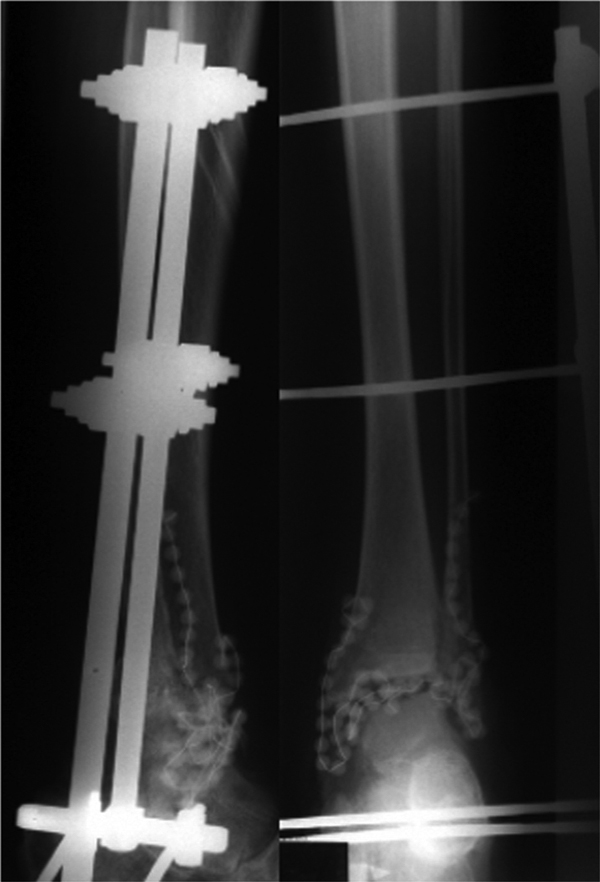
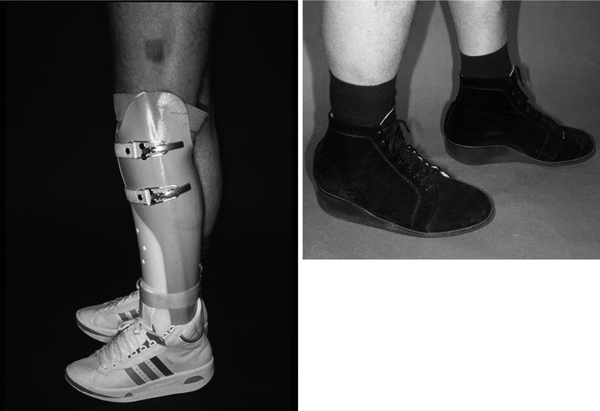
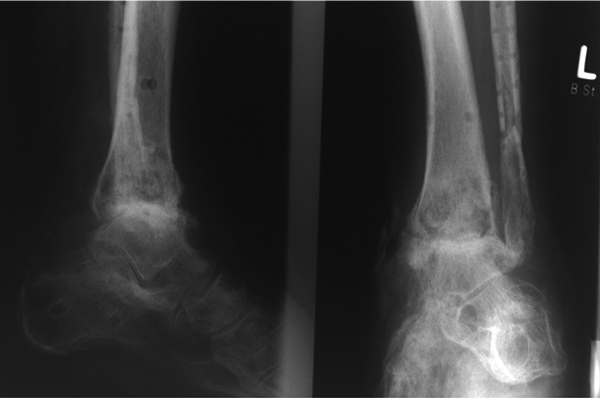
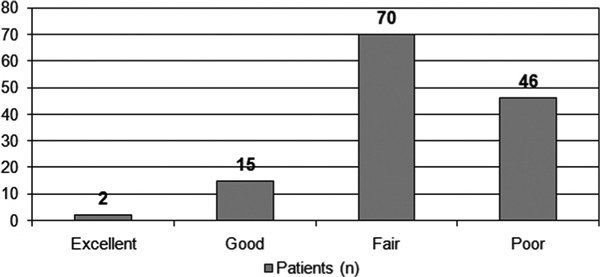
Although there is a clear trend toward internal fixation for ankle arthrodesis, there is general consensus that external fixation is required for cases of posttraumatic infection. We retrospectively evaluated the technique and clinical long term results of external fixation in a triangular frame for cases of posttraumatic infection of the ankle. From 1993 to 2006 a consecutive series of 155 patients with an infection of the ankle was included in our study. 133 cases of the advanced "Gächter" stage III and IV were treated with arthrodesis. We treated the patients with a two step treatment plan. After radical debridement and sequestrectomy the malleoli and the joint surfaces were resected. An AO fixator was applied with two Steinmann-nails inserted in the tibia and in the calcaneus and the gap was temporary filled with gentamicin beads as the first step. In the second step we performed an autologous bone graft after a period of four weeks. The case notes were evaluated regarding trauma history, medical complaints, further injuries and illnesses, walking and pain status and occupational issues. Mean age at the index procedure was 49.7 years (18-82), 104 patients were male (67.1%). Follow up examination after mean 4.5 years included a standardised questionnaire and a clinical examination including the criteria of the AOFAS-Score and radiographs. 92.7% of the cases lead to a stable arthrodesis. In 5 patients the arthrodesis was found partly-stable. In six patients (4,5%) the infection was not controllable during the treatment process. These patients had to be treated with a below knee amputation. The mean AOFAS score at follow up was 63.7 (53-92). Overall there is a high degree of remaining disability. The complication rate and the reduced patient comfort reserve this method mainly for infection. Joint salvage is possible in the majority of cases with an earlier stage I and II infection.
Figures
References
-
- Maurer RC, Transarticular cross-screw fixation. A technique of ankle arthrodesis. Clin Orthop Relat Res. 1991. pp. 56–64. - PubMed
-
- Monroe MT, Beals TC, Manoli A. Clinical outcome of arthrodesis of the ankle using rigid internal fixation with cancellous screws. Foot Ankle Int. 1999;20(4):227–231. - PubMed
MeSH terms
Substances
LinkOut - more resources
Full Text Sources
Medical
Miscellaneous
