


Stimulating the central nervous system to prevent intestinal dysfunction after traumatic brain injury
- PMID: 20453760
- PMCID: PMC4251579
- DOI: 10.1097/TA.0b013e3181d87373
Stimulating the central nervous system to prevent intestinal dysfunction after traumatic brain injury
Abstract
Background: Traumatic brain injury (TBI) causes gastrointestinal dysfunction and increased intestinal permeability. Regulation of the gut barrier may involve the central nervous system. We hypothesize that vagal nerve stimulation prevents an increase in intestinal permeability after TBI.
Methods: Balb/c mice underwent a weight drop TBI. Selected mice had electrical stimulation of the cervical vagus nerve before TBI. Intestinal permeability to 4.4 kDa FITC-Dextran was measured 6 hours after injury. Ileum was harvested and intestinal tumor necrosis factor-alpha and glial fibrillary acidic protein (GFAP), a marker of glial activity, were measured.
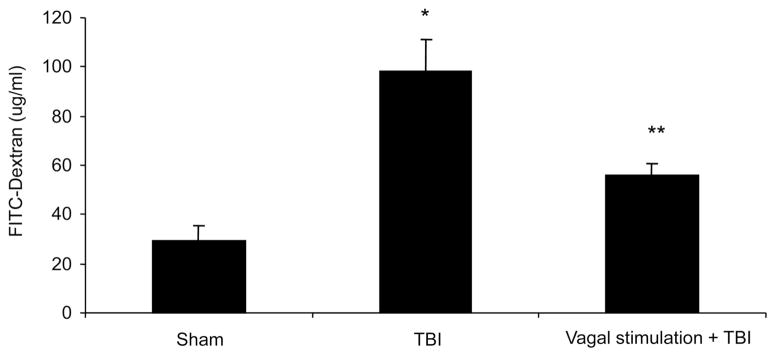
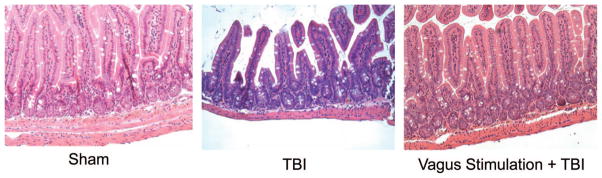
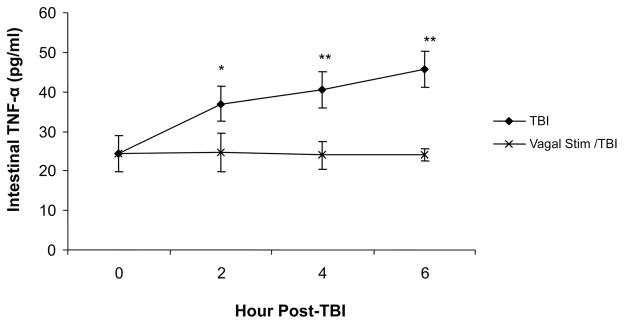
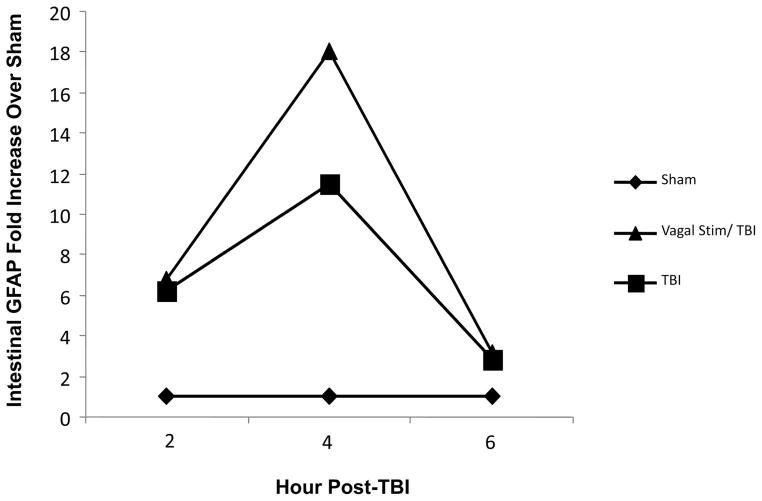
Results: TBI increased intestinal permeability compared with sham, 6 hours after injury (98.5 microg/mL +/- 12.5 vs. 29.5 microg/mL +/- 5.9 microg/mL; p < 0.01). Vagal stimulation prevented TBI-induced intestinal permeability (55.8 +/- 4.8 microg/mL vs. 98.49 microg/mL +/- 12.5; p < 0.02). TBI animals had an increase in intestinal tumor necrosis factor-alpha 6 hours after injury compared with vagal stimulation + TBI (45.6 +/- 8.6 pg/mL vs. 24.1 +/- 1.4 pg/mL; p < 0.001). TBI increased intestinal GFAP 6.2-fold higher than sham at 2 hours and 11.5-fold higher at 4 hours after injury (p < 0.05). Intestinal GFAP in vagal stimulation + TBI animals was also 6.7-fold higher than sham at 2 hours, however, intestinal GFAP was 18.0-fold higher at 4 hours compared with sham and 1.6-fold higher than TBI alone (p < 0.05).
Conclusion: In a mouse model of TBI, vagal stimulation prevented TBI-induced intestinal permeability. Furthermore, vagal stimulation increased enteric glial activity and may represent the pathway for central nervous system regulation of intestinal permeability.
Figures
References
-
- McGarry LJ, Thompson D, Millham FH, et al. Outcomes and costs of acute treatment of traumatic brain injury. J Trauma. 2002;53:1152–1159. - PubMed
-
- Beal AL, Cerra FB. Multiple organ failure syndrome in the 1990s. Systemic inflammatory response and organ dysfunction. JAMA. 1994;271:226–233. - PubMed
-
- Kemp CD, Johnson JC, Riordan WP, Cotton BA. How we die: the impact of nonneurologic organ dysfunction after severe traumatic brain injury. Am Surg. 2008;74:866–872. - PubMed
-
- Feighery L, Smyth A, Keely S, et al. Increased intestinal permeability in rats subjected to traumatic frontal lobe percussion brain injury. J Trauma. 2008;64:131–137. discussion 137–138. - PubMed
MeSH terms
Substances
Grants and funding
LinkOut - more resources
Full Text Sources
Other Literature Sources
Medical
Miscellaneous
