. 2010 Jun 17;465(7300):951-5.
doi: 10.1038/nature09097. Epub 2010 May 9.

Ubiquitin-dependent DNA damage bypass is separable from genome replication

Affiliations

Ubiquitin-dependent DNA damage bypass is separable from genome replication

Yasukazu Daigaku et al. Nature. .

Abstract

Post-replication repair (PRR) is a pathway that allows cells to bypass or overcome lesions during DNA replication. In eukaryotes, damage bypass is activated by ubiquitylation of the replication clamp PCNA through components of the RAD6 pathway. Whereas monoubiquitylation of PCNA allows mutagenic translesion synthesis by damage-tolerant DNA polymerases, polyubiquitylation is required for an error-free pathway that probably involves a template switch to the undamaged sister chromatid. Both the timing of PRR events during the cell cycle and their location relative to replication forks, as well as the factors required downstream of PCNA ubiquitylation, have remained poorly characterized. Here we demonstrate that the RAD6 pathway normally operates during S phase. However, using an inducible system of DNA damage bypass in budding yeast (Saccharomyces cerevisiae), we show that the process is separable in time and space from genome replication, thus allowing direct visualization and quantification of productive PRR tracts. We found that both during and after S phase ultraviolet-radiation-induced lesions are bypassed predominantly via translesion synthesis, whereas the error-free pathway functions as a backup system. Our approach has revealed the distribution of PRR tracts in a synchronized cell population. It will allow an in-depth mechanistic analysis of how cells manage the processing of lesions to their genomes during and after replication.


Figures
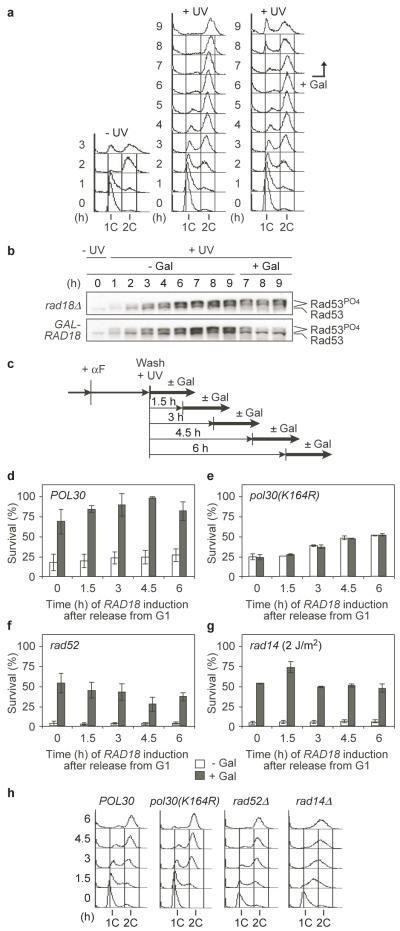
Figure 1
Figure 1. Ubiquitin-dependent DNA damage bypass can be delayed until after genome replication
a Cell cycle profiles of synchronised GAL-RAD18 cultures either unirradiated (left) or treated with 10 J/m2 UV (middle, right). RAD18 expression was induced by galactose (Gal, right). b Time course of Rad53 phosphorylation in rad18Δ and GAL-RAD18, treated as above. c Experimental scheme for GAL-RAD18 induction during and after S phase. αF: alpha factor. d-g Survival of the indicated GAL-RAD18 strains (UV dose: 10 J/m2rad14Δ: 2 J/m2). Error bars represent standard deviations from 3 experiments. dPOL30; epol30(K164R); frad52Δ; grad14Δ. h Cell cycle profiles at the time of RAD18 induction.
Figure 2
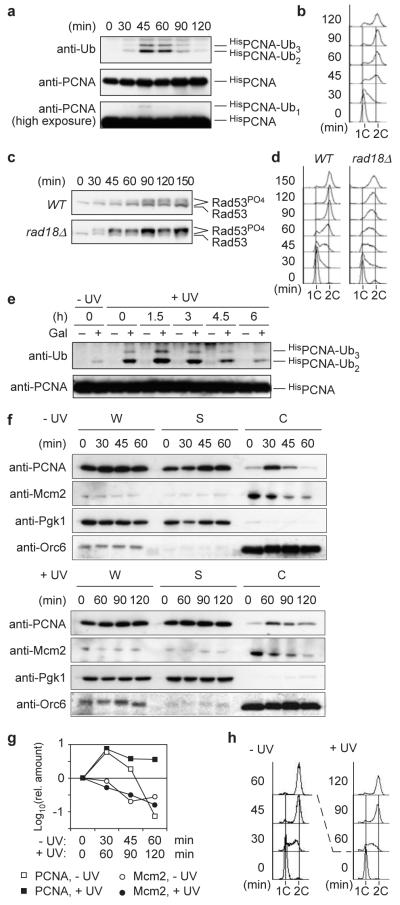
Figure 2. PRR normally operates during S phase, but chromatin-bound PCNA can be ubiquitylated in G2/M
a Ubiquitylation of HisPCNA in WT cells after release from G1 arrest (UV dose: 20 J/m2). b Cell cycle profile of the above culture. c Time course of Rad53 phosphorylation in WT and rad18Δ cells treated as above. d Cell cycle profiles of the above cultures. eHisPCNA ubiquitylation in GALS-RAD18 cells treated as described in Fig. 1c. f Distribution of PCNA and Mcm2 in whole-cell extracts (W), soluble (S) and chromatin-associated (C) fractions prepared from G1-irradiated cultures (± 20 J/m2) at the indicated times after release. Pgk1 and Orc6 served as controls for soluble and chromatin-bound proteins, respectively. g Quantification of PCNA and Mcm2 in the chromatin fractions. h Cell cycle profiles of the above cultures. Since irradiation slows down cell cycle progression, different time scales were used for damaged versus undamaged cells in panels f-h in order to relate comparable cell cycle stages to each other.
Figure 3
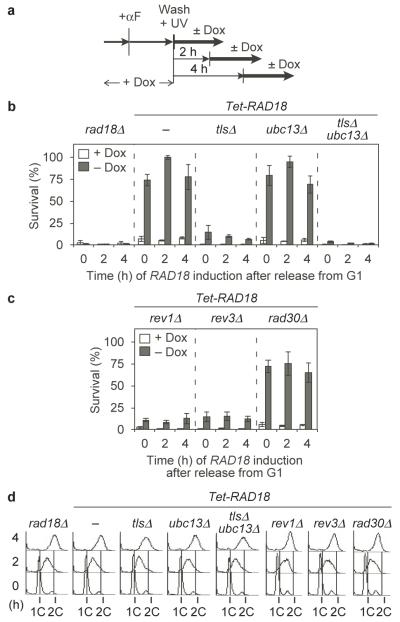
Figure 3. UV-induced lesions are bypassed predominantly by TLS
a Experimental scheme for Tet-RAD18 induction during and after S phase (UV dose: 10 J/m2). b, c Survival of the indicated strains, relative to unirradiated controls. Standard deviations were derived from 4 experiments. d Cell cycle profiles of the indicated strains at the time of plating.
Figure 4
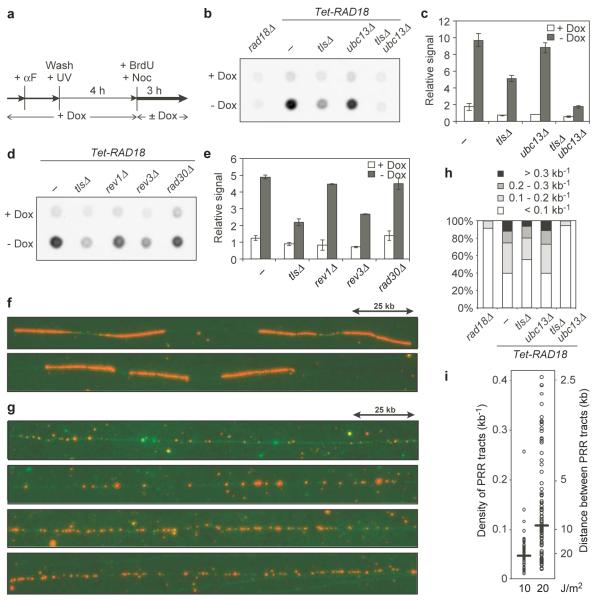
Figure 4. Quantification and visualisation of PRR tracts in G2/M-arrested cells
a Experimental scheme for labelling of PRR tracts in Tet-RAD18 cells (UV dose: 20 J/m2). b Dot blot for detection of BrdU incorporation. c Quantification of BrdU signals with s.d. from a minimum of 3 independent experiments. d Dot blot for detection of BrdU incorporation in single TLS polymerase mutants. e Quantification of the above signals. f Fluorescence microscopy images of DNA fibres (green) labelled with BrdU (red) in HU-treated S phase cells. g Fluorescence microscopy images of DNA fibres labelled postreplicatively with BrdU in Tet-RAD18 cells. h Density distribution of BrdU patches. i Dose dependence of BrdU patch densities. Horizontal bars indicate median values.

References

    1. Lawrence C. The RAD6 DNA repair pathway in Saccharomyces cerevisiae: what does it do, and how does it do it? BioEssays. 1994;16:253–258. - PubMed
    1. Hoege C, Pfander B, Moldovan GL, Pyrowolakis G, Jentsch S. RAD6-dependent DNA repair is linked to modification of PCNA by ubiquitin and SUMO. Nature. 2002;419:135–141. - PubMed
    1. Kannouche PL, Wing J, Lehmann AR. Interaction of human DNA polymerase η with monoubiquitinated PCNA: a possible mechanism for the polymerase switch in response to DNA damage. Mol. Cell. 2004;14:491–500. - PubMed
    1. Stelter P, Ulrich HD. Control of spontaneous and damage-induced mutagenesis by SUMO and ubiquitin conjugation. Nature. 2003;425:188–191. - PubMed
    1. Watanabe K, et al. Rad18 guides pol| to replication stalling sites through physical interaction and PCNA monoubiquitination. EMBO J. 2004;23:3886–3896. - PMC - PubMed

Publication types

MeSH terms