


p53 activates transcription by directing structural shifts in Mediator
- PMID: 20453859
- PMCID: PMC2932482
- DOI: 10.1038/nsmb.1816
p53 activates transcription by directing structural shifts in Mediator
Abstract
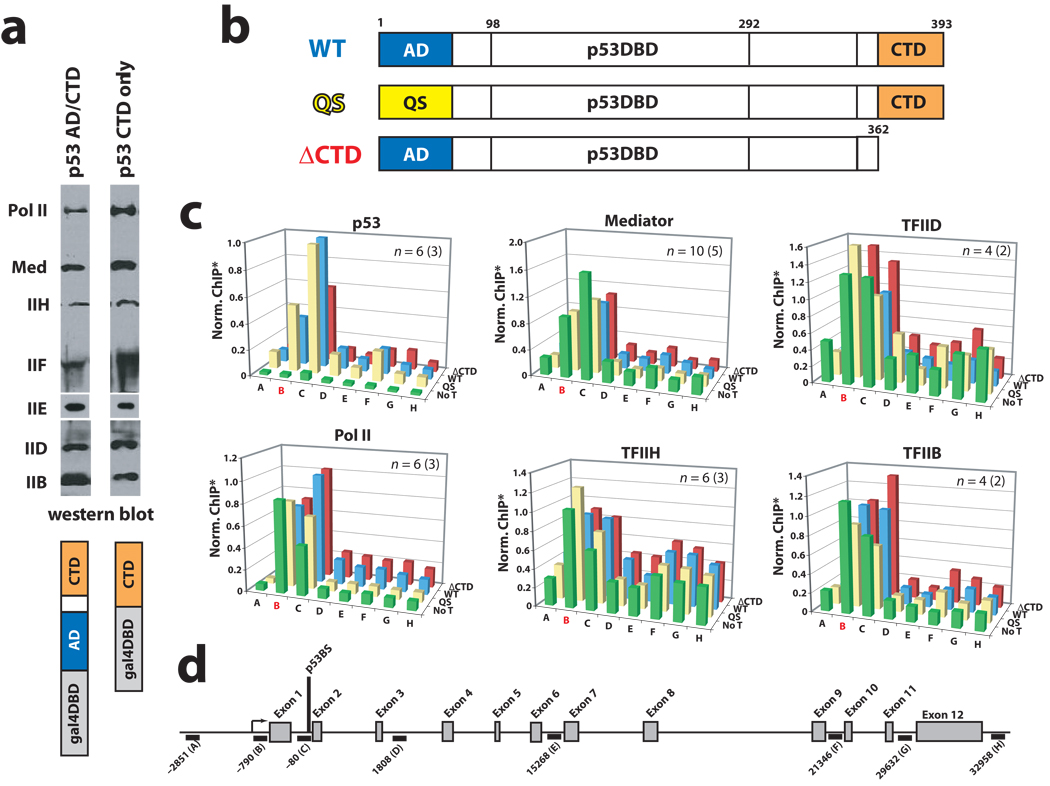
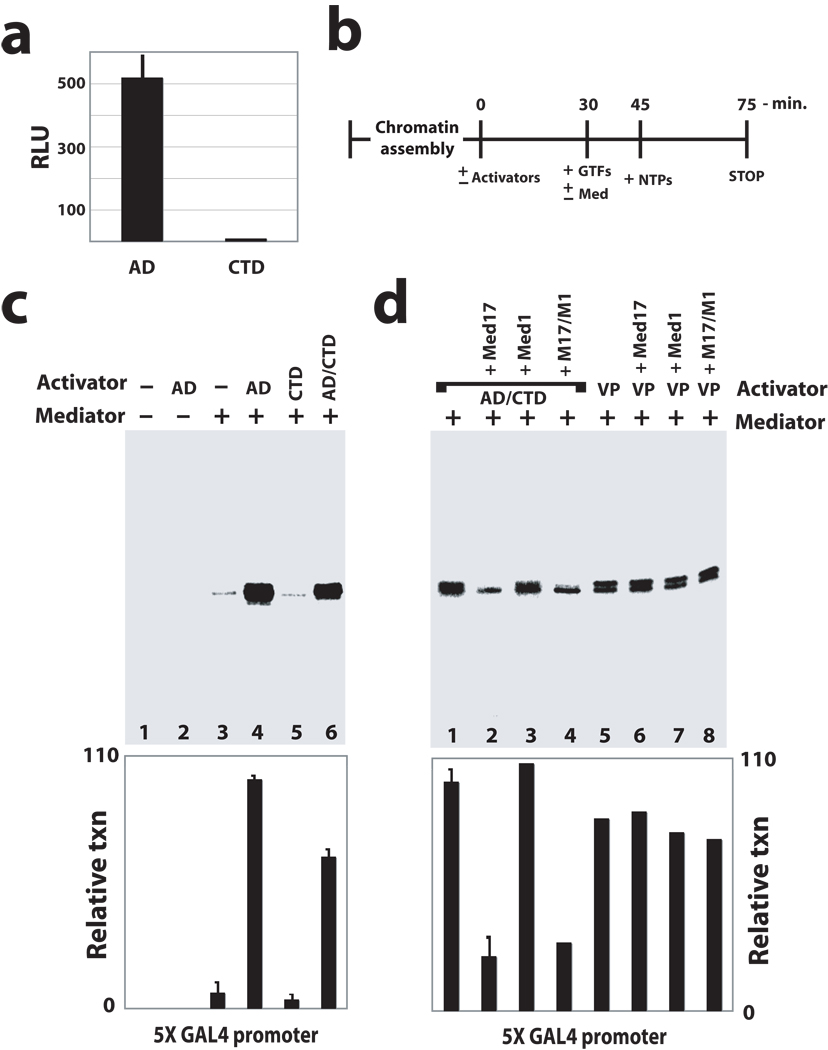
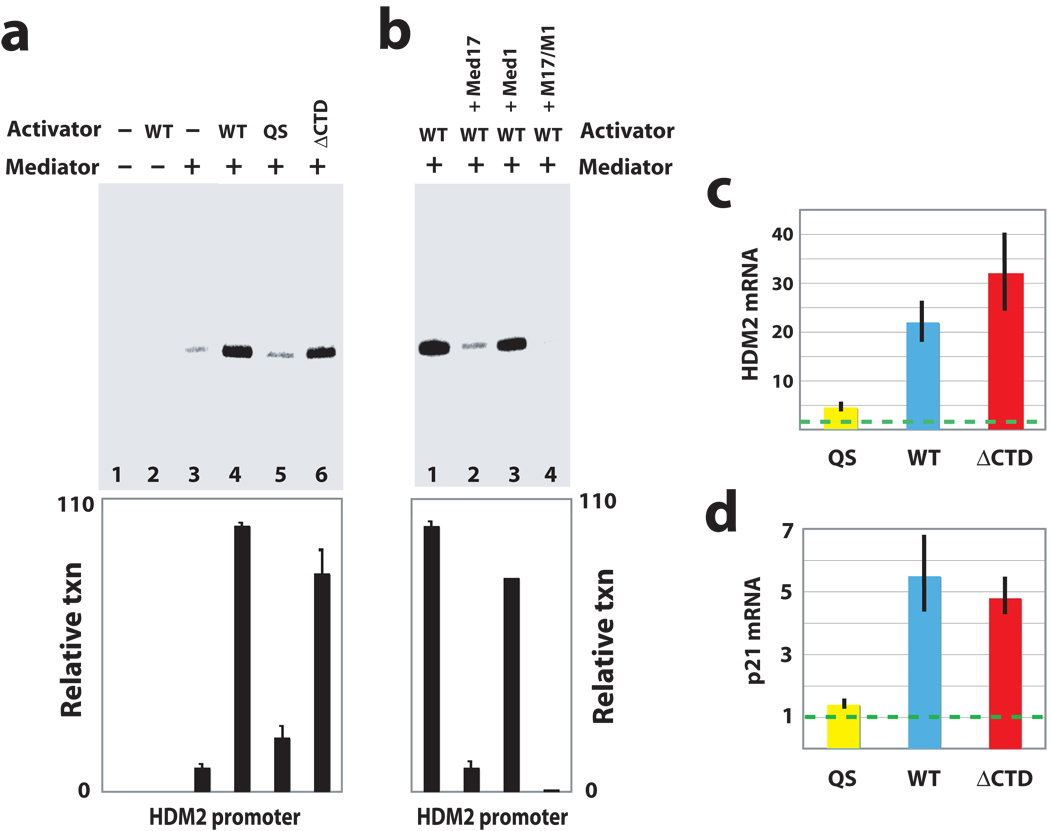
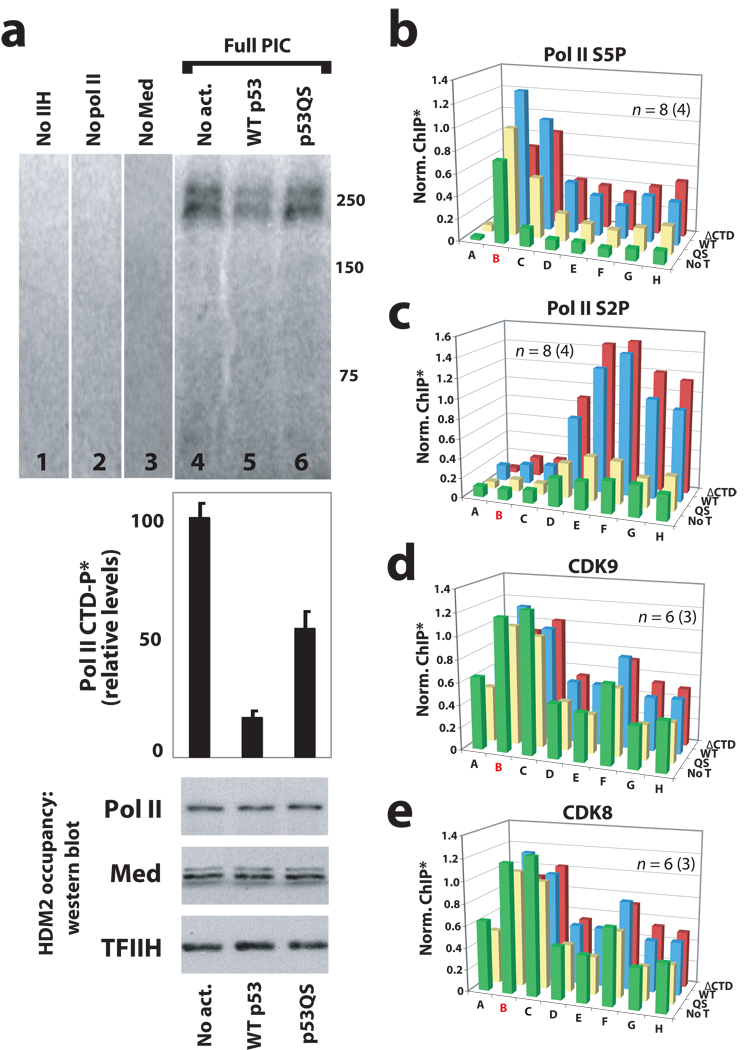
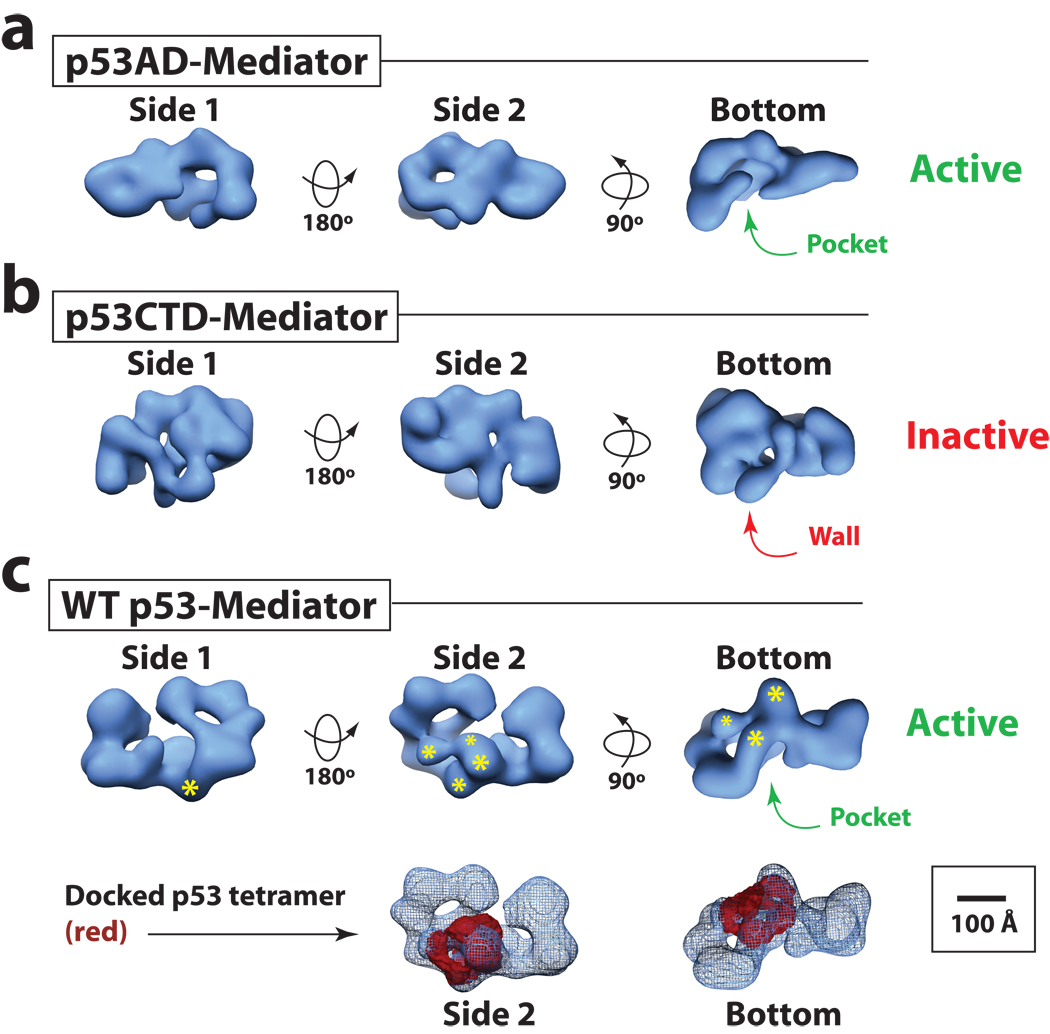
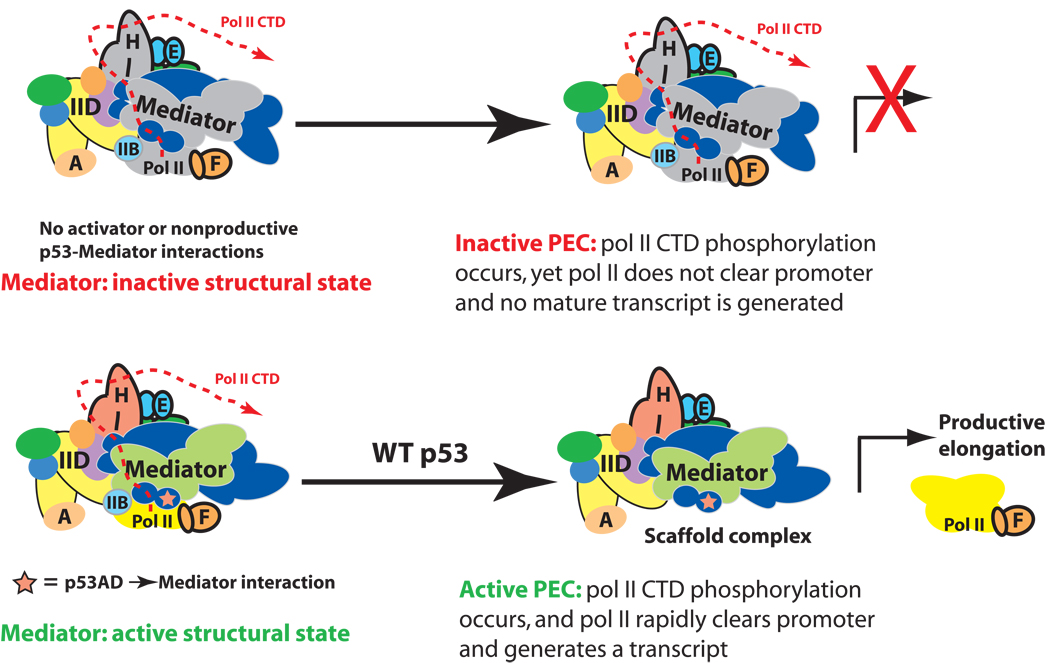
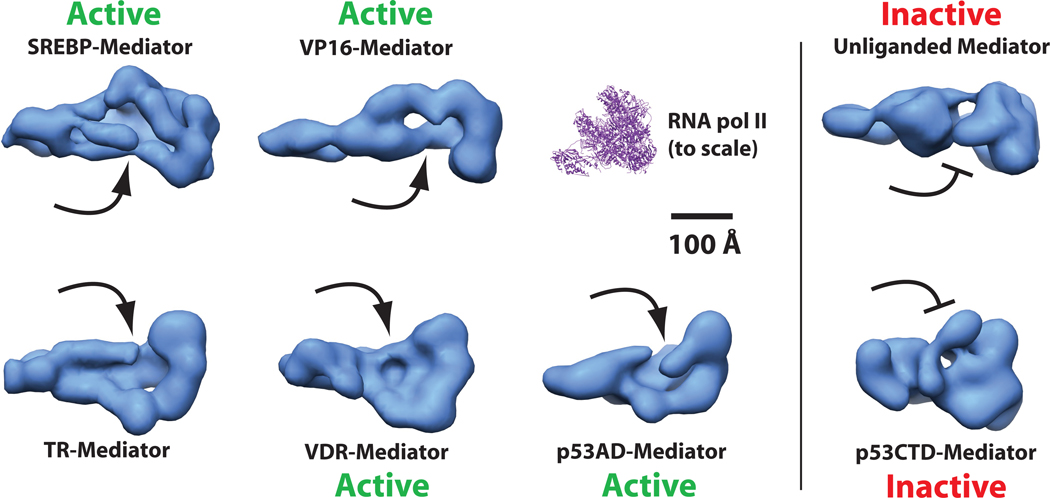
It is not well understood how the human Mediator complex, transcription factor IIH and RNA polymerase II (Pol II) work together with activators to initiate transcription. Activator binding alters Mediator structure, yet the functional consequences of such structural shifts remain unknown. The p53 C terminus and its activation domain interact with different Mediator subunits, and we find that each interaction differentially affects Mediator structure; strikingly, distinct p53-Mediator structures differentially affect Pol II activity. Only the p53 activation domain induces the formation of a large pocket domain at the Mediator-Pol II interaction site, and this correlates with activation of stalled Pol II to a productively elongating state. Moreover, we define a Mediator requirement for TFIIH-dependent Pol II C-terminal domain phosphorylation and identify substantial differences in Pol II C-terminal domain processing that correspond to distinct p53-Mediator structural states. Our results define a fundamental mechanism by which p53 activates transcription and suggest that Mediator structural shifts trigger activation of stalled Pol II complexes.
Figures
References
-
- Holstege FC, et al. Dissecting the regulatory circuitry of a eukaryotic genome. Cell. 1998;95:717–728. - PubMed
-
- Esnault C, et al. Mediator-dependent recruitment of TFIIH modules in Preinitiation Complex. Mol Cell. 2008;31:337–346. - PubMed
-
- Davis JA, Takagi Y, Kornberg RD, Asturias FA. Structure of the yeast RNA polymerase II holoenzyme: Mediator conformation and polymerase interaction. Mol Cell. 2002;10:409–415. - PubMed
Publication types
MeSH terms
Substances
Grants and funding
LinkOut - more resources
Full Text Sources
Other Literature Sources
Research Materials
Miscellaneous
