


Rethinking the concept of acculturation: implications for theory and research
- PMID: 20455618
- PMCID: PMC3700543
- DOI: 10.1037/a0019330
Rethinking the concept of acculturation: implications for theory and research
Abstract
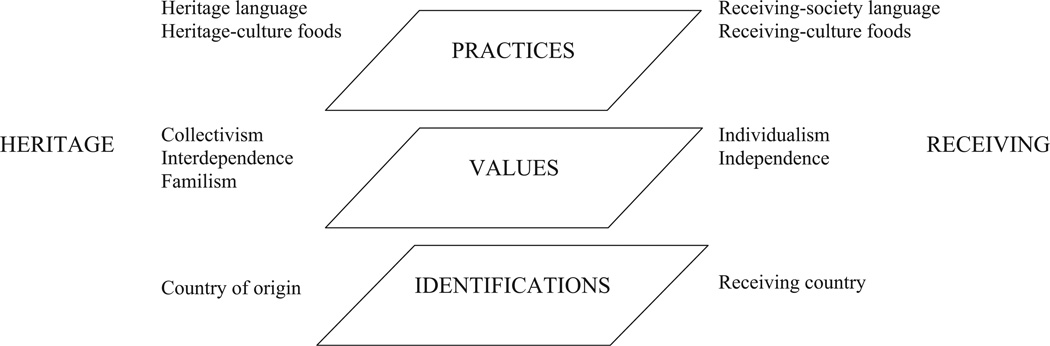
This article presents an expanded model of acculturation among international migrants and their immediate descendants. Acculturation is proposed as a multidimensional process consisting of the confluence among heritage-cultural and receiving-cultural practices, values, and identifications. The implications of this reconceptualization for the acculturation construct, as well as for its relationship to psychosocial and health outcomes, are discussed. In particular, an expanded operationalization of acculturation is needed to address the "immigrant paradox," whereby international migrants with more exposure to the receiving cultural context report poorer mental and physical health outcomes. We discuss the role of ethnicity, cultural similarity, and discrimination in the acculturation process, offer an operational definition for context of reception, and call for studies on the role that context of reception plays in the acculturation process. The new perspective on acculturation presented in this article is intended to yield a fuller understanding of complex acculturation processes and their relationships to contextual and individual functioning.
Copyright 2010 APA, all rights reserved.
Figures
Comment in
-
Integrative perspectives on acculturation.Am Psychol. 2011 Feb-Mar;66(2):154-5; discussion 155-7. doi: 10.1037/a0022242. Am Psychol. 2011. PMID: 21299267
References
-
- Akhtar S. The immigrant, the exile, and the experience of nostalgia. Journal of Applied Psychoanalytic Studies. 1999;1:123–130.
-
- Akhtar S, Choi LW. When evening falls: The immigrant’s encounter with middle and old age. American Journal of Psychoanalysis. 2004;64:183–191. - PubMed
Publication types
MeSH terms
Grants and funding
LinkOut - more resources
Full Text Sources
Miscellaneous