


Characteristics associated with pediatric inpatient death
- PMID: 20457682
- PMCID: PMC3033561
- DOI: 10.1542/peds.2009-1451
Characteristics associated with pediatric inpatient death
Abstract
Objective: The primary objective of this study was to obtain a broad understanding of inpatient deaths across academic children's hospitals.
Methods: A nonconcurrent cohort study of children hospitalized in 37 academic children's hospitals in 2005 was performed. The primary outcome was death. Patient characteristics including age, gender, race, diagnostic grouping, and insurance status and epidemiological measures including standardized mortality rate and standardized mortality ratios (SMRs) were used.
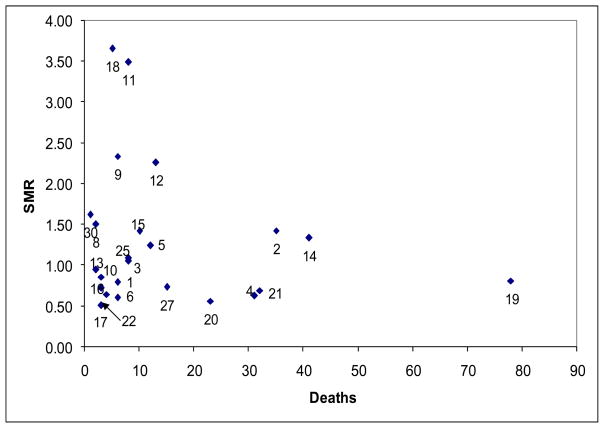
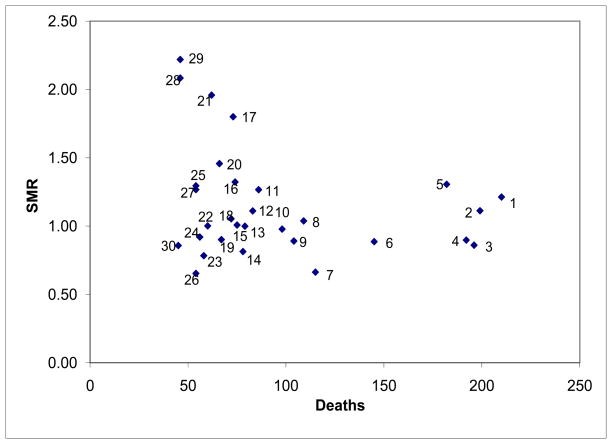
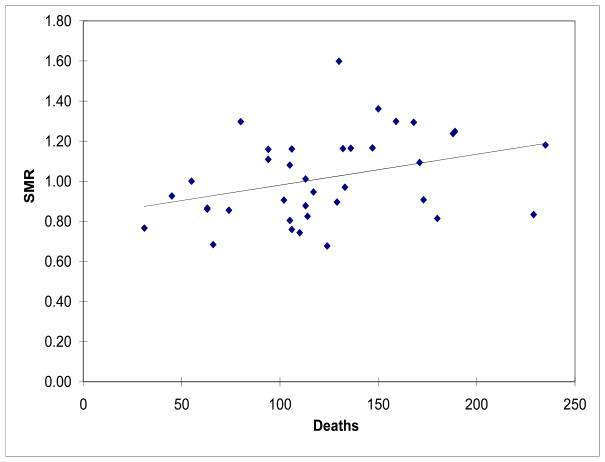
Results: A total of 427 615 patients were discharged during the study period, of whom 4529 (1.1%) died. Neonates had the highest mortality rate (4.03%; odds ratio: 8.66; P < .001), followed by patients >18 years of age (1.4%; odds ratio: 2.86; P < .001). The SMRs ranged from 0.46 (all patient-refined, diagnosis-related group 663, other anemias and disorders of blood) to 30.0 (all patient-refined, diagnosis-related group 383, cellulitis and other bacterial skin infections). When deaths were compared according to institution, there was considerable variability in both the number of children who died and the SMRs at those institutions.
Conclusions: Patient characteristics, such as age, severity, and diagnosis, were all substantive factors associated with the death of children. Opportunities to improve the environment of care by reducing variability within and between hospitals may improve mortality rates for hospitalized children.
Figures
References
-
- Deaths: Final data 1999. National Center for Health Statistics; 2001a. [Accessed on August 18, 2009.]. Available at: http://www.nber.org/mortality/1999/docs/nvsr49_08.pdf. - PubMed
-
- Deaths by place of death, age, race, and sex: United states, 2002. National Center for Health Statistics; 2006. Available from: http://www.cdc.gov/nchs/data/dvs/mortfinal2002_work309.pdf.
-
- Nasi T, Vince JD, Mokela D. Mortality in children admitted to port moresby general hospital: How can we improve our hospital outcomes? P N G Med J. 2003;46:113–124. - PubMed
-
- Carter BS, Howenstein M, Gilmer MJ, Throop P, France D, Whitlock JA. Circumstances surrounding the deaths of hospitalized children: Opportunities for pediatric palliative care. Pediatrics. 2004;114:e361–6. - PubMed
-
- McCallum DE, Byrne P, Bruera E. How children die in hospital. J Pain Symptom Manage. 2000;20:417–423. - PubMed
Publication types
MeSH terms
Grants and funding
LinkOut - more resources
Full Text Sources
Other Literature Sources
