


Biochemical characterization of cholesteryl ester transfer protein inhibitors
- PMID: 20458119
- PMCID: PMC2918456
- DOI: 10.1194/jlr.M007468
Biochemical characterization of cholesteryl ester transfer protein inhibitors
Abstract
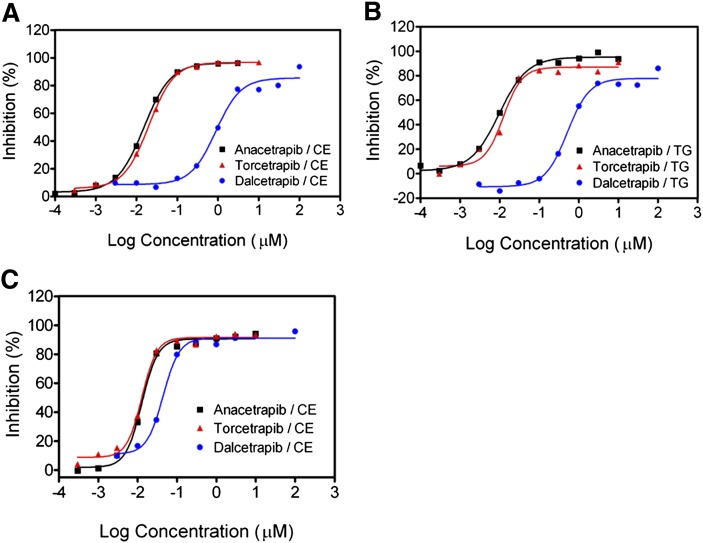
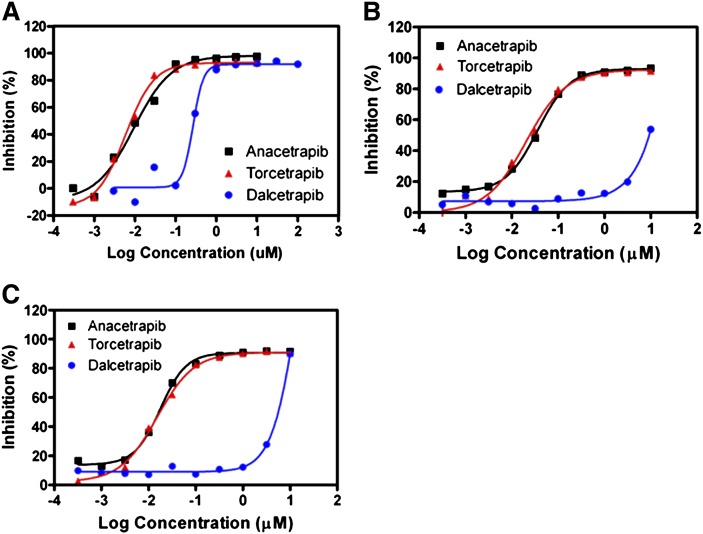
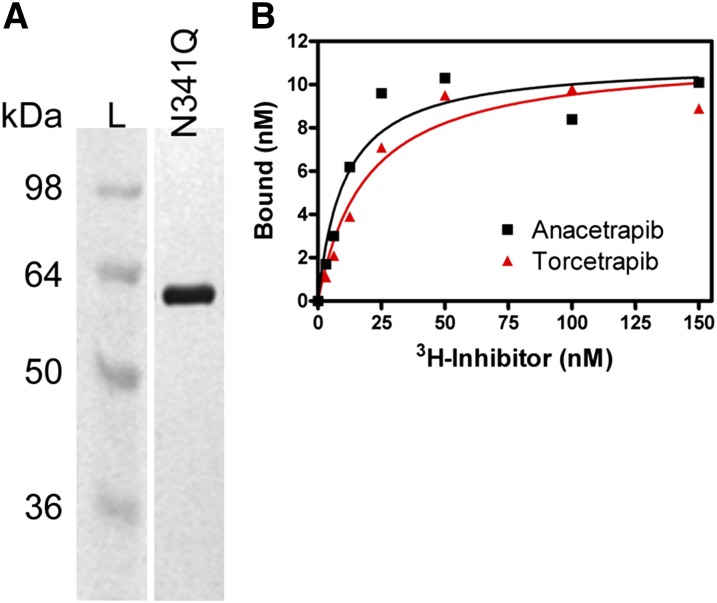
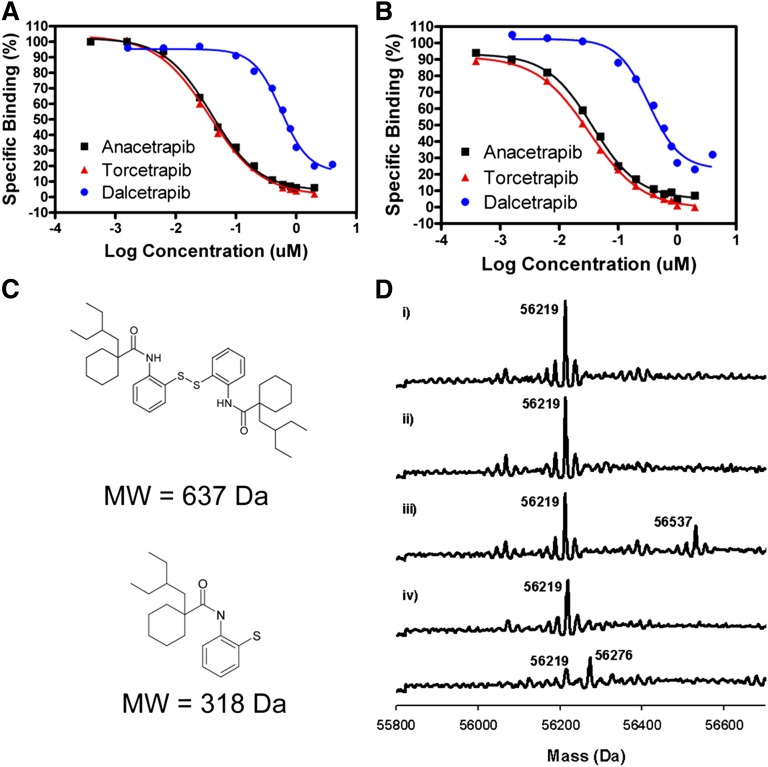
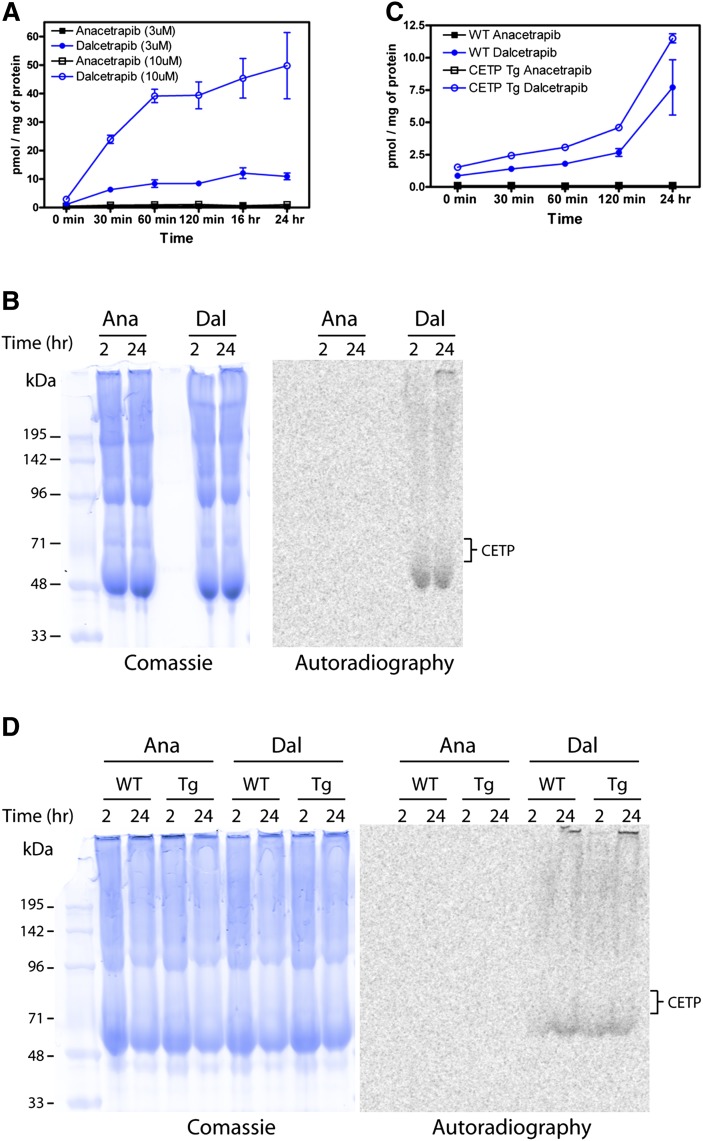
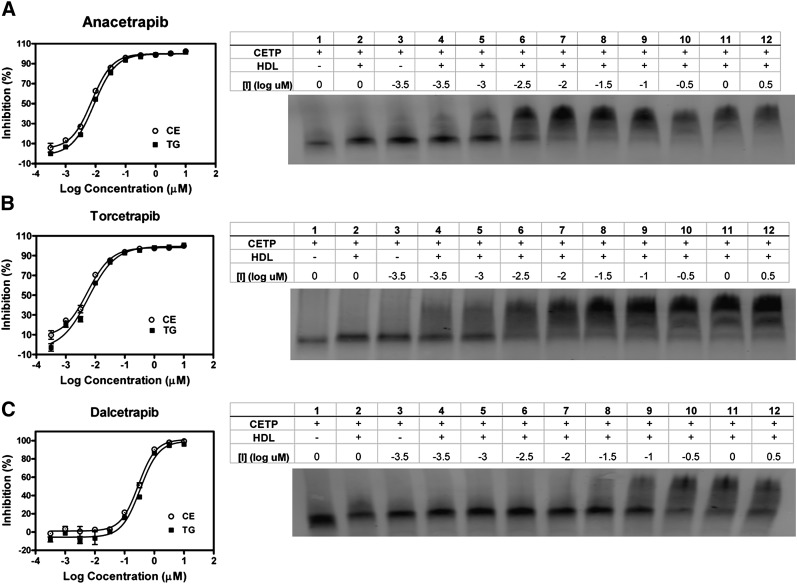
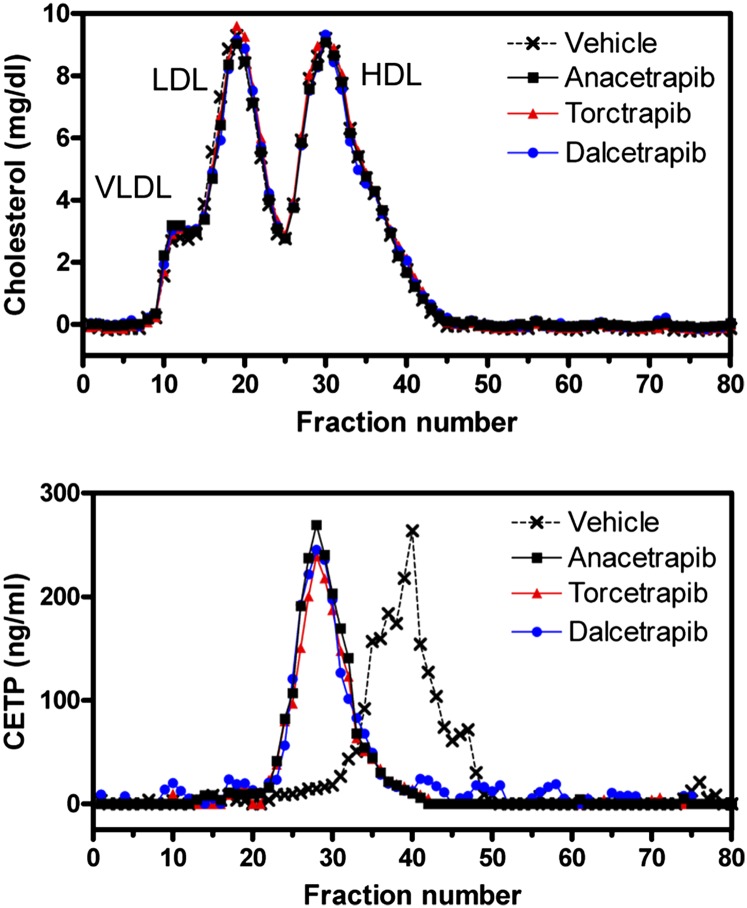
Cholesteryl ester transfer protein (CETP) has been identified as a novel target for increasing HDL cholesterol levels. In this report, we describe the biochemical characterization of anacetrapib, a potent inhibitor of CETP. To better understand the mechanism by which anacetrapib inhibits CETP activity, its biochemical properties were compared with CETP inhibitors from distinct structural classes, including torcetrapib and dalcetrapib. Anacetrapib and torcetrapib inhibited CETP-mediated cholesteryl ester and triglyceride transfer with similar potencies, whereas dalcetrapib was a significantly less potent inhibitor. Inhibition of CETP by both anacetrapib and torcetrapib was not time dependent, whereas the potency of dalcetrapib significantly increased with extended preincubation. Anacetrapib, torcetrapib, and dalcetrapib compete with one another for binding CETP; however anacetrapib binds reversibly and dalcetrapib covalently to CETP. In addition, dalcetrapib was found to covalently label both human and mouse plasma proteins. Each CETP inhibitor induced tight binding of CETP to HDL, indicating that these inhibitors promote the formation of a complex between CETP and HDL, resulting in inhibition of CETP activity.
Figures
References
-
- Gordon D. J., Probstfield J. L., Garrison R. J., Neaton J. D., Castelli W. P., Knoke J. D., Jacobs D. R., Bangdiwala S., Tyroler H. A. 1989. High-density lipoprotein cholesterol and cardiovascular disease. Four prospective American studies. Circulation. 79: 8–15. - PubMed
-
- Assmann G., Schulte H., Eckardstein A., Huang Y. 1996. High-density lipoprotein cholesterol as a predictor of coronary heart disease risk. The PROCAM experience and pathophysiological implications for reverse cholesterol transport. Atherosclerosis. 124: S11–S20. - PubMed
-
- Sharrett A. R., Ballantyne C. M., Coady S. A., Heiss G., Sorlie P. D., Catellier D., Patsch W. 2001. Coronary heart disease prediction from lipoprotein cholesterol levels, triglycerides, lipoprotein(a), apolipoproteins A-I and B, and HDL density subfractions: The Atherosclerosis Risk in Communities (ARIC) Study. Circulation. 104: 1108–1113. - PubMed
-
- Luc G., Bard J., Ferrieres J., Evans A., Amouyel P., Arveiler D., Fruchart J., Ducimetiere P., on behalf of the PRIME Study Group. 2002. Value of HDL cholesterol, apolipoprotein A-I, lipoprotein A-I, and lipoprotein A-I/A-II in prediction of coronary heart disease: The PRIME Study. Arterioscler. Thromb. Vasc. Biol. 22: 1155–1161. - PubMed
-
- Boden W. E. 2000. High-density lipoprotein cholesterol as an independent risk factor in cardiovascular disease: assessing the data from Framingham to the Veterans Affairs High–Density Lipoprotein Intervention Trial. Am. J. Cardiol. 86: 19L–22L. - PubMed
MeSH terms
Substances
LinkOut - more resources
Full Text Sources
