


Sexually dimorphic alterations in locomotion and reversal learning after adolescent tetrahydrocannabinol exposure in the rat
- PMID: 20460150
- PMCID: PMC4209473
- DOI: 10.1016/j.ntt.2010.05.001
Sexually dimorphic alterations in locomotion and reversal learning after adolescent tetrahydrocannabinol exposure in the rat
Abstract
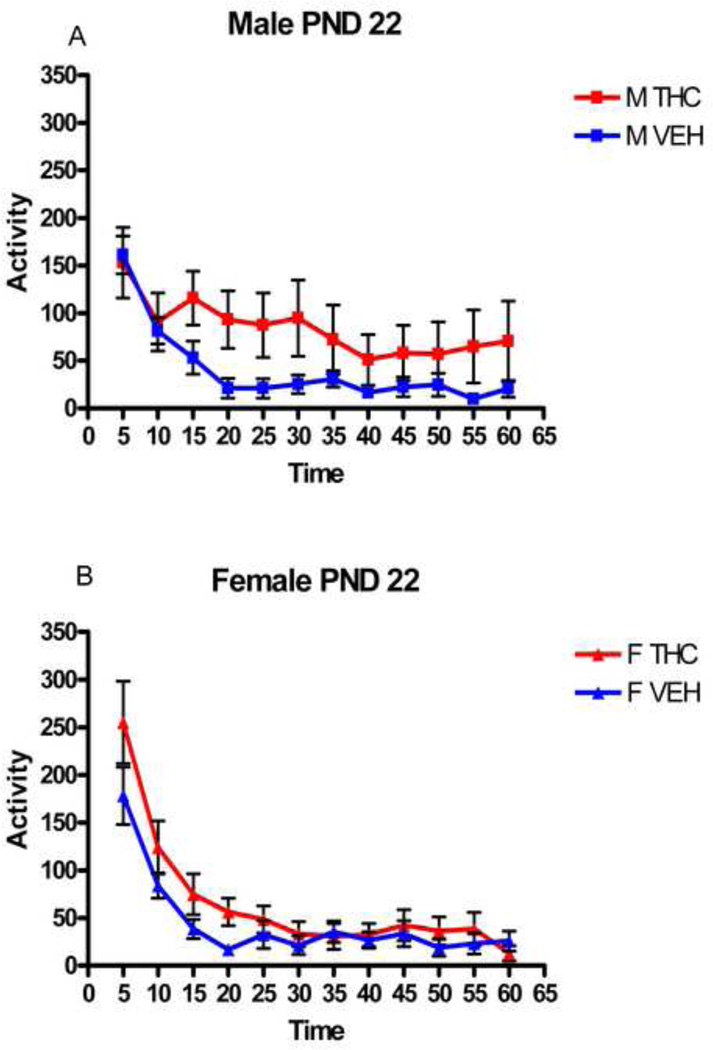
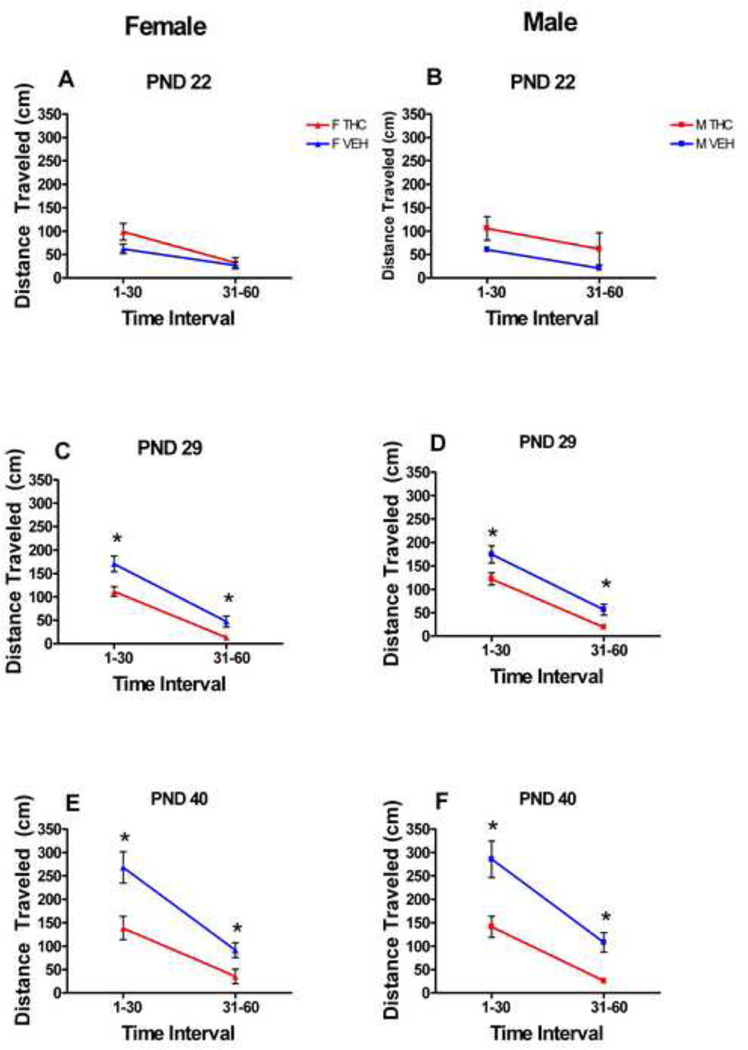
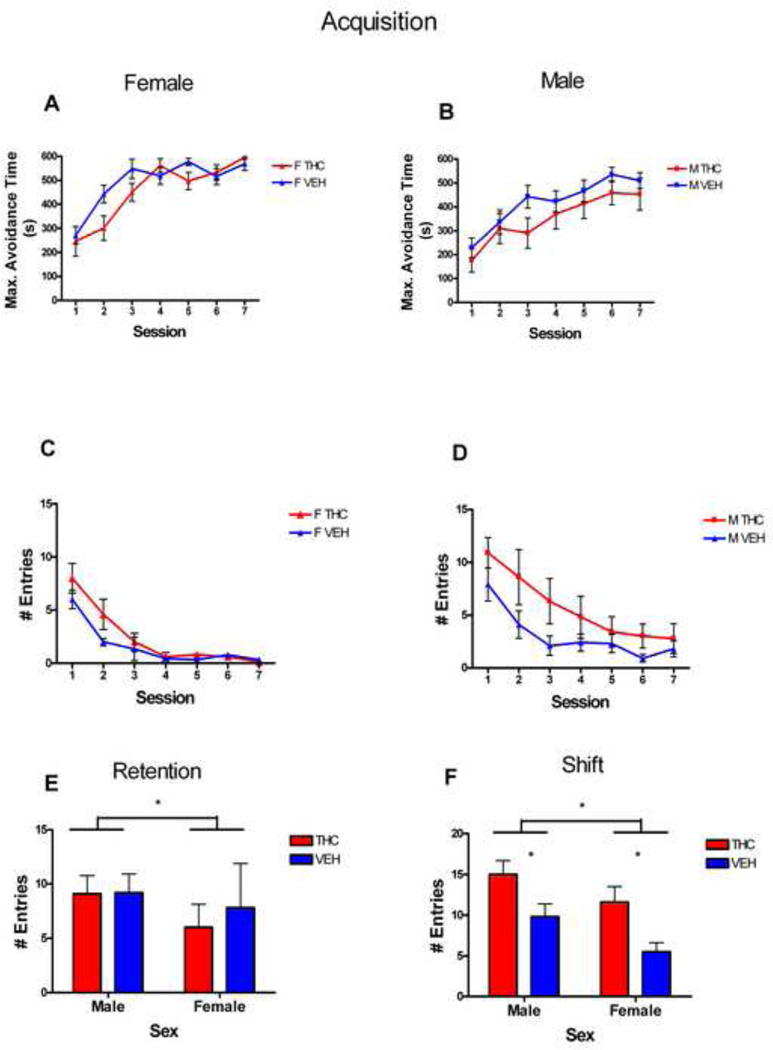
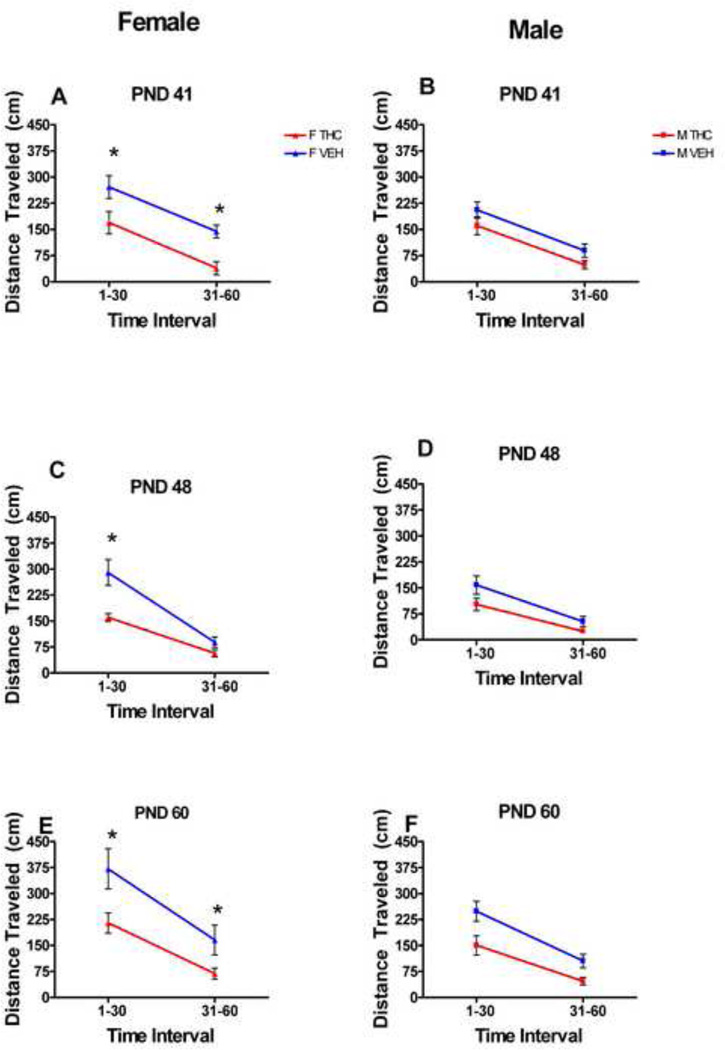
Research suggests that use and abuse of marijuana can be especially harmful if it occurs during adolescence, a period of vast developmental changes throughout the brain. We examined the effects of 2mg/kg (9)-tetrahydrocannabinol (THC) administered daily via intra-peritoneal injections during juvenile/early adolescence (postnatal day 22-40) or late adolescence (postnatal day 41-60) on locomotor activity, development of tolerance, and acquisition/retention of spatial avoidance in adulthood. THC caused locomotor depression in both male and female animals dosed during early adolescence but only in female animals dosed during late adolescence. Evidence of reverse tolerance to THC was seen in early adolescent animals only. In the active place avoidance test (APA), male and female animals administered THC during early adolescence made more errors on the reversal trial requiring flexibility in learning, but in animals dosed during late adolescence there were no significant sex or treatment differences. The results of the locomotor activity study indicate that females may be more sensitive to the effects of THC than males, while results of both locomotor activity and APA studies suggest that early adolescents appear to be more vulnerable to these effects than late adolescents/young adults.
Copyright (c) 2010 Elsevier Inc. All rights reserved.
References
-
- Abood ME, Sauss C, Fan F, Tilton CL, Martin BR. Development of behavioral tolerance to delta 9-THC without alteration of cannabinoid receptor binding or mRNA levels in whole brain, Pharmacol. Biochem. Behav. 1993;46:575–579. - PubMed
-
- Ameri A. The effects of cannabinoids on the brain. Prog. Neurobiol. 1999;58:315–348. - PubMed
-
- Bass CE, Martin BR. Time course for the induction and maintenance of tolerance to Delta(9)-tetrahydrocannabinol in mice. Drug Alcohol Depend. 2000;60:113–119. - PubMed
-
- Belue RC, Howlett AC, Westlake TM, Hutchings DE. The ontogeny of cannabinoid receptors in the brain of postnatal and aging rats. Neurotoxicol. Teratol. 1995;17:25–30. - PubMed
-
- Breivogel CS, Childers SR, Deadwyler SA, Hampson RE, Vogt LJ, Sim-Selley LJ. Chronic delta9-tetrahydrocannabinol treatment produces a time-dependent loss of cannabinoid receptors and cannabinoid receptor-activated G proteins in rat brain. J. Neurochem. 1999;73:2447–2459. - PubMed
Publication types
MeSH terms
Substances
Grants and funding
LinkOut - more resources
Full Text Sources
