Expression of LIGHT/TNFSF14 combined with vaccination against human papillomavirus Type 16 E7 induces significant tumor regression
- PMID: 20460520
- PMCID: PMC2873073
- DOI: 10.1158/0008-5472.CAN-09-3773
Expression of LIGHT/TNFSF14 combined with vaccination against human papillomavirus Type 16 E7 induces significant tumor regression
Abstract
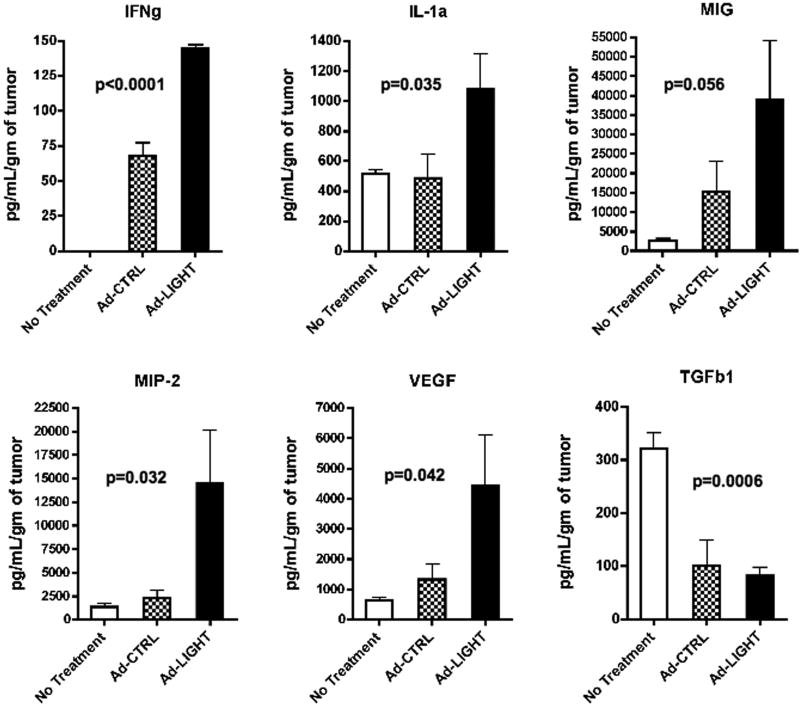
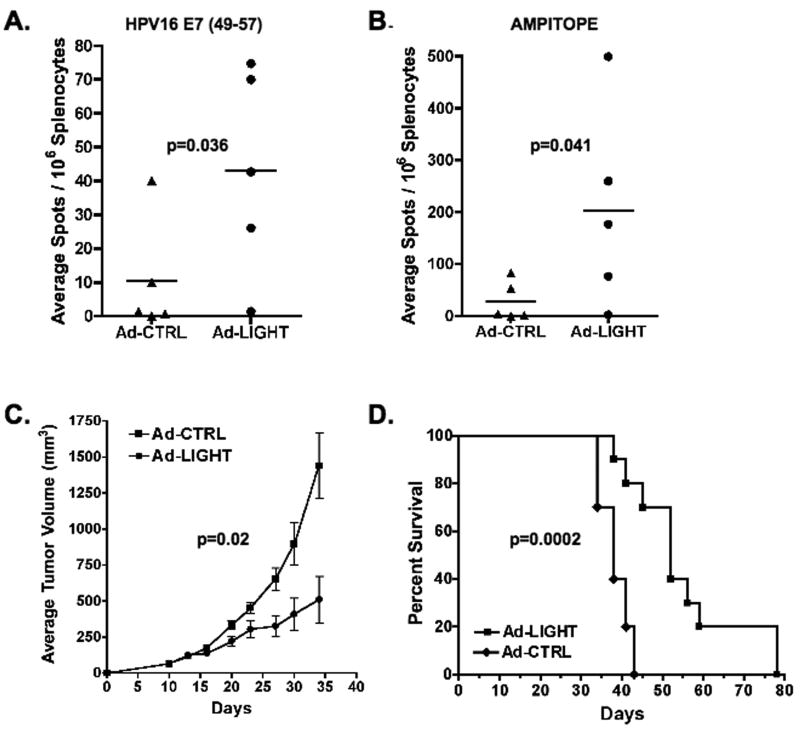
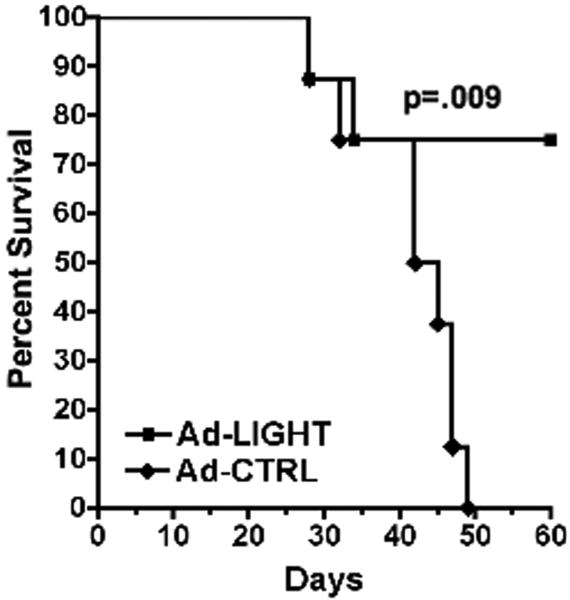
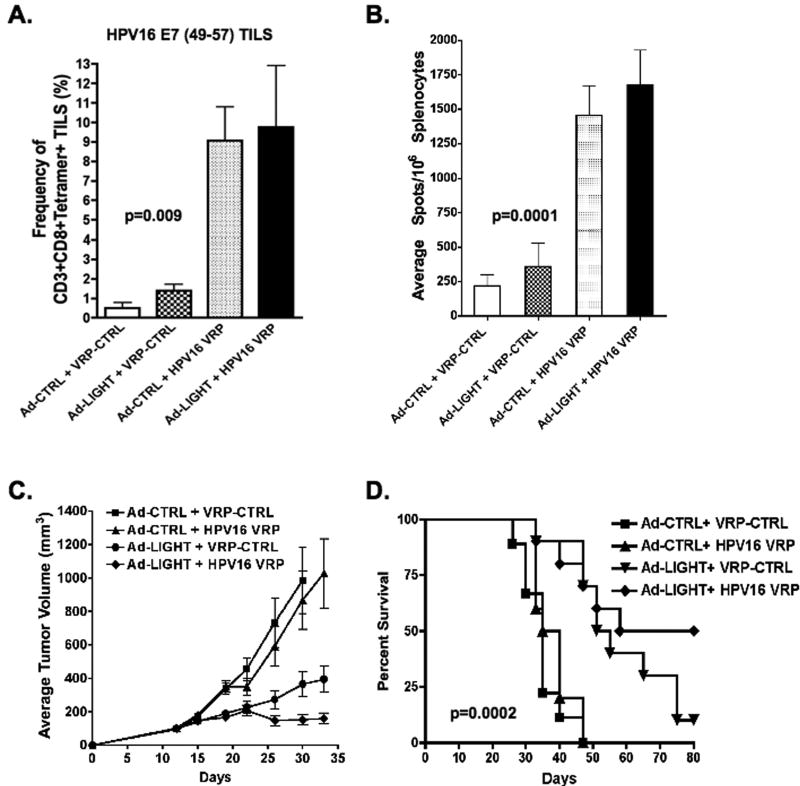
LIGHT, a ligand for the lymphotoxin-beta receptor, establishes lymphoid-like tissues inside tumor sites and recruits naïve T cells into the tumor. However, whether these infiltrating T cells are specific for tumor antigens is not known. We hypothesized that therapy with LIGHT can expand functional tumor-specific CD8(+) T cells that can be boosted using HPV16E6E7-Venezuelan equine encephalitis virus replicon particles (HPV16-VRP) and that this combined therapy can eradicate human papillomavirus 16 (HPV16)-induced tumors. Our data show that forced expression of LIGHT in tumors results in an increase in expression of IFNgamma and chemoattractant cytokines such as interleukin-1a, MIG, and macrophage inflammatory protein-2 within the tumor and that this tumor microenvironment correlates with an increase in frequency of tumor-infiltrating CD8(+) T cells. Forced expression of LIGHT also results in the expansion of functional T cells that recognize multiple tumor antigens, including HPV16 E7, and these T cells prevent the outgrowth of tumors on secondary challenge. Subsequent boosting of E7-specific T cells by vaccination with HPV16-VRP significantly increases their frequency in both the periphery and the tumor and leads to the eradication of large well-established tumors, for which either treatment alone is not successful. These data establish the safety of Ad-LIGHT as a therapeutic intervention in preclinical studies and suggest that patients with HPV16(+) tumors may benefit from combined immunotherapy with LIGHT and antigen-specific vaccination.
(c)2010 AACR.
Figures
References
-
- Nasiell K, Roger V, Nasiell M. Behavior of mild cervical dysplasia during long-term follow-up. Obstet Gynecol. 1986;67:665–9. - PubMed
-
- Benton C, Shyahidullah H, Hunter JAM. Human papillomavirus in the immunocompromised. Papillomavirus Rep. 1999;3:23–6.
-
- Laga M, Icenogle JP, Marsella R, Manoka AT, Nzila N, Ryder RW, et al. Genital papillomavirus infection and cervical dysplasia--opportunistic complications of HIV infection. IntJCancer. 1992;50:45–8. - PubMed
-
- Maiman M, Fruchter RG, Serur E, Remy JC, Feuer G, Boyce J. Human immunodeficiency virus infection and cervical neoplasia. GynecolOncol. 1990;38:377–82. - PubMed
-
- Rudlinger R, Smith IW, Bunney MH, Hunter JA. Human papillomavirus infections in a group of renal transplant recipients. BrJDermatol. 1986;115:681–92. - PubMed
Publication types
MeSH terms
Substances
Grants and funding
LinkOut - more resources
Full Text Sources
Other Literature Sources
Research Materials