Using psychometric techniques to improve the Balance Evaluation Systems Test: the mini-BESTest
- PMID: 20461334
- PMCID: PMC3228839
- DOI: 10.2340/16501977-0537
Using psychometric techniques to improve the Balance Evaluation Systems Test: the mini-BESTest
Abstract
Objective: To improve, with the aid of psychometric analysis, the Balance Evaluation Systems Test (BESTest), a tool designed to analyse several postural control systems that may contribute to poor functional balance in adults.
Methods: Performance of the BESTest was examined in a convenience sample of 115 consecutive adult patients with diverse neurological diagnoses and disease severity, referred to rehabilitation for balance disorders. Factor (both explorative and confirmatory) and Rasch analysis were used to process the data in order to produce a new, reduced and coherent balance measurement tool.
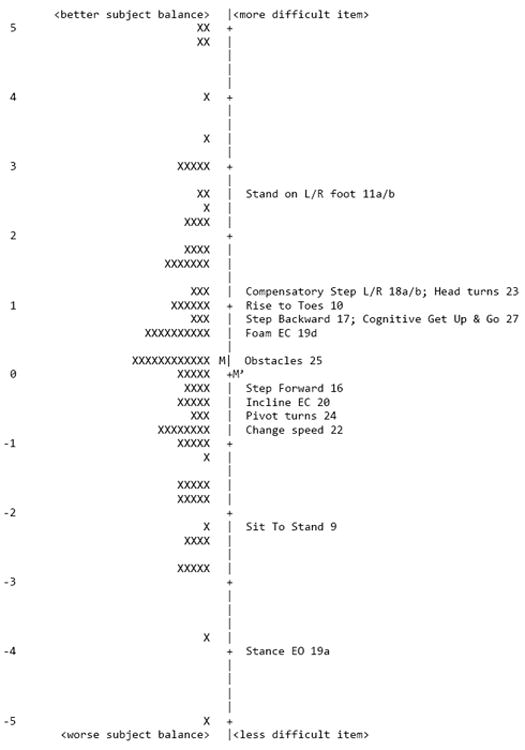
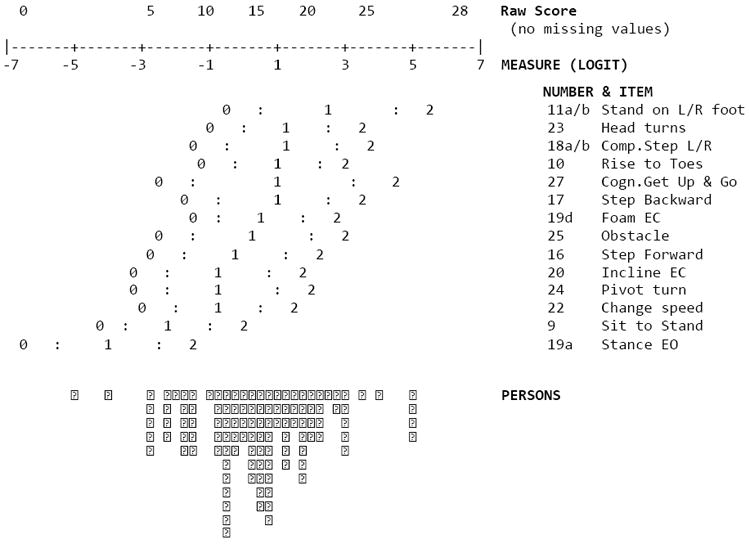
Results: Factor analysis selected 24 out of the 36 original BESTest items likely to represent the unidimensional construct of "dynamic balance". Rasch analysis was then used to: (i) improve the rating categories, and (ii) delete 10 items (misfitting or showing local dependency). The model consisting of the remaining 14 tasks was verified with confirmatory factor analysis to meet the stringent requirements of modern measurement.
Conclusion: The new 14-item scale (dubbed mini-BESTest) focuses on dynamic balance, can be conducted in 10-15 min, and contains items belonging evenly to 4 of the 6 sections from the original BESTest. Further studies are needed to confirm the usefulness of the mini-BESTest in clinical settings.
Figures
References
-
- Thurman DJ, Stevens JA, Rao JK. Practice parameter: Assessing patients in a neurology practice for risk of falls (an evidence-based review): report of the Quality Standards Subcommittee of the American Academy of Neurology. Neurology. 2008;70:473–479. - PubMed
-
- Gillespie LD, Robertson MC, Gillespie WJ, Lamb SE, Gates S, Cumming RG, et al. Interventions for preventing falls in older people living in the community. Cochrane Database Syst Rev. 2009 Apr 15;2:CD007146. - PubMed
-
- Horak FB. Clinical assessment of balance disorders. Gait Posture. 1997;6:76–84.
-
- Horak FB, Macpherson JM. Postural orientation and equilibrium. In: Shepard J, Rowell L, editors. Regulation and Integration of Multiple Systems Handbook of Physiology: Section 12, Exercise. New York: Oxford University Press; 1996. pp. 255–292.
-
- Horak FB. Postural orientation and equilibrium: what do we need to know about neural control of balance to prevent falls? Age Ageing. 2006;35:ii7–ii11. - PubMed
Publication types
MeSH terms
Grants and funding
LinkOut - more resources
Full Text Sources
Other Literature Sources
Medical