Protection of pancreatic beta-cells by group VIA phospholipase A(2)-mediated repair of mitochondrial membrane peroxidation
- PMID: 20463052
- PMCID: PMC2903934
- DOI: 10.1210/en.2010-0016
Protection of pancreatic beta-cells by group VIA phospholipase A(2)-mediated repair of mitochondrial membrane peroxidation
Erratum in
- Endocrinology. 2011 Jan;152(1):336
Abstract
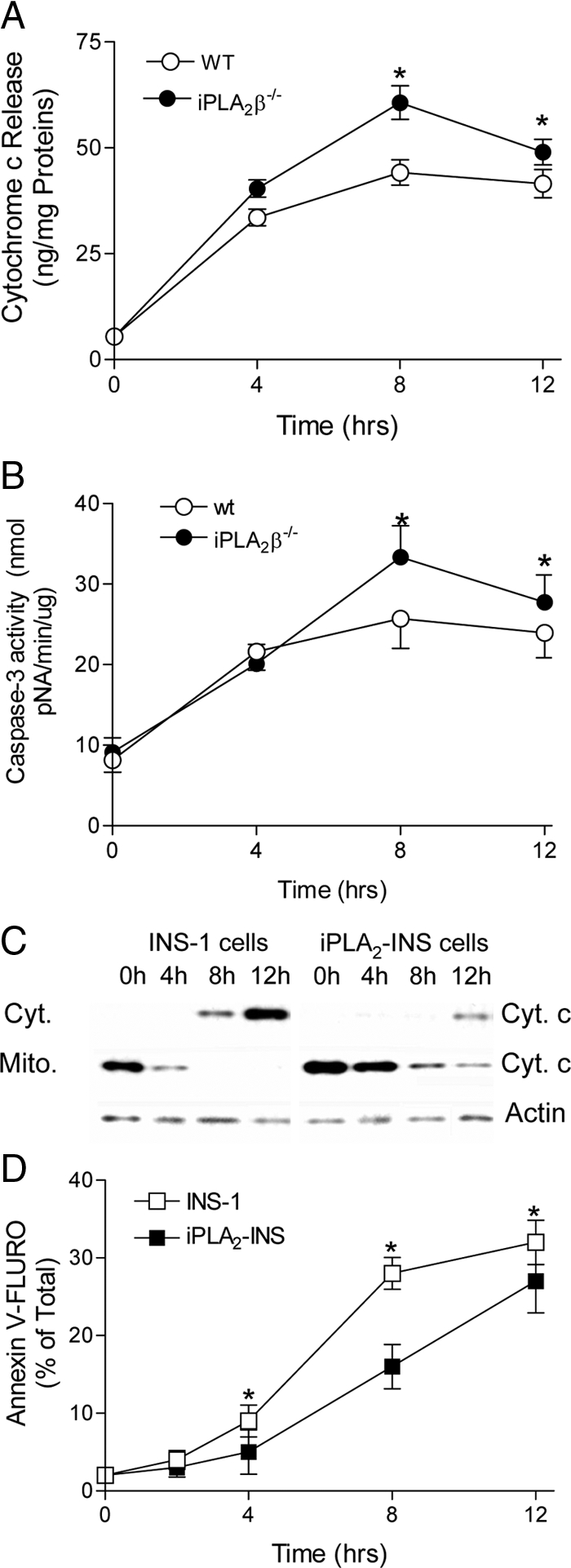
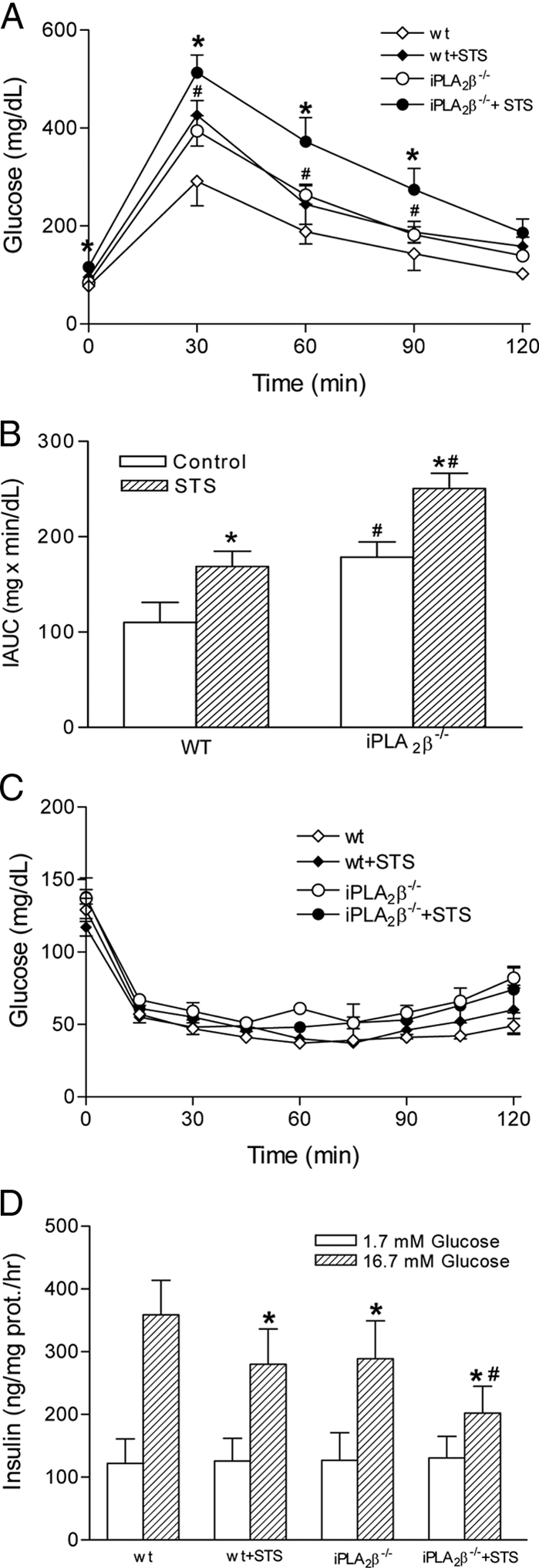
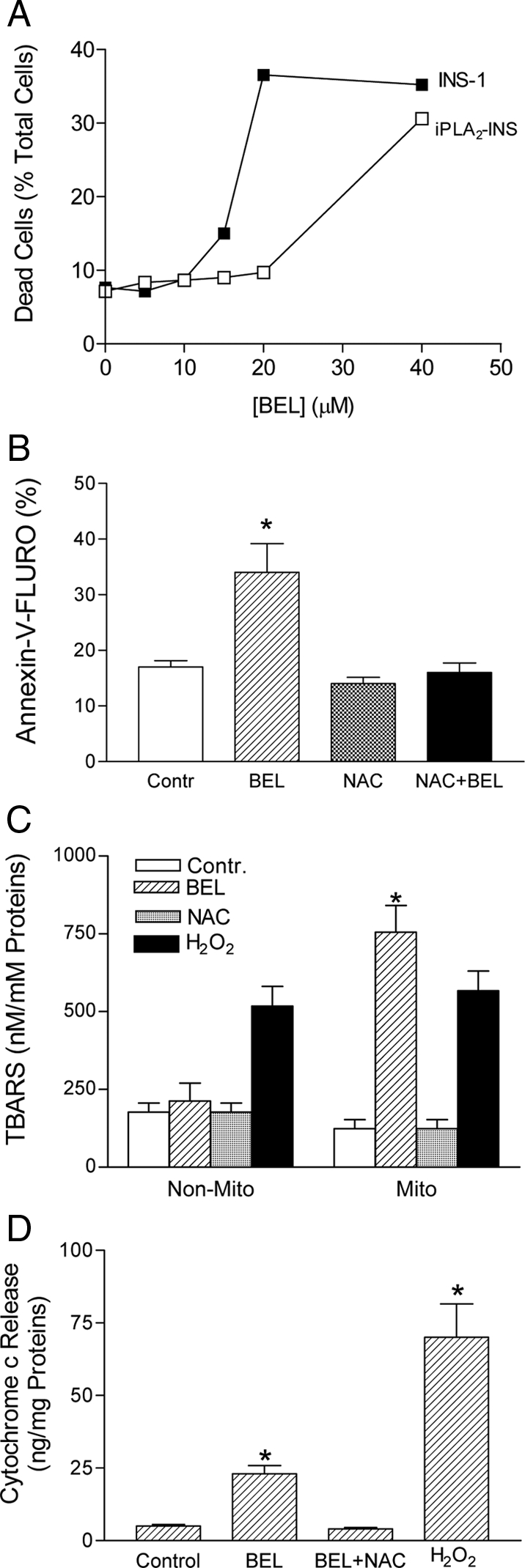
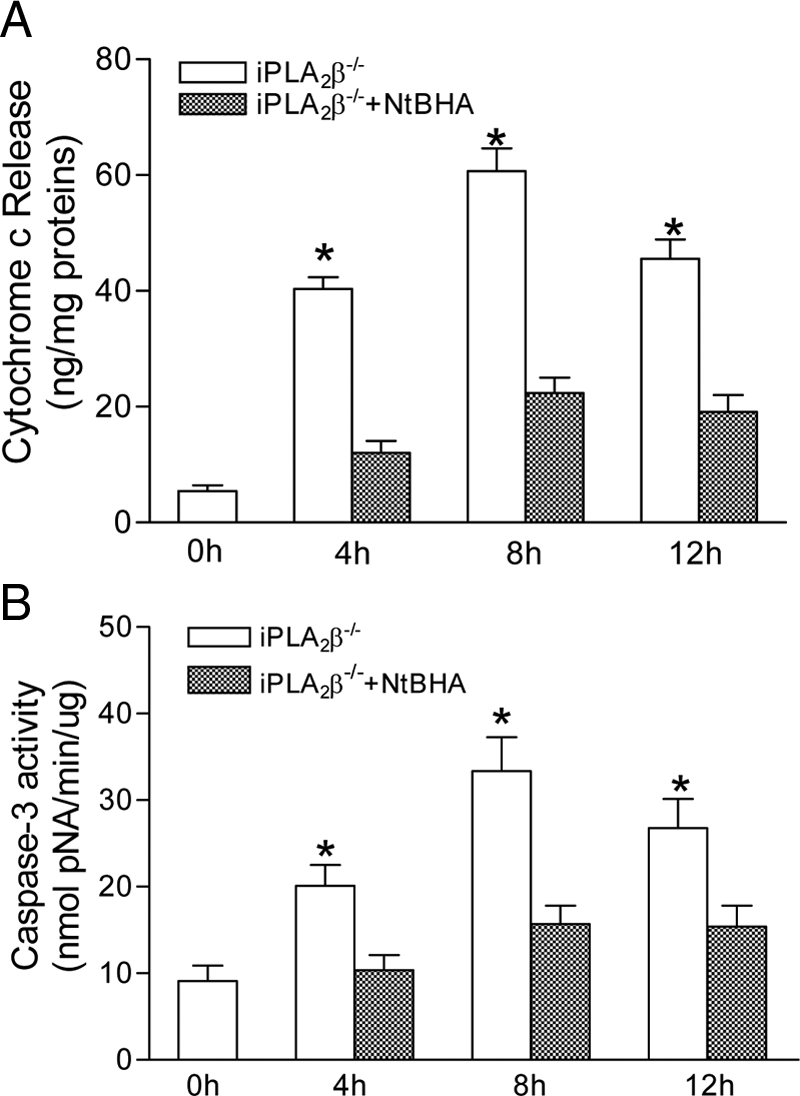
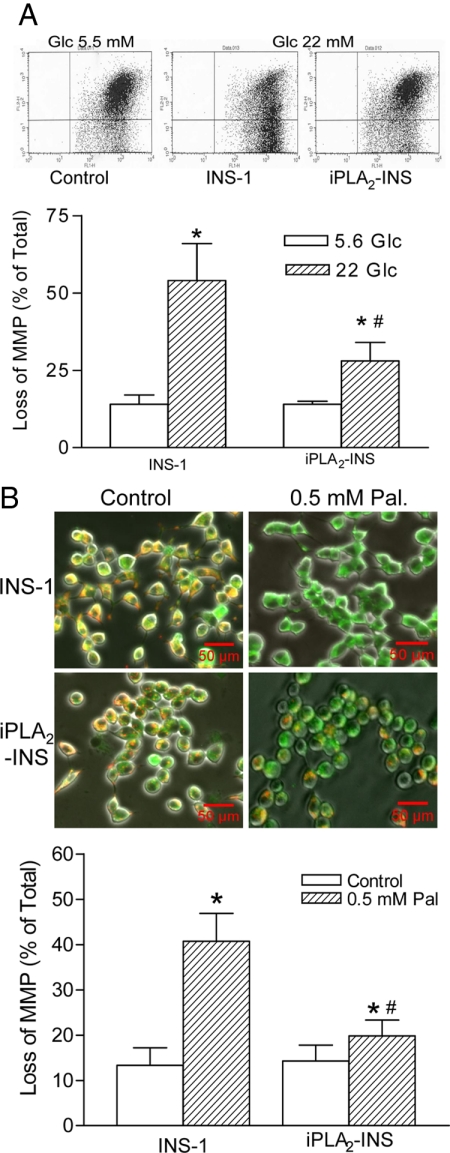
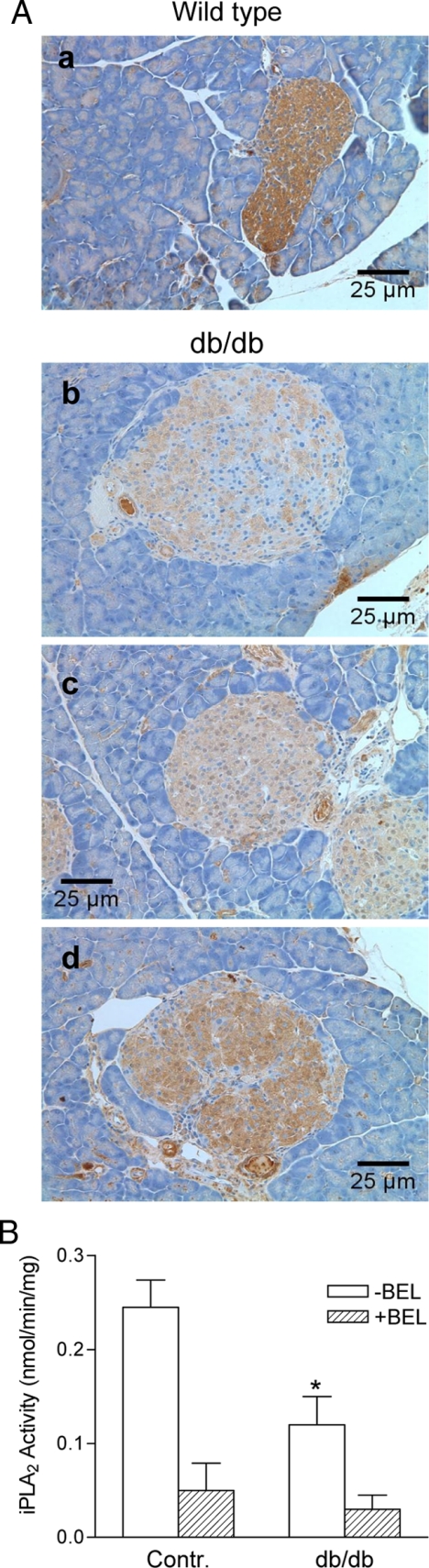
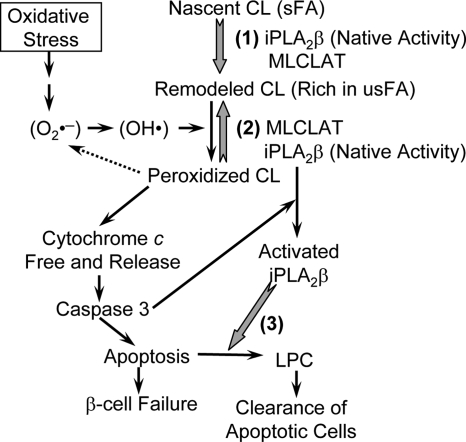
Mitochondrial production of reactive oxygen species and oxidation of cardiolipin are key events in initiating apoptosis. We reported that group VIA Ca(2+)-independent phospholipase A(2) (iPLA(2)beta) localizes in and protects beta-cell mitochondria from oxidative damage during staurosporine-induced apoptosis. Here, we used iPLA(2)beta-null (iPLA(2)beta(-/-)) mice to investigate the role of iPLA(2)beta in the repair of mitochondrial membranes. We show that islets isolated from iPLA(2)beta(-/-) mice are more sensitive to staurosporine-induced apoptosis than those from wild-type littermates and that 2 wk of daily ip administration of staurosporine to iPLA(2)beta(-/-) mice impairs both the animals' glucose tolerance and glucose-stimulated insulin secretion by their pancreatic islets. Moreover, the iPLA(2)beta inhibitor bromoenol lactone caused mitochondrial membrane peroxidation and cytochrome c release, and these effects were reversed by N-acetyl cysteine. The mitochondrial antioxidant N-t-butyl hydroxylamine blocked staurosporine-induced cytochrome c release and caspase-3 activation in iPLA(2)beta(-/-) islets. Furthermore, the collapse of mitochondrial membrane potential in INS-1 insulinoma cells caused by high glucose and fatty acid levels was attenuated by overexpressing iPLA(2)beta. Interestingly, iPLA(2)beta was expressed only at low levels in islet beta-cells from obesity- and diabetes-prone db/db mice. These findings support the hypothesis that iPLA(2)beta is important in repairing oxidized mitochondrial membrane components (e.g. cardiolipin) and that this prevents cytochrome c release in response to stimuli that otherwise induce apoptosis. The low iPLA(2)beta expression level in db/db mouse beta-cells may render them vulnerable to injury by reactive oxygen species.
Figures
References
-
- Mathis D, Vence L, Benoist C 2001 β-Cell death during progression to diabetes. Nature 414:792–798 - PubMed
-
- Butler AE, Janson J, Bonner-Weir S, Ritzel R, Rizza RA, Butler PC 2003 β-Cell deficit and increased β-cell apoptosis in humans with type 2 diabetes. Diabetes 52:102–110 - PubMed
-
- Hockenbery DM, Oltvai ZN, Yin XM, Milliman CL, Korsmeyer SJ 1993 Bcl-2 functions in an antioxidant pathway to prevent apoptosis. Cell 75:241–251 - PubMed
-
- Kagan VE, Tyurin VA, Jiang J, Tyurina YY, Ritov VB, Amoscato AA, Osipov AN, Belikova NA, Kapralov AA, Kini V, Vlasova II, Zhao Q, Zou M, Di P, Svistunenko DA, Kurnikov IV, Borisenko GG 2005 Cytochrome c acts as a cardiolipin oxygenase required for release of proapoptotic factors. Nat Chem Biol 1:223–232 - PubMed
Publication types
MeSH terms
Substances
Grants and funding
LinkOut - more resources
Full Text Sources
Molecular Biology Databases
Research Materials
Miscellaneous