


Hip fracture epidemiological trends, outcomes, and risk factors, 1970-2009
- PMID: 20463818
- PMCID: PMC2866546
Hip fracture epidemiological trends, outcomes, and risk factors, 1970-2009
Abstract
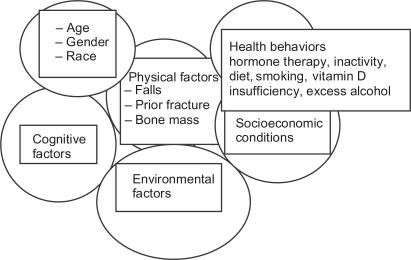
Hip fractures - which commonly lead to premature death, high rates of morbidity, or reduced life quality - have been the target of a voluminous amount of research for many years. But has the lifetime risk of incurring a hip fracture decreased sufficiently over the last decade or are high numbers of incident cases continuing to prevail, despite a large body of knowledge and a variety of contemporary preventive and refined surgical approaches? This review examines the extensive hip fracture literature published in the English language between 1980 and 2009 concerning hip fracture prevalence trends, and injury mechanisms. It also highlights the contemporary data concerning the personal and economic impact of the injury, plus potentially remediable risk factors underpinning the injury and ensuing disability. The goal was to examine if there is a continuing need to elucidate upon intervention points that might minimize the risk of incurring a hip fracture and its attendant consequences. Based on this information, it appears hip fractures remain a serious global health issue, despite some declines in the incidence rate of hip fractures among some women. Research also shows widespread regional, ethnic and diagnostic variations in hip fracture incidence trends. Key determinants of hip fractures include age, osteoporosis, and falls, but some determinants such as socioeconomic status, have not been well explored. It is concluded that while more research is needed, well-designed primary, secondary, and tertiary preventive efforts applied in both affluent as well as developing countries are desirable to reduce the present and future burden associated with hip fracture injuries. In this context, and in recognition of the considerable variation in manifestation and distribution, as well as risk factors underpinning hip fractures, well-crafted comprehensive, rather than single solutions, are strongly indicated in early rather than late adulthood.
Keywords: disability; epidemiology; hip fractures; injury; prevention; risk factors.
Figures
References
-
- Leslie WD, O’Donnell S, Jean S, et al. Osteoporosis Surveillance Expert Working Group Trends in hip fracture rates in Canada. JAMA. 2009;302:883–889. - PubMed
-
- Nieves JW, Bilezikian JP, Lane JM, et al. Fragility fractures of the hip and femur: incidence and patient characteristics Osteoporos Int 2009May30[Epub ahead of print]. - PubMed
-
- Haleem S, Lutchman L, Mayahi R, Grice JE, Parker MJ. Mortality following hip fracture: trends and geographical variations over the last 40 years. Injury. 2008;39:1157–1163. - PubMed
-
- Guilley B, Chevally T, Herrmann F, et al. Reversal of the hip fracture secular trend is related to a decrease in the incidence in institution dwelling elderly women. Osteoporos Int. 2008;19:1741–1747. - PubMed
LinkOut - more resources
Full Text Sources
