


N-methyl-d-aspartic acid receptors are altered by stress and alcohol in Wistar-Kyoto rat brain
- PMID: 20466039
- PMCID: PMC2900440
- DOI: 10.1016/j.neuroscience.2010.05.003
N-methyl-d-aspartic acid receptors are altered by stress and alcohol in Wistar-Kyoto rat brain
Abstract
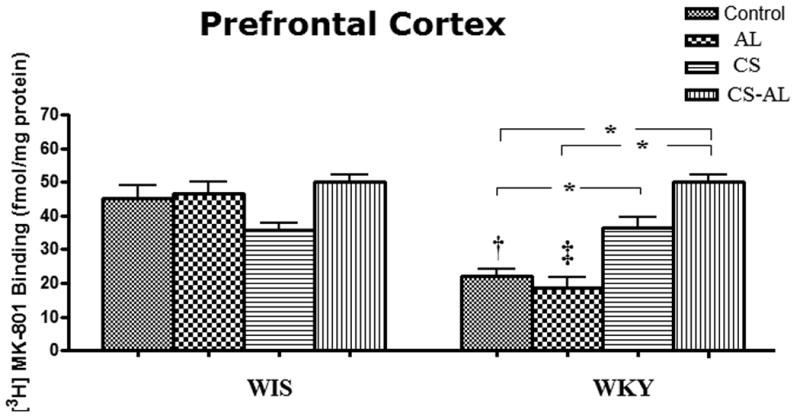
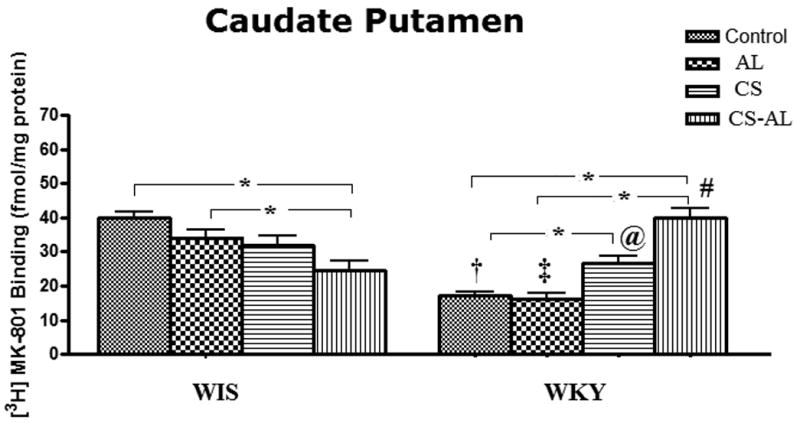
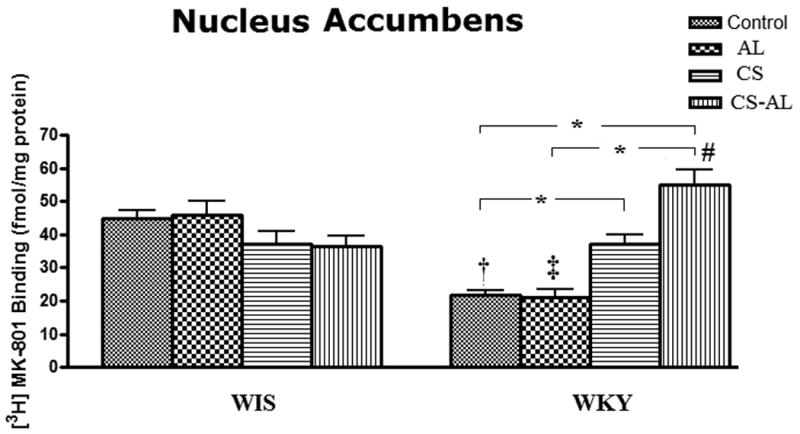
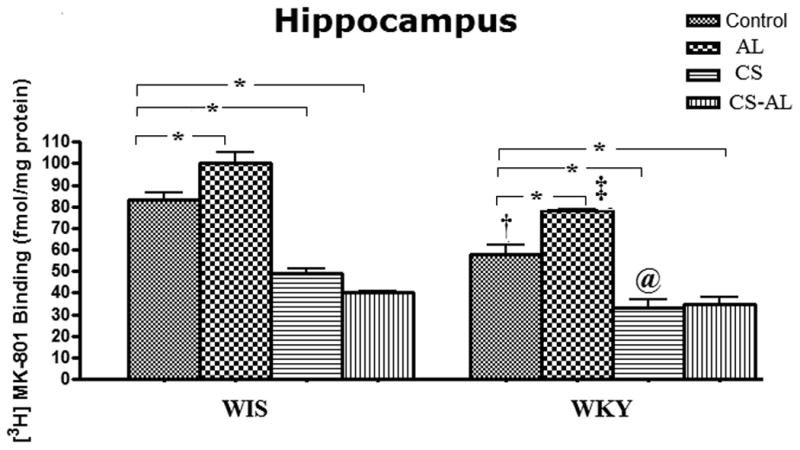
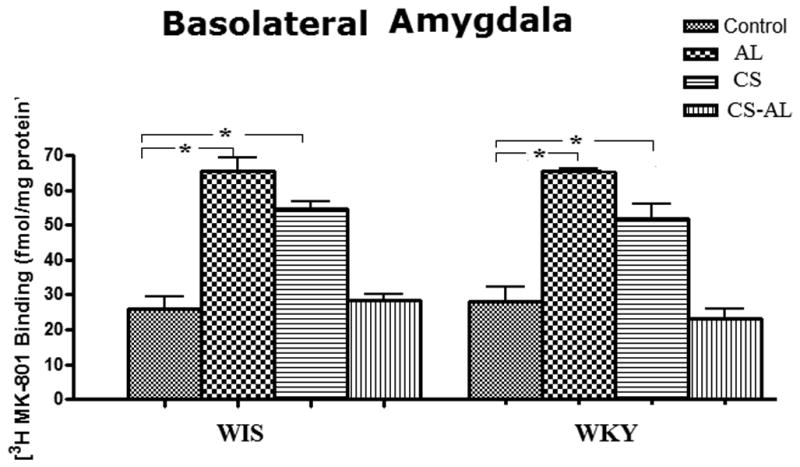
Previous studies have shown that the Wistar-Kyoto (WKY) rat strain is more sensitive to stressors and consumes significant quantities of alcohol under basal as well as stressful conditions when compared to other strains. Given that the glutamate neurotransmitter system has been implicated in depression and addiction, the goals of the present study were to investigate the effects of stress and stress-alcohol interactions on N-methyl-d-aspartate (NMDA) receptors in the rat brain. Thus this study measured the binding of [(3)H] MK-801 to NMDA receptors in the prefrontal cortex (PFC), caudate putamen (CPu), nucleus accumbens (NAc), hippocampus (HIP) and basolateral amygdala (BLA) in WKY rats in comparison to the Wistar (WIS) rat strain. Our results suggested that while voluntary alcohol consumption did not alter NMDA receptors in the PFC, CPu or NAc in either rat strain, it increased NMDA receptors in the HIP and BLA in both strains. In contrast, chronic stress increased NMDA receptors in the PFC, CPu, NAc in WKY rats but not in WIS rats. Chronic stress also decreased NMDA receptors in the HIP and increased NMDA receptors in the BLA in both strains. Alcohol co-treatment with stress increased NMDA receptors in the PFC, CPu and NAc in WKY rats but not in WIS rats. Interestingly, while alcohol co-treatment did not reverse stress induced decreases in NMDA receptors in the HIP, it reduced the binding of NMDA receptors in the BLA to control levels in both strains. Thus it appears that NMDA receptors in the PFC, CPu and NAc may be more sensitive to the effects of stress and could be implicated in the stress-induced alcohol consumption behavior seen in WKY rats. In contrast, NMDA receptors in the HIP and BLA may reflect an adaptive response and may not be responsible for the stress susceptible phenotype of the WKY rat strain.
Copyright (c) 2010 IBRO. Published by Elsevier Ltd. All rights reserved.
Figures
References
-
- Alele PE, Devaud LL. Differential adaptations in GABAergic and glutamatergic systems during ethanol withdrawal in male and female rats. Alcohol Clin Exp Res. 2005;29:1027–1034. - PubMed
-
- Bagley J, Moghaddam B. Temporal dynamics of glutamate efflux in the prefrontal cortex and in the hippocampus following repeated stress: effects of pretreatment with saline or diazepam. Neuroscience. 1997;77:65–73. - PubMed
-
- Banks MI, White JA, Pearce RA. Interactions between distinct GABA (A) circuits in hippocampus. Neuron. 2000;25:449–57. - PubMed
-
- Brown SA, Vik PW, Patterson TL, Grant I, Schuckit MA. Stress, vulnerability and adult alcohol relapse. J Stud Alcohol. 1995;56:538–545. - PubMed
Publication types
MeSH terms
Substances
Grants and funding
LinkOut - more resources
Full Text Sources
Medical
Miscellaneous
