Case Reports
. 2010 Jun;20(6):397-402.
doi: 10.1016/j.nmd.2010.04.004. Epub 2010 May 14.

Neutral lipid storage disease with subclinical myopathy due to a retrotransposal insertion in the PNPLA2 gene

Affiliations
Case Reports

Neutral lipid storage disease with subclinical myopathy due to a retrotransposal insertion in the PNPLA2 gene

Hasan O Akman et al. Neuromuscul Disord. 2010 Jun.

Abstract

An 18-year-old girl referred to a rheumatologist with malar flush and Gottran papules was found to have a markedly elevated serum CK. She was a good student and an avid ballet dancer. A muscle biopsy showed massive triglyceride storage, which was also found in peripheral blood granulocytes (Jordan anomaly) and cultured skin fibroblasts. Assessment using computerized dynamometry and cycle ergometry showed normal strength and muscle energetics, but proton spectroscopy revealed severe triglyceride accumulation in both skeletal and cardiac muscle. Sequencing of PNPLA2, the gene responsible for neutral lipid storage disease with myopathy (NLSDM), revealed a retrotransposal insertion of about 1.8kb in exon 3 that abrogates transcription of PNPLA2. The sequences of CGI-58, the gene responsible for Chanarin-Dorfman syndrome (CDS), another multisystem triglyceride storage disease, and of two genes encoding lipid droplets-associated proteins, perilipin A and adipophilin, were normal. This case shows that NLSDM can be a transposon-associated disease and that massive lipid storage in muscle can present as asymptomatic hyperCKemia.


Figures
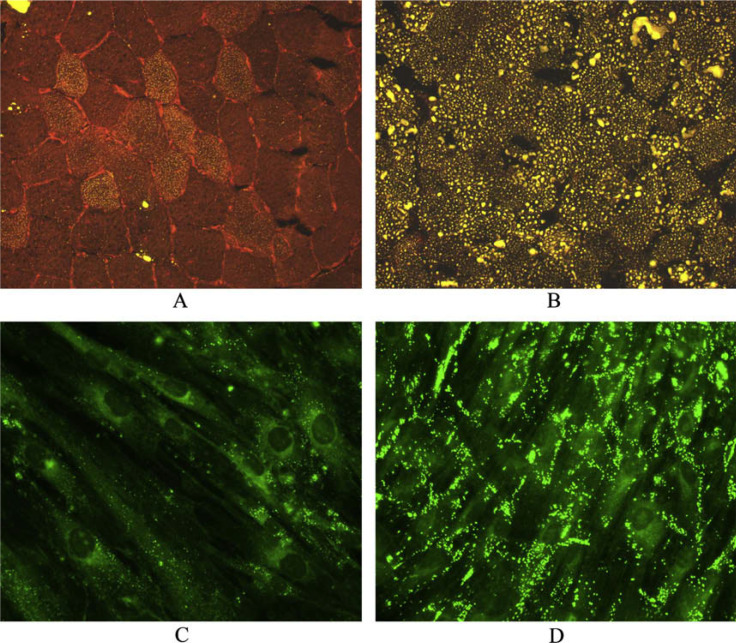
Fig. 1.
Fig. 1.
Nile Red stain of muscle cryosections (A and B) and of confluent cultured skin fibroblasts (C and D) showing the marked increase in lipid droplets in the patient’s muscle (B) and fibroblasts (D) than in control tissues (A and C).
Fig. 2.
Fig. 2.
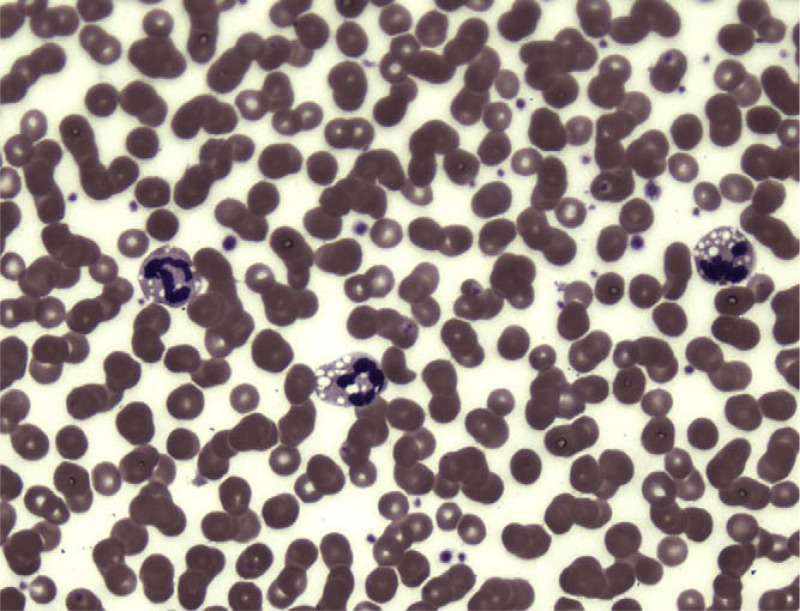
Vacuolization of granulocytes (Jordan anomaly) in a peripheral blood smear from the patient.
Fig. 3.
Fig. 3.
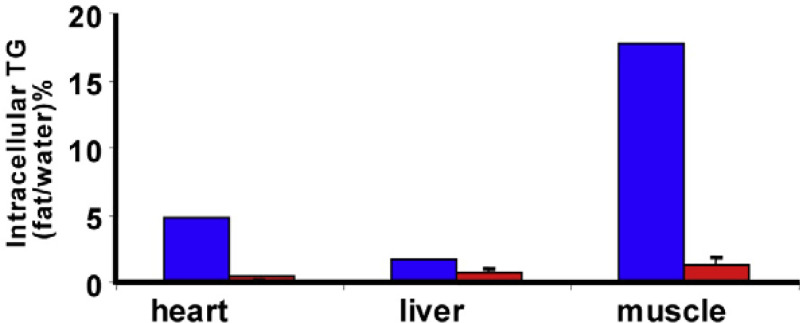
Intracellular triglyceride measured by proton spectroscopy in myocardium, skeletal muscle and liver from the patient and three controls (the bars indicate SD). The values in the patient were far above average values for morbidly obese adults.
Fig. 4.
Fig. 4.
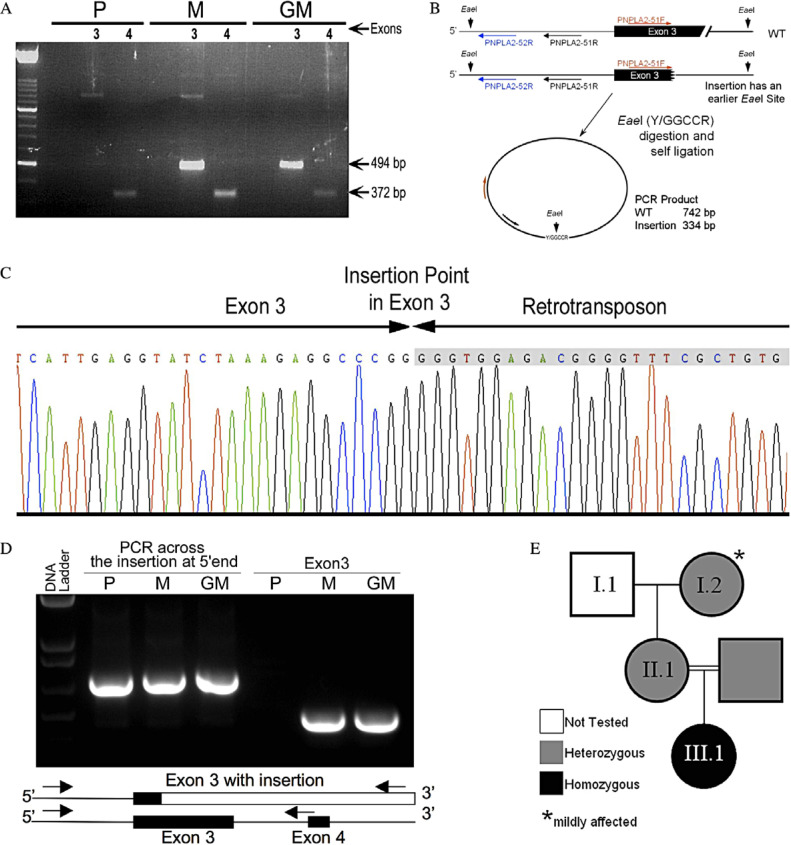
Molecular analysis of the PNPLA2 gene. (A) PCR amplification of exons 3 and 4 of the PNPLA2 gene from the genomic DNA of the patient (P), her mother (M), and grandmother (GM). (B) Diagram of the inverse PCR reaction strategy. (C) Electropherogram of inverse PCR products shows partial sequences of PNPLA2 exon 3 and of the 5′-sequence of the retrotransposon. (D) Agarose gel of PCR fragments showing amplified fragments across the insertion point (from the 5′ end of exon 3 to the transposon) and exon 3 only. The diagram below shows the map of the locus and the locations of the PCR primers. (E) Pedigree of the family based on molecular data.
Fig. 5.
Fig. 5.
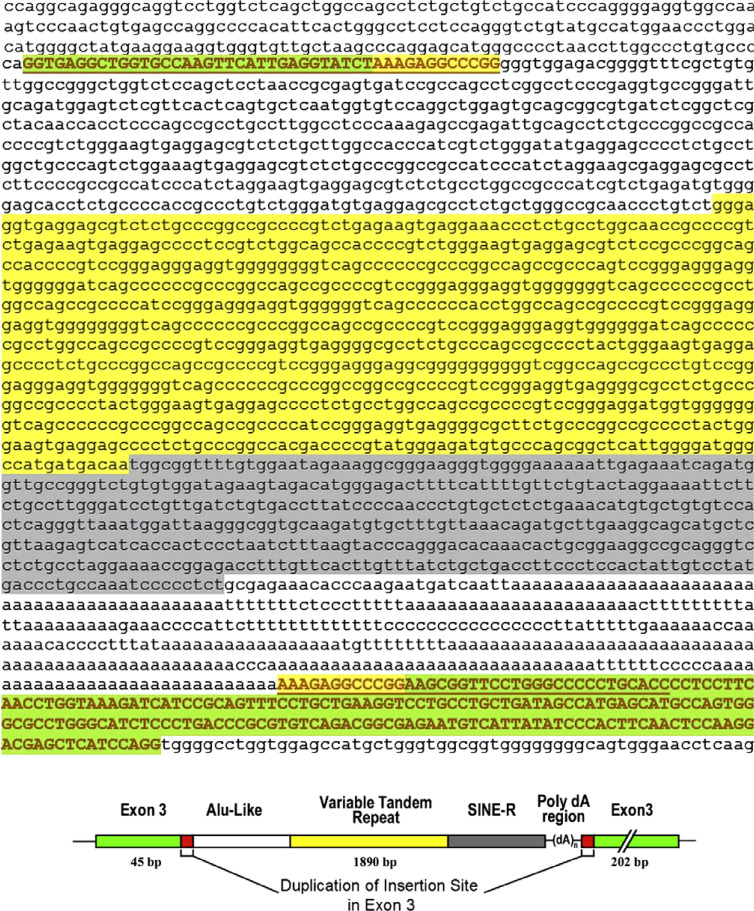
Sequence and schematic diagram of the retrotransposon in exon 3 of the PNPLA2 gene. This element was obtained by PCR amplification of the genomic DNA insert. Sequencing revealed the interruption of exon 3 by a 1890-bp retrotransposon element. This fragment contains a 517-bp Alu-like sequence (white bar), an 868-bp sequence of 78% GC-rich variable tandem repeats (yellow bar), and a 431-bp sequence of short interspersed nucleotide elements (gray bar) following a 44-bp poly dA region, all bracketed by the duplicated insertion site (red bar).

References

    1. Tein I Carnitine transport: pathophysiology and metabolism of known molecular defects. J Inher Metab Dis 2003;26:147–69. - PubMed
    1. Horvath R, Scneiderat P, Schoser BGH, et al. Coenzyme Q10 deficiency and isolated myopathy. Neurology 2006;66:253–5. - PubMed
    1. Zimmermann R, Strauss JG, Haemmerle G, et al. Fat mobilization in adipose tissue is promoted by adipose triglyceride lipase. Science 2004;306:1383–6. - PubMed
    1. Lefevre C, Jobard F, Caux F, et al. Mutations in CGI-58, the gene encoding a new protein of the esterase/lipase/thioesterase subfamily, in Chanarin–Dorfman syndrome. Am J Hum Genet 2001;69:1002–12. - PMC - PubMed
    1. Gempel K, Topaloglu H, Talim B, et al. The myopathic form of coenzyme Q10 deficiency is caused by mutations in the electron-transferring-flavoprotein dehydrogenase (ETFDH) gene. Brain 2007;130:2037–44. - PMC - PubMed

Publication types

MeSH terms