


Effects of birth trauma and estrogen on urethral elastic fibers and elastin expression
- PMID: 20472273
- PMCID: PMC3547610
- DOI: 10.1016/j.urology.2010.02.055
Effects of birth trauma and estrogen on urethral elastic fibers and elastin expression
Abstract
Objectives: To investigate the effects of birth trauma and estrogen on urethral elastic fibers and elastin expression.
Methods: Pregnant rats were subjected to sham operation (Delivery-only), DVDO (delivery, vaginal distension and ovariectomy), or DVDO + E₂ (estrogen). At 2, 4, 8, or 12 weeks, their urethras were harvested for elastic fiber staining and reverse transcription-polymerase chain reaction analysis. Urethral cells were treated with transforming growth factor- β1 (TGFβ1) and/or estrogen and analyzed for elastin mRNA expression. Urethral cells were also examined for the activities of Smad1- and Smad3/4-responsive elements in response to TGFβ1 and estrogen.
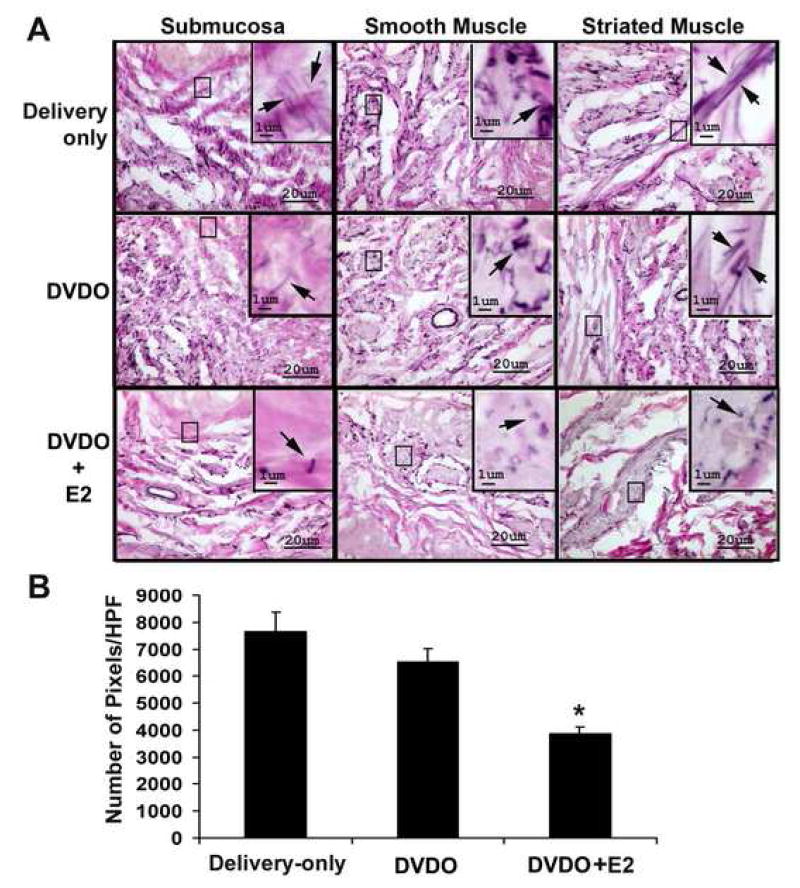
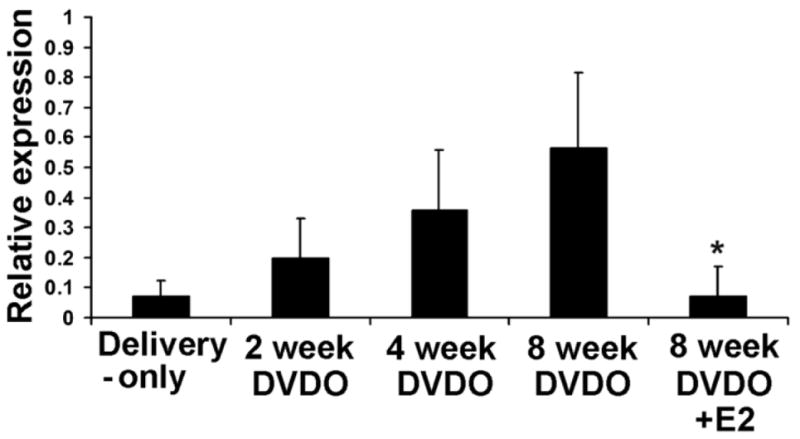
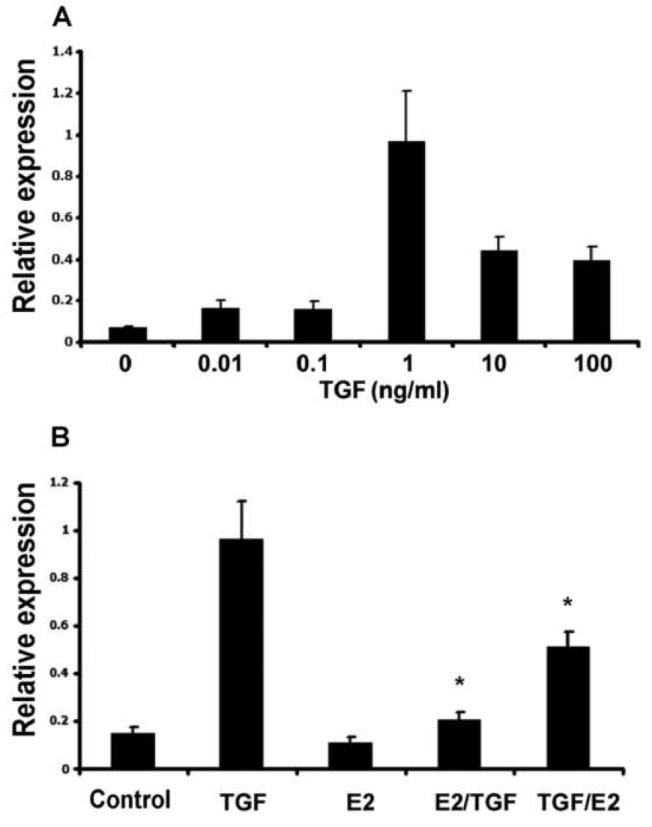
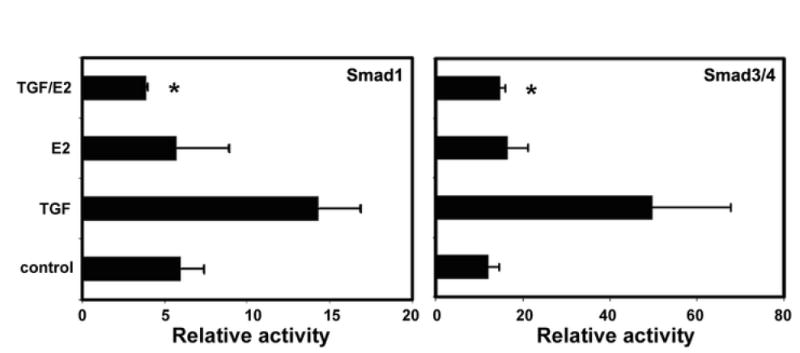
Results: At 8 weeks post-treatment, the urethras of DVDO rats had fewer and shorter elastic fibers when compared with Delivery-only rats, and those of DVDO + E₂ rats had fewer and shorter elastic fibers when compared with DVDO rats. Elastin mRNA was expressed at low levels in Delivery-only rats and at increasingly higher levels in DVDO rats at 2, 4, and 8 weeks but at sharply lower levels in DVDO + E₂ rats when compared with DVDO rats at 8 weeks. Urethral cells expressed increasingly higher levels of elastin mRNA in response to increasing concentrations of TGFβ1 up to 1 ng/mL. At this TGFβ1 concentration, urethral cells expressed significantly lower levels of elastin mRNA when treated with estrogen before or after TGFβ1 treatment. Both Smad1- and Smad3/4-responsive elements were activated by TGFβ1 and such activation was suppressed by estrogen.
Conclusions: Birth trauma appears to activate urethral elastin expression via TGFβ1 signaling. Estrogen interferes with this signaling, resulting in improper assembly of elastic fibers.
Copyright © 2010 Elsevier Inc. All rights reserved.
Figures
References
-
- Norton P, Brubaker L. Urinary incontinence in women. Lancet. 2006;367:57–67. - PubMed
-
- Hu TW, Wagner TH, Bentkover JD, et al. Costs of urinary incontinence and overactive bladder in the United States: a comparative study. Urology. 2004;63:461–465. - PubMed
-
- Gibbs CF, Johnson TM, 2nd, Ouslander JG. Office management of geriatric urinary incontinence. Am J Med. 2007;120:211–220. - PubMed
-
- Dooley Y, Kenton K, Cao G, et al. Urinary Incontinence Prevalence: Results From the National Health and Nutrition Examination Survey. J Urol. 2007 - PubMed
-
- Cheater FM, Castleden CM. Epidemiology and classification of urinary incontinence. Baillieres Best Pract Res Clin Obstet Gynaecol. 2000;14:183–205. - PubMed
Publication types
MeSH terms
Substances
Grants and funding
LinkOut - more resources
Full Text Sources
