


Intersection between metabolic dysfunction, high fat diet consumption, and brain aging
- PMID: 20477933
- PMCID: PMC2910139
- DOI: 10.1111/j.1471-4159.2010.06803.x
Intersection between metabolic dysfunction, high fat diet consumption, and brain aging
Abstract
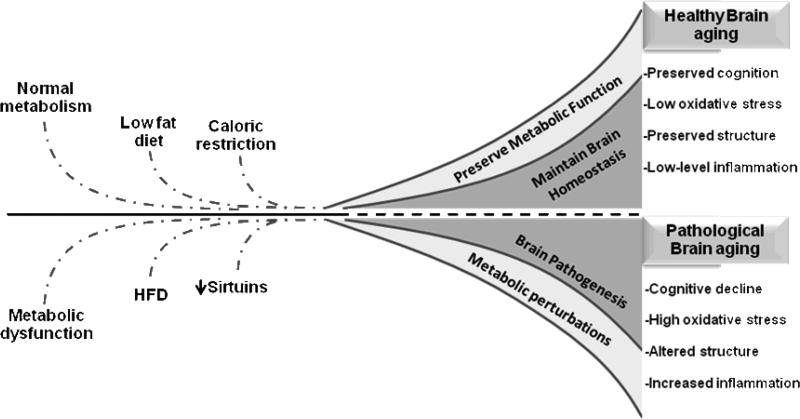
Deleterious neurochemical, structural, and behavioral alterations are a seemingly unavoidable aspect of brain aging. However, the basis for these alterations, as well as the basis for the tremendous variability in regards to the degree to which these aspects are altered in aging individuals, remains to be elucidated. An increasing number of individuals regularly consume a diet high in fat, with high-fat diet consumption known to be sufficient to promote metabolic dysfunction, although the links between high-fat diet consumption and aging are only now beginning to be elucidated. In this review we discuss the potential role for age-related metabolic disturbances serving as an important basis for deleterious perturbations in the aging brain. These data not only have important implications for understanding the basis of brain aging, but also may be important to the development of therapeutic interventions which promote successful brain aging.
Figures
References
-
- Adami A, Rossato G, Cerini R, Thijs VN, Pozzi-Mucelli R, Anzola GP, Del SM, Finocchi C, Meneghetti G, Zanferrari C. Right-to-left shunt does not increase white matter lesion load in migraine with aura patients. Neurology. 2008;71:101–107. - PubMed
-
- Aguero-Torres H, Kivipelto M, von SE. Rethinking the dementia diagnoses in a population-based study: what is Alzheimer's disease and what is vascular dementia?. A study from the kungsholmen project. Dement. Geriatr. Cogn Disord. 2006;22:244–249. - PubMed
-
- Ahima RS, Osei SY. Adipokines in obesity. Front Horm. Res. 2008;36:182–197. - PubMed
Publication types
MeSH terms
Substances
Grants and funding
LinkOut - more resources
Full Text Sources
Medical
