


Extranuclear estrogen receptors mediate the neuroprotective effects of estrogen in the rat hippocampus
- PMID: 20479872
- PMCID: PMC2866326
- DOI: 10.1371/journal.pone.0009851
Extranuclear estrogen receptors mediate the neuroprotective effects of estrogen in the rat hippocampus
Abstract
Background: 17beta-estradiol (E2) has been implicated to exert neuroprotective effects in the brain following cerebral ischemia. Classically, E2 is thought to exert its effects via genomic signaling mediated by interaction with nuclear estrogen receptors. However, the role and contribution of extranuclear estrogen receptors (ER) is unclear and was the subject of the current study.
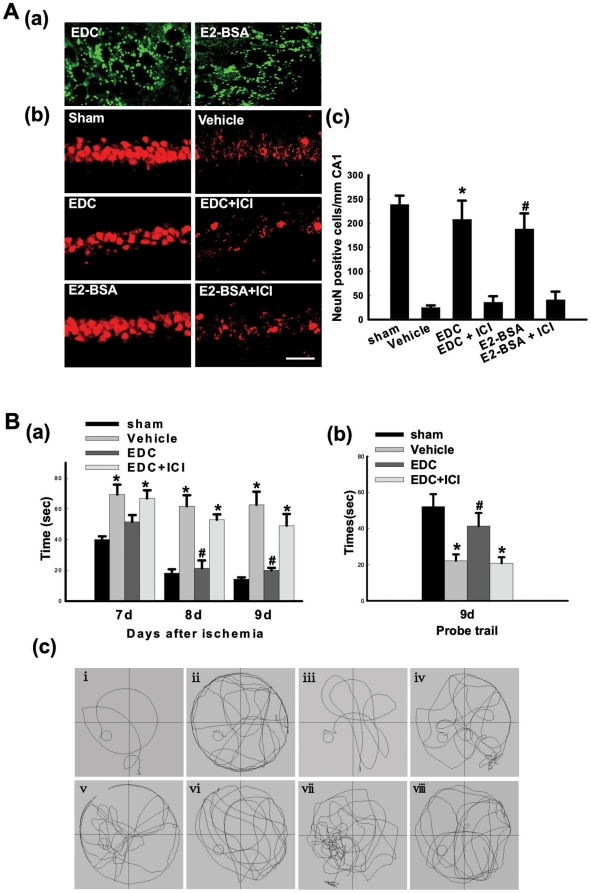
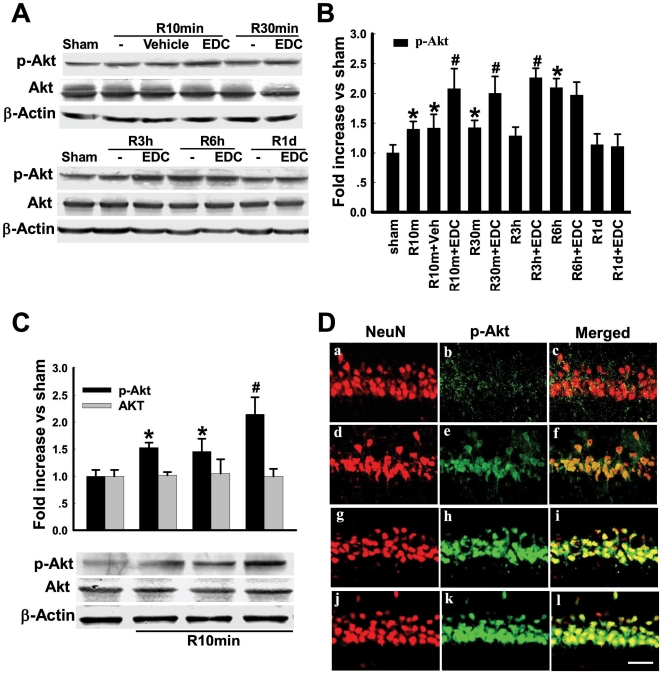
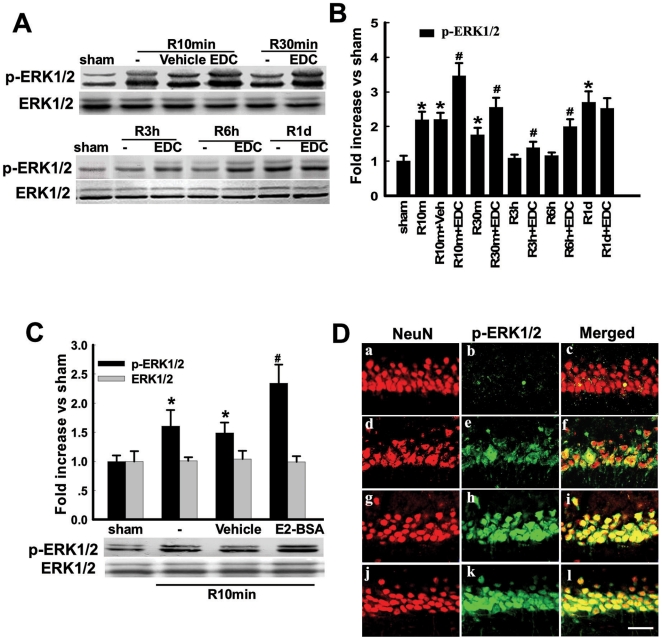
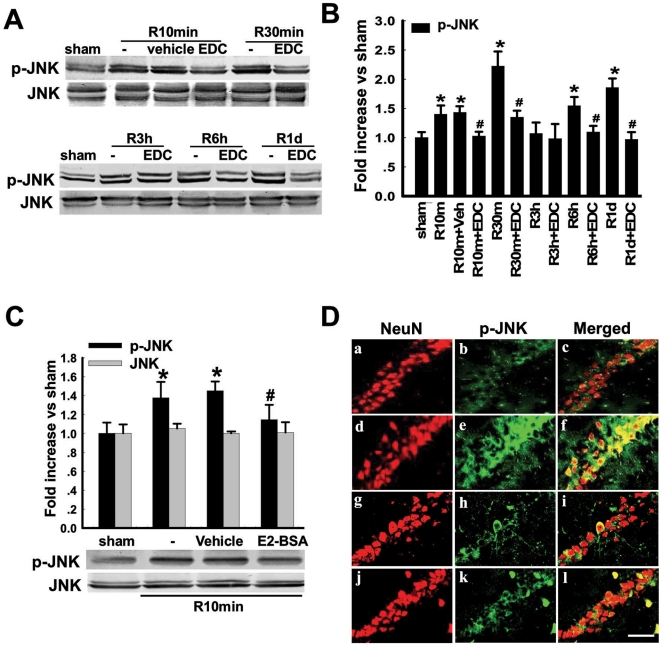
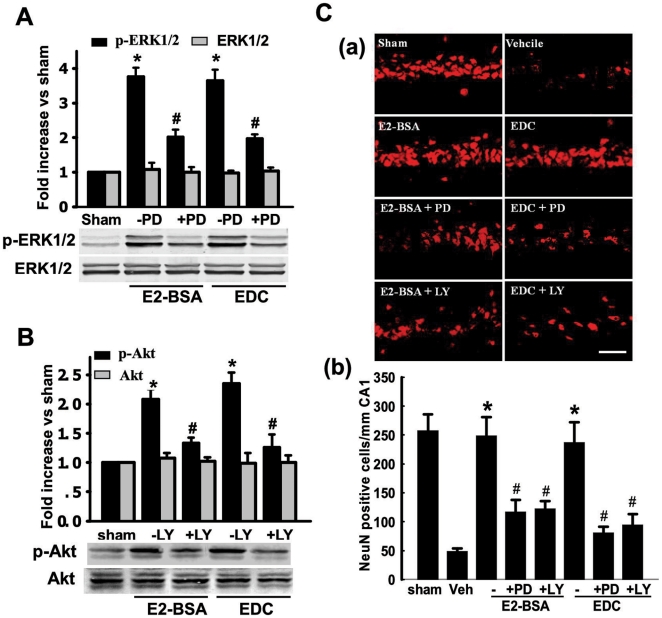
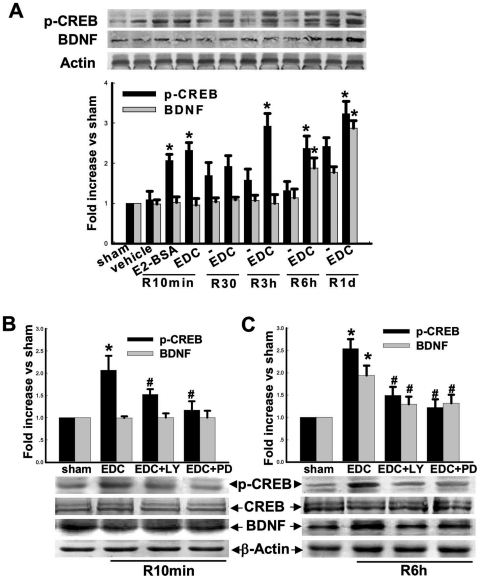
Methodology/principal findings: To accomplish this goal, we employed two E2 conjugates (E2 dendrimer, EDC, and E2-BSA) that can interact with extranuclear ER and exert rapid nongenomic signaling, but lack the ability to interact with nuclear ER due to their inability to enter the nucleus. EDC or E2-BSA (10 microM) was injected icv 60 min prior to global cerebral ischemia (GCI). FITC-tagged EDC or E2-BSA revealed high uptake in the hippocampal CA1 region after icv injection, with a membrane (extranuclear) localization pattern in cells. Both EDC and E2-BSA exerted robust neuroprotection in the CA1 against GCI, and the effect was blocked by the ER antagonist, ICI182,780. EDC and E2-BSA both rapidly enhanced activation of the prosurvival kinases, ERK and Akt, while attenuating activation of the proapoptotic kinase, JNK following GCI, effects that were blocked by ICI182,780. Administration of an MEK or PI3K inhibitor blocked the neuroprotective effects of EDC and E2-BSA. Further studies showed that EDC increased p-CREB and BDNF in the CA1 region in an ERK- and Akt-dependent manner, and that cognitive outcome after GCI was preserved by EDC in an ER-dependent manner.
Conclusions/significance: In conclusion, the current study demonstrates that activation of extranuclear ER results in induction of ERK-Akt-CREB-BDNF signaling in the hippocampal CA1 region, which significantly reduces ischemic neuronal injury and preserves cognitive function following GCI. The study adds to a growing literature that suggests that extranuclear ER can have important actions in the brain.
Conflict of interest statement
Figures

References
-
- Murphy SJ, McCullough LD, Smith JM. Stroke in the female: role of biological sex and estrogen. ILAR J. 2004;45:147–159. - PubMed
-
- Niewada M, Kobayashi A, Sandercock PA, Kaminski B, Czlonkowska A. Influence of gender on baseline features and clinical outcomes among 17,370 patients with confirmed ischaemic stroke in the international stroke trial. Neuroepidemiology. 2005;24:123–128. - PubMed
-
- Di Carlo A, Lamassa M, Baldereschi M, Pracucci G, Basile AM, et al. Sex differences in the clinical presentation, resource use, and 3-month outcome of acute stroke in Europe: data from a multicenter multinational hospital-based registry. Stroke. 2003;34:1114–1119. - PubMed
-
- Roquer J, Campello AR, Gomis M. Sex differences in first-ever acute stroke. Stroke. 2003;34:1581–1585. - PubMed
Publication types
MeSH terms
Substances
Grants and funding
LinkOut - more resources
Full Text Sources
Other Literature Sources
Research Materials
Miscellaneous
