


High-density lipoprotein heterogeneity and function in reverse cholesterol transport
- PMID: 20480549
- PMCID: PMC3215082
- DOI: 10.1097/mol.0b013e328338472d
High-density lipoprotein heterogeneity and function in reverse cholesterol transport
Abstract
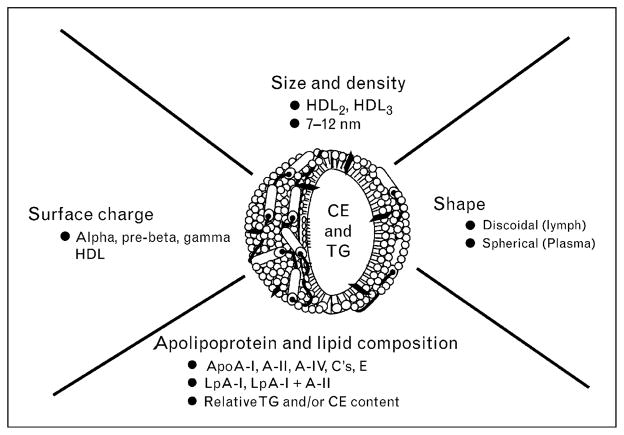
Purpose of review: HDL is a cardioprotective lipoprotein, at least in part, because of its ability to mediate reverse cholesterol transport (RCT). It is becoming increasingly clear that the antiatherogenic effects of HDL are not only dependent on its concentration in circulating blood but also on its biological 'quality'. This review summarizes our current understanding of how the biological activities of individual subclasses of HDL particles contribute to overall HDL performance in RCT.
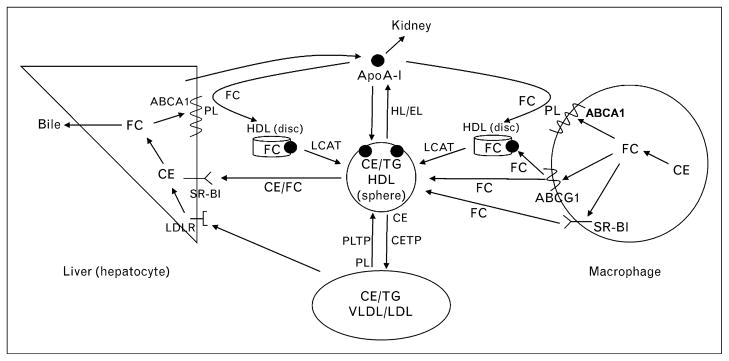
Recent findings: Recent work indicates that apolipoprotein A-I-containing nascent HDL particles are heterogeneous and that such particles exert different effects on the RCT pathway. RCT from macrophages has been examined in detail in mice and the roles of plasma factors (lecithin-cholesterol acyltransferase, cholesterol ester transfer protein, phospholipid transfer protein) and cell factors (ATP-binding cassette transporter A1, ATP-binding cassette transporter G1, scavenger receptor class B type 1) have been evaluated. Manipulation of such factors has consistent effects on RCT and atherosclerosis, but the level of plasma HDL does not reliably predict the degree of RCT. Furthermore, HDL cholesterol or apolipoprotein A-I levels do not necessarily correlate with the magnitude of cholesterol efflux from macrophages; more understanding of the contributions of specific HDL subspecies is required.
Summary: The antiatherogenic quality of HDL is defined by the functionality of HDL subspecies. In the case of RCT, the rate of cholesterol movement through the pathway is critical and the contributions of particular types of HDL particles to this process are becoming better defined.
Figures
References
-
- Castelli WP. Epidemiology of coronary heart disease: the Framingham study. Am J Med. 1984;76:4–12. - PubMed
-
- Nicholls SJ, Nissen SE. New targets of high-density lipoprotein therapy. Curr Opin Lipidol. 2007;18:421–426. - PubMed
-
- Fielding CJ, Fielding PE. Molecular physiology of reverse cholesterol transport. J Lipid Res. 1995;36:211–228. - PubMed
-
- von Eckardstein A, Nofer J-R, Assmann G. High density lipoproteins and apolipoproteins. Role of cholesterol efflux and reverse cholesterol transport. Arterioscler Thromb Vasc Biol. 2001;21:13–27. - PubMed
-
- Cuchel M, Rader DJ. Macrophage reverse cholesterol transport. Key to the regression of atherosclerosis? Circulation. 2006;113:2548–2555. - PubMed
Publication types
MeSH terms
Substances
Grants and funding
LinkOut - more resources
Full Text Sources
Other Literature Sources
Medical
Research Materials
