


Calcium-dependent protein kinase 1 is an essential regulator of exocytosis in Toxoplasma
- PMID: 20485436
- PMCID: PMC2874977
- DOI: 10.1038/nature09022
Calcium-dependent protein kinase 1 is an essential regulator of exocytosis in Toxoplasma
Abstract
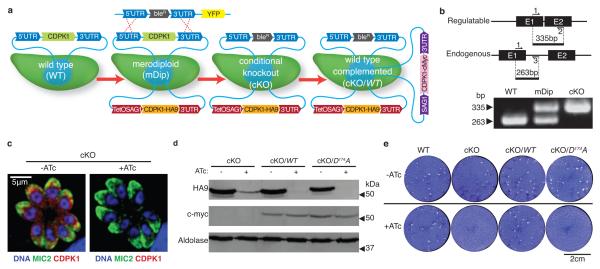
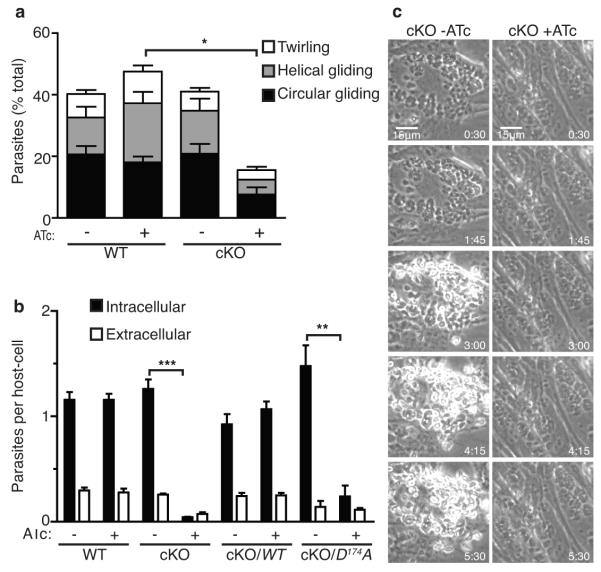
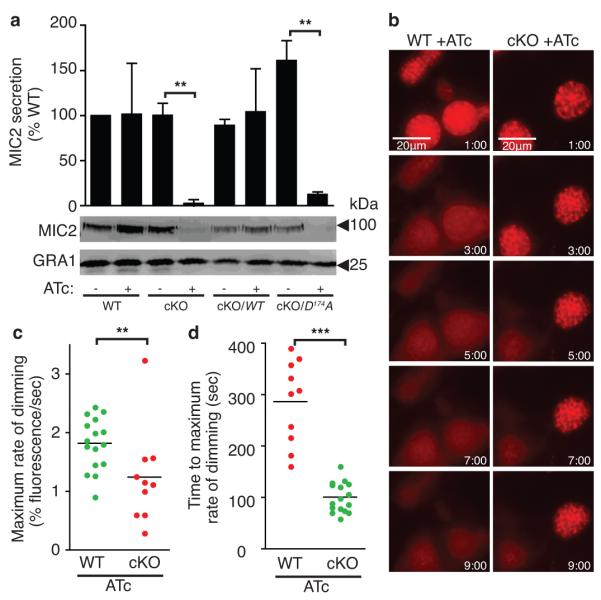
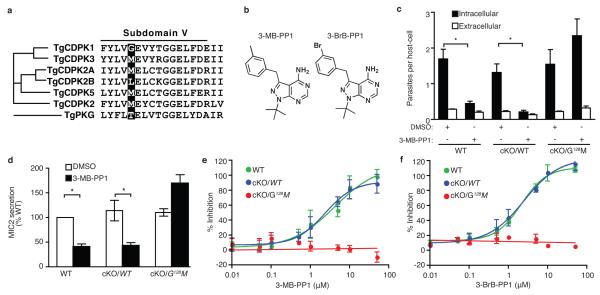
Calcium-regulated exocytosis is a ubiquitous process in eukaryotes, whereby secretory vesicles fuse with the plasma membrane and release their contents in response to an intracellular calcium surge. This process regulates various cellular functions such as plasma membrane repair in plants and animals, the discharge of defensive spikes in Paramecium, and the secretion of insulin from pancreatic cells, immune modulators from lymphocytes, and chemical transmitters from neurons. In animal cells, serine/threonine kinases including cAMP-dependent protein kinase, protein kinase C and calmodulin kinases have been implicated in calcium-signal transduction leading to regulated secretion. Although plants and protozoa also regulate secretion by means of intracellular calcium, the method by which these signals are relayed has not been explained. Here we show that the Toxoplasma gondii calcium-dependent protein kinase 1 (TgCDPK1) is an essential regulator of calcium-dependent exocytosis in this opportunistic human pathogen. Conditional suppression of TgCDPK1 revealed that it controls calcium-dependent secretion of specialized organelles called micronemes, resulting in a block of essential phenotypes including parasite motility, host-cell invasion, and egress. These phenotypes were recapitulated by using a chemical biology approach in which pyrazolopyrimidine-derived compounds specifically inhibited TgCDPK1 and disrupted the parasite's life cycle at stages dependent on microneme secretion. Inhibition was specific to TgCDPK1, because expression of a resistant mutant kinase reversed sensitivity to the inhibitor. TgCDPK1 is conserved among apicomplexans and belongs to a family of kinases shared with plants and ciliates, suggesting that related CDPKs may have a function in calcium-regulated secretion in other organisms. Because this kinase family is absent from mammalian hosts, it represents a validated target that may be exploitable for chemotherapy against T. gondii and related apicomplexans.
Figures
References
-
- Barclay JW, Morgan A, Burgoyne RD. Calcium-dependent regulation of exocytosis. Cell Calcium. 2005;38:343–353. - PubMed
-
- Schapire AL, Valpuesta V, Botella MA. Plasma membrane repair in plants. Trends Plant Sci. 2009;14:645–652. - PubMed
-
- Bansal D, Campbell KP. Dysferlin and the plasma membrane repair in muscular dystrophy. Trends Cell Biol. 2004;14:206–213. - PubMed
-
- Vayssie L, Skouri F, Sperling L, Cohen J. Molecular genetics of regulated secretion in paramecium. Biochimie. 2000;82:269–288. - PubMed
-
- Chieregatti E, Meldolesi J. Regulated exocytosis: new organelles for non-secretory purposes. Nat. Rev. Mol. Cell Biol. 2005;6:181–187. - PubMed
Publication types
MeSH terms
Substances
Grants and funding
LinkOut - more resources
Full Text Sources
Other Literature Sources
