


Disposition of hop prenylflavonoids in human breast tissue
- PMID: 20486208
- PMCID: PMC3856213
- DOI: 10.1002/mnfr.200900519
Disposition of hop prenylflavonoids in human breast tissue
Abstract
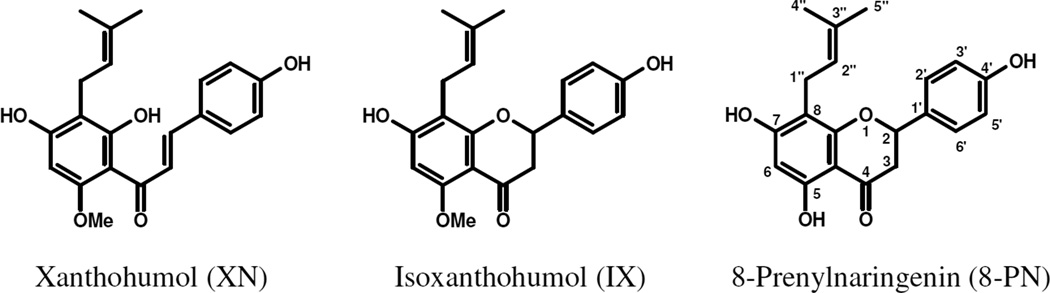
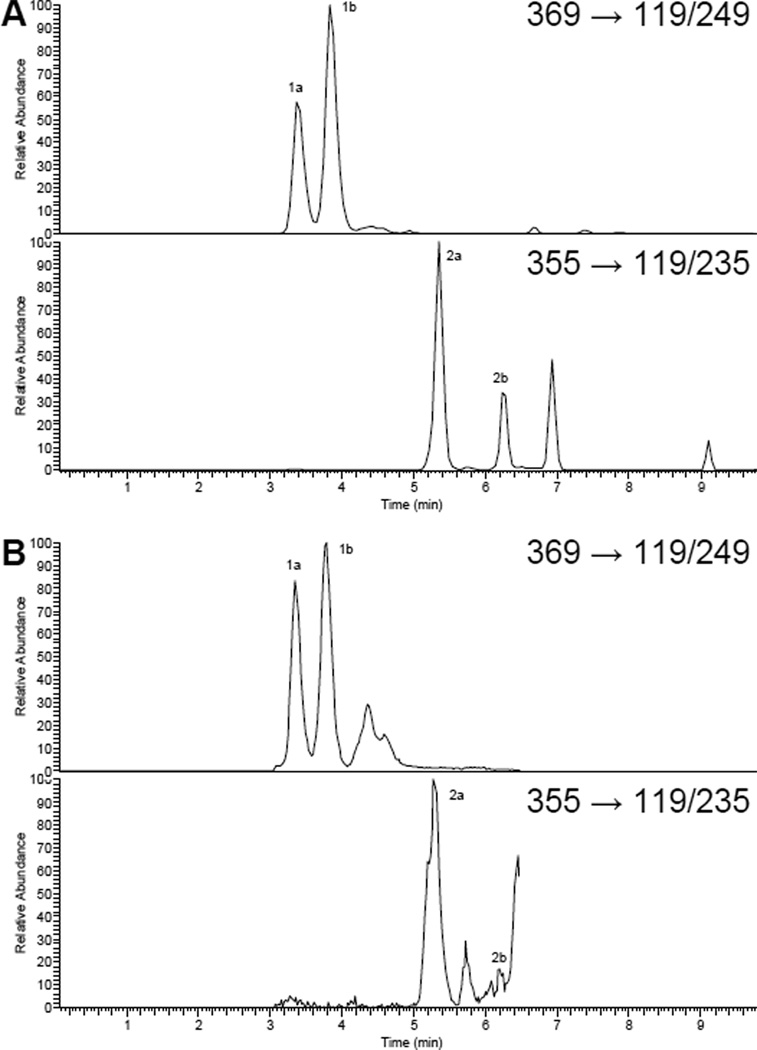
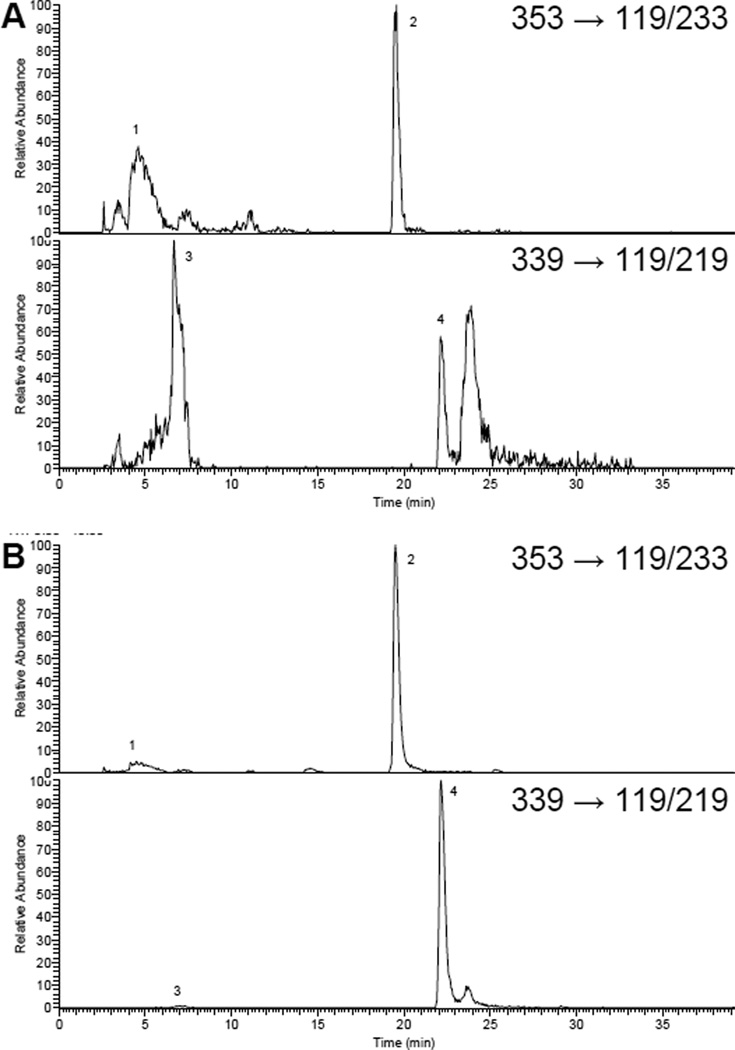
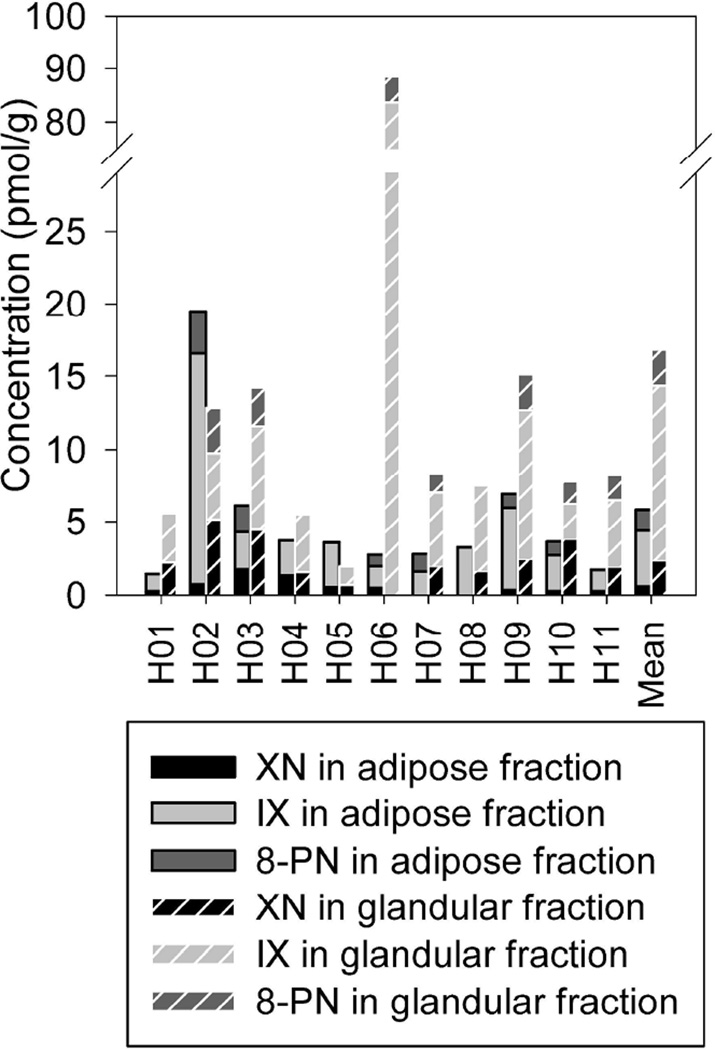
Hop-derived products may contain xanthohumol (XN), isoxanthohumol (IX), and the potent phytoestrogen 8-prenylnaringenin (8-PN). To evaluate the potential health effects of these prenylflavonoids on breast tissue, their concentration, nature of metabolites, and biodistribution were assessed and compared with 17beta-estradiol (E(2)) exposure. In this dietary intervention study, women were randomly allocated to hop (n=11; 2.04 mg XN, 1.20 mg IX, and 0.1 mg 8-PN per supplement) or control (n=10). After a run-in of >or=4 days, three supplements were taken daily for 5 days preceding an aesthetic breast reduction. Blood and breast biopsies were analyzed using HPLC-ESI-MS/MS. Upon hop administration, XN and IX concentrations ranged between 0.72 and 17.65 nmol/L and 3.30 and 31.50 nmol/L, and between 0.26 and 5.14 pmol/g and 1.16 and 83.67 pmol/g in hydrolyzed serum and breast tissue, respectively. 8-PN however, was only detected in samples of moderate and strong 8-PN producers (0.43-7.06 nmol/L and 0.78-4.83 pmol/g). Phase I metabolism appeared to be minor (approximately 10%), whereas extensive glucuronidation was observed (> 90%). Total prenylflavonoids showed a breast adipose/glandular tissue distribution of 38/62 and their derived E(2)-equivalents were negligible compared with E(2) in adipose (384.6+/-118.8 fmol/g, p=0.009) and glandular (241.6+/-93.1 fmol/g, p<0.001) tissue, respectively. Consequently, low doses of prenylflavonoids are unlikely to elicit estrogenic responses in breast tissue.
Conflict of interest statement
None of the authors had a personal or financial conflict of interest.
Figures
References
-
- Metzler M. Editorial - Hormonally active compounds in food. Mol. Nutr. Food Res. 2007;51:763.
-
- Eisenbrand G. Isoflavones as phytoestrogens in food supplements and dietary foods for special medicalpurposes. Mol. Nutr. Food Res. 2007;51:1305–1312. - PubMed
-
- Eisenbrand G. Untitled - Answer to Dr. Messina's letter to the Editor. Mol. Nutr. Food Res. 2008;52:737–738. - PubMed
-
- Messina M. Conclusion that isoflavones exert estrogenic effects on breast tissue and may raise breast cancer risk unfounded. Mol. Nutr. Food Res. 2008;52:299–300. - PubMed
-
- Rimoldi G, Christoffel J, Wuttke W. Morphologic changes induced by oral long-term treatment with 8-prenylnaringenin in the uterus, vagina, and mammary gland ofcastrated rats. Menopause. 2006;13:669–677. - PubMed
Publication types
MeSH terms
Substances
Grants and funding
LinkOut - more resources
Full Text Sources
Medical
