


Bisphenol A exposure during pregnancy disrupts glucose homeostasis in mothers and adult male offspring
- PMID: 20488778
- PMCID: PMC2944084
- DOI: 10.1289/ehp.1001993
Bisphenol A exposure during pregnancy disrupts glucose homeostasis in mothers and adult male offspring
Abstract
Background: Bisphenol A (BPA) is a widespread endocrine-disrupting chemical used as the base compound in the manufacture of polycarbonate plastics. In humans, epidemiological evidence has associated BPA exposure in adults with higher risk of type 2 diabetes and heart disease.
Objective: We examined the action of environmentally relevant doses of BPA on glucose metabolism in mice during pregnancy and the impact of BPA exposure on these females later in life. We also investigated the consequences of in utero exposure to BPA on metabolic parameters and pancreatic function in offspring.
Methods: Pregnant mice were treated with either vehicle or BPA (10 or 100 microg/kg/day) during days 9-16 of gestation. Glucose metabolism experiments were performed on pregnant mice and their offspring.
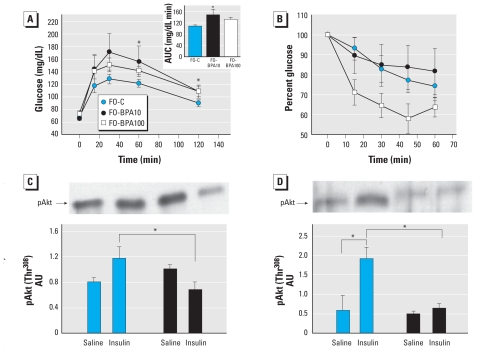
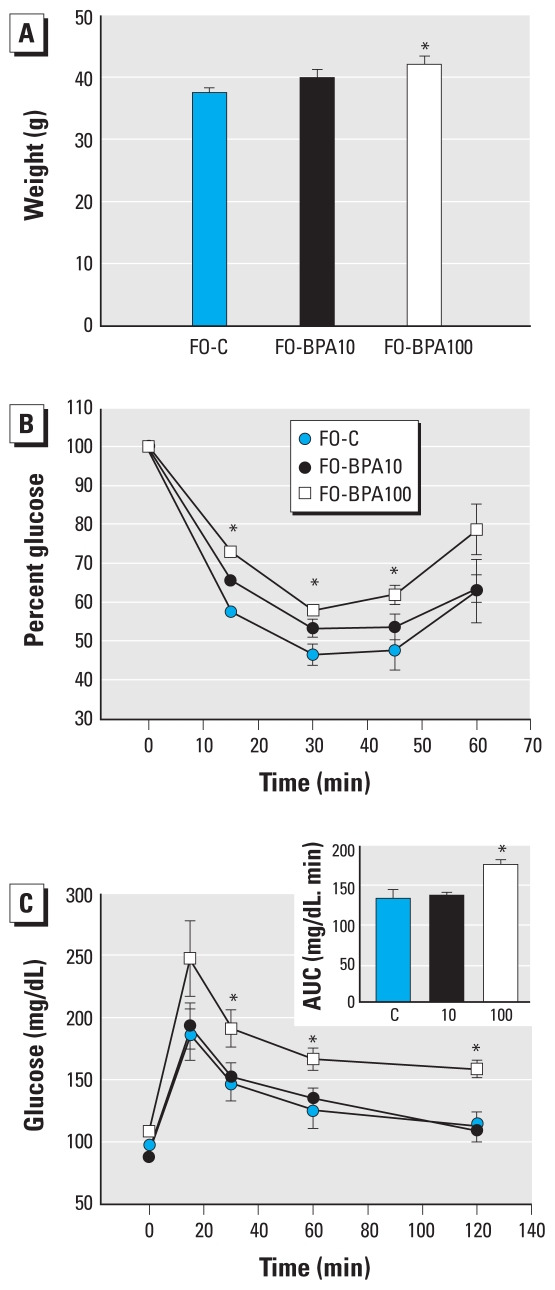
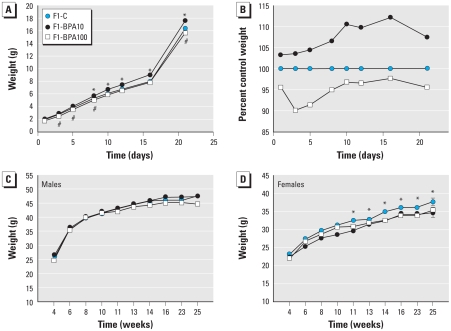
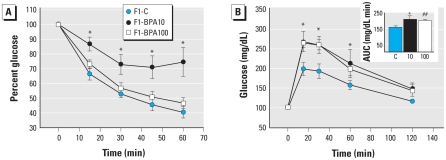
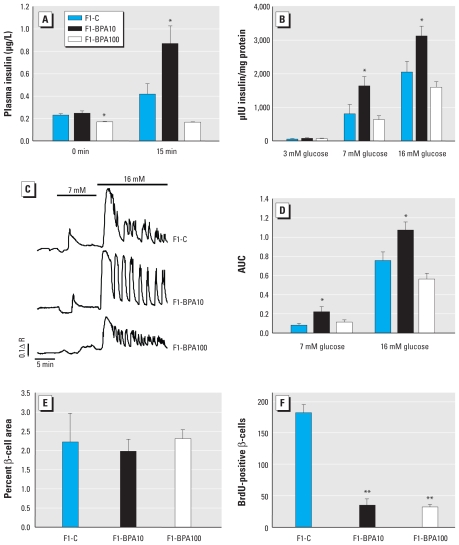
Results: BPA exposure aggravated the insulin resistance produced during pregnancy and was associated with decreased glucose tolerance and increased plasma insulin, triglyceride, and leptin concentrations relative to controls. Insulin-stimulated Akt phosphorylation was reduced in skeletal muscle and liver of BPA-treated pregnant mice relative to controls. BPA exposure during gestation had long-term consequences for mothers: 4 months post-partum, treated females weighed more than untreated females and had higher plasma insulin, leptin, triglyceride, and glycerol levels and greater insulin resistance. At 6 months of age, male offspring exposed in utero had reduced glucose tolerance, increased insulin resistance, and altered blood parameters compared with offspring of untreated mothers. The islets of Langerhans from male offspring presented altered Ca2+ signaling and insulin secretion. BrdU (bromodeoxyuridine) incorporation into insulin-producing cells was reduced in the male progeny, yet beta-cell mass was unchanged.
Conclusions: Our findings suggest that BPA may contribute to metabolic disorders relevant to glucose homeostasis and that BPA may be a risk factor for diabetes.
Figures
Comment in
-
BPA and insulin resistance: evidence of effects in dams and offspring.Environ Health Perspect. 2010 Sep;118(9):a399. doi: 10.1289/ehp.118-a399a. Environ Health Perspect. 2010. PMID: 20810351 Free PMC article. No abstract available.
References
-
- Barbour LA, McCurdy CE, Hernandez TL, Kirwan JP, Catalano PM, Friedman JE. Cellular mechanisms for insulin resistance in normal pregnancy and gestational diabetes. Diabetes Care. 2007;30(suppl 2):S112–S119. - PubMed
-
- Barker DJ. In utero programming of chronic disease. Clin Sci (Lond) 1998;95(2):115–128. - PubMed
Publication types
MeSH terms
Substances
LinkOut - more resources
Full Text Sources
Medical
Miscellaneous