


Amelioration of nephropathy with apoA-1 mimetic peptide in apoE-deficient mice
- PMID: 20488818
- PMCID: PMC2980997
- DOI: 10.1093/ndt/gfq274
Amelioration of nephropathy with apoA-1 mimetic peptide in apoE-deficient mice
Abstract
Background: There is mounting evidence that dyslipidaemia may contribute to development and progression of renal disease. For instance, hyperlipidaemia in apolipoprotein E-deficient (apoE(-/-)) mice is associated with glomerular inflammation, mesangial expansion and foam cell formation. ApoA-1 mimetic peptides are potent antioxidant and anti-inflammatory compounds which are highly effective in ameliorating atherosclerosis and inflammation in experimental animals. Given the central role of oxidative stress and inflammation in progression of renal disease, we hypothesized that apoA-1 mimetic peptide, D-4F, may attenuate renal lesions in apoE(-/-) mice.
Methods: Twenty-five-month-old female apoE(-/-) mice were treated with D-4F (300 µg/mL in drinking water) or placebo for 6 weeks. Kidneys were harvested and examined for histological and biochemical characteristics.
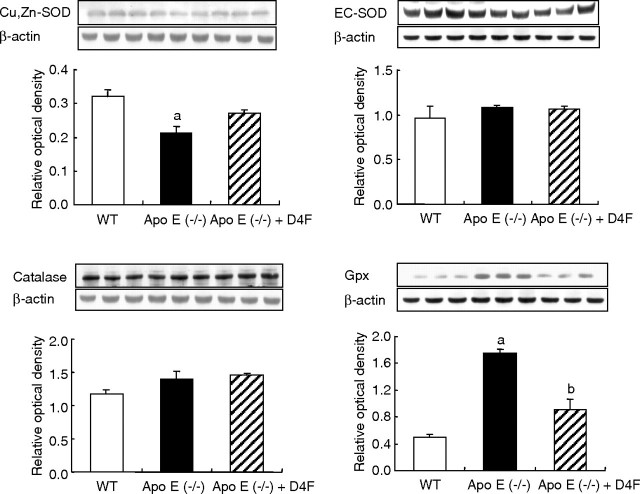
Results: Compared with the control mice, apoE(-/-) mice showed significant proteinuria, tubulo-interstitial inflammation, mesangial expansion, foam cell formation and up-regulation of oxidative [NAD(P)H oxidase subunits] and inflammatory [NF-κB, MCP-1, PAI-1 and COX-2] pathways. D-4F administration lowered proteinuria, improved renal histology and reversed up-regulation of inflammatory and oxidative pathways with only minimal changes in plasma lipid levels.
Conclusions: The apoE(-/-) mice develop proteinuria and glomerular and tubulo-interstitial injury which are associated with up-regulation of oxidative and inflammatory mediators in the kidney and are ameliorated by the administration of apoA-1 mimetic peptide. These observations point to the role of oxidative stress and inflammation in the pathogenesis of renal disease in hyperlipidaemic animals and perhaps humans.
Figures




References
-
- Vaziri ND. Dyslipidemia of chronic renal failure: the nature, mechanisms and potential consequences. Am J Physiol, Renal Physiol. 2006;290:262–272. - PubMed
-
- Attman PO, Alaupovic P, Samuelsson O. Lipoprotein abnormalities as a risk factor for progressive nondiabetic renal disease. Kidney Int Suppl. 1999;71:14–17. - PubMed
-
- Cases A, Coll E. Dyslipidemia and the progression of renal disease in chronic renal failure patients. Kidney Int Suppl. 2005;99:87–93. - PubMed
-
- Dalrymple LS, Kaysen GA. The effect of lipoproteins on the development and progression of renal disease. Am J Nephrol. 2008;28:723–731. - PubMed
Publication types
MeSH terms
Substances
Grants and funding
LinkOut - more resources
Full Text Sources
Medical
Research Materials
Miscellaneous
