


Pheromones in birds: myth or reality?
- PMID: 20490809
- PMCID: PMC3522863
- DOI: 10.1007/s00359-010-0534-4
Pheromones in birds: myth or reality?
Abstract
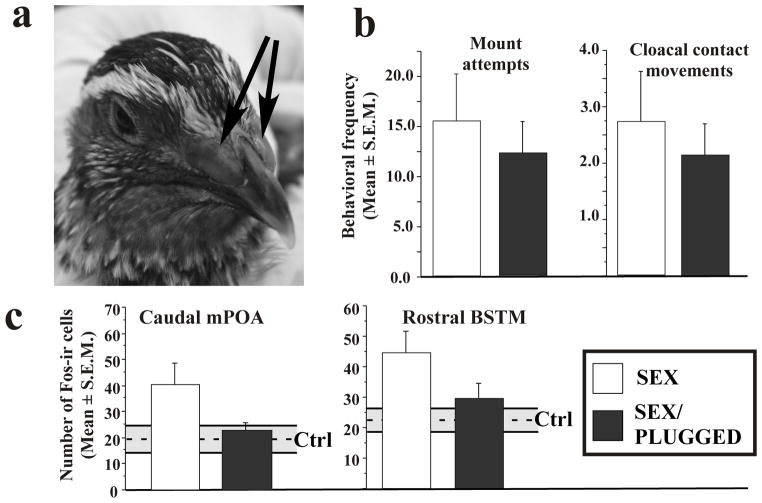
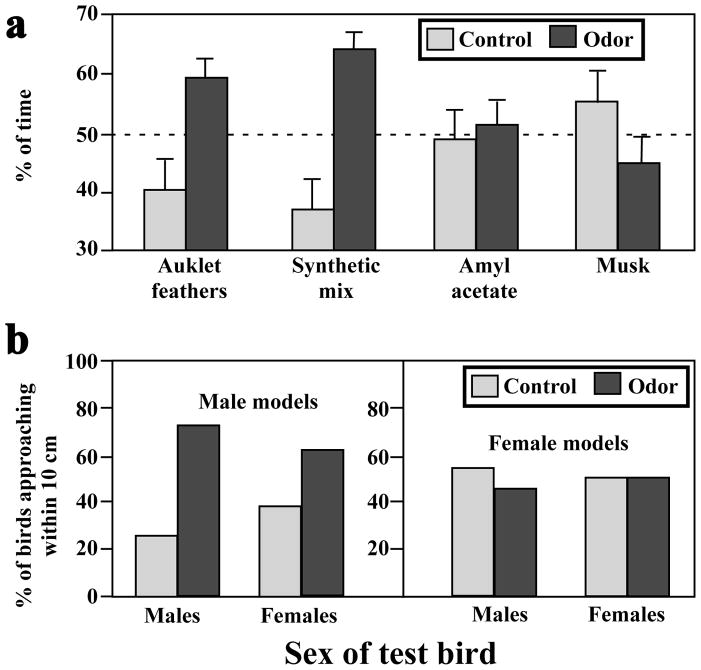
Birds are anosmic or at best microsmatic… This misbelief persisted until very recently and has strongly influenced the outcome of communication studies in birds, with olfaction remaining neglected as compared to acoustic and visual channels. However, there is now clear empirical evidence showing that olfaction is perfectly functional in birds and birds use olfactory information in a variety of ethological contexts. Although the existence of pheromones has never been formally demonstrated in this vertebrate class, different groups of birds, such as petrels, auklets and ducks have been shown to produce specific scents that could play a significant role in within-species social interactions. Behavioral experiments have indeed demonstrated that these odors influence the behavior of conspecifics. Additionally, in quail, deprivation of olfactory inputs decreases neuronal activation induced by sexual interactions with a female. It seems therefore well established that birds enjoy a functional sense of smell and a fast growing body of experimental evidence suggests that they use this channel of olfactory communication to control their social life. The unequivocal identification of an avian pheromone is, however, still ahead of us but there are now many exciting opportunities to unravel the behavioral and physiological particularities of chemical communication in birds.
Figures
References
-
- Amo L, Galvan I, Tomas G, Sanz JJ. Predator odour recognition and avoidance in a songbird. Functional Ecology. 2008;22:289–293.
-
- Ball GF, Balthazart J. Neuroendocrine mechanisms regulating reproductive cycles and reproductive behavior in birds. In: Pfaff DW, Arnold AP, Etgen AM, Fahrbach SE, Rubin RT, editors. Hormones, Brain and Behavior. Academic Press; San Diego: 2002. pp. 649–798.
-
- Ball GF, Tlemçani O, Balthazart J. Induction of the Zenk protein after sexual interactions in male Japanese quail. Neuroreport. 1997;8:2965–2970. - PubMed
-
- Balthazart J, Absil P. Identification of catecholaminergic inputs to and outputs from aromatase-containing brain areas of the Japanese quail by tract tracing combined with tyrosine hydroxylase immunocytochemistry. J Comp Neurol. 1997;382:401–428. - PubMed
Publication types
MeSH terms
Substances
Grants and funding
LinkOut - more resources
Full Text Sources
