. 2010 Jun 18;397(1):117-9.
doi: 10.1016/j.bbrc.2010.05.081. Epub 2010 May 20.

The phosphoCTD-interacting domain of Topoisomerase I

Affiliations

The phosphoCTD-interacting domain of Topoisomerase I

Jianhong Wu et al. Biochem Biophys Res Commun. .

Abstract

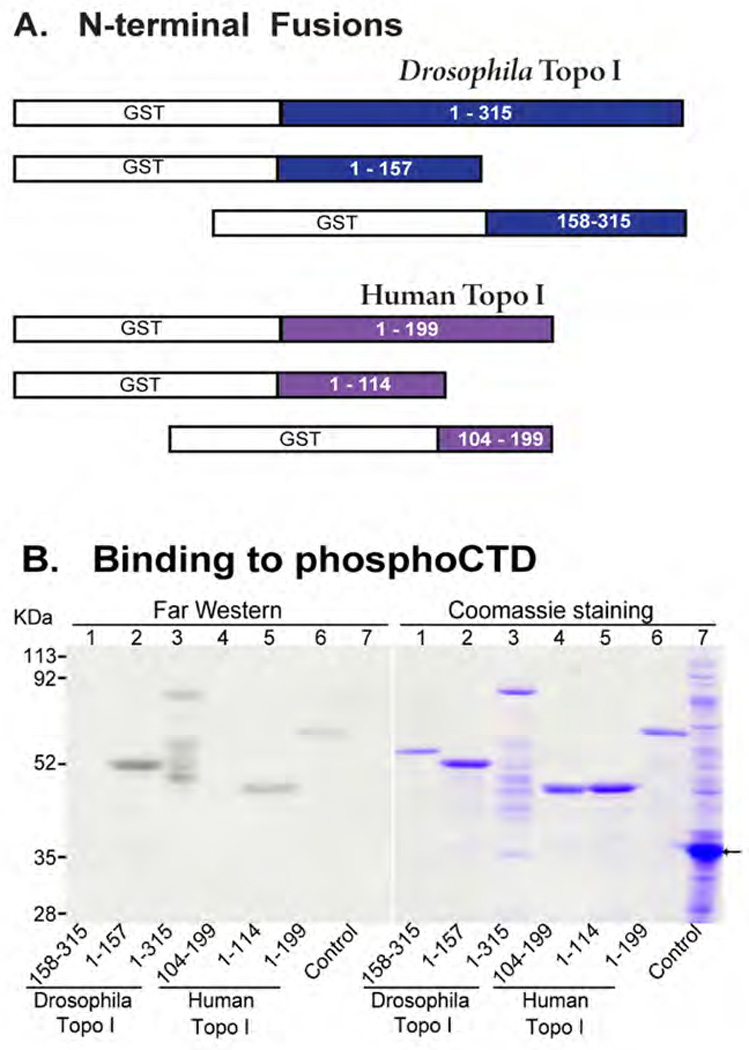
The N-terminal domain (NTD) of Drosophila melanogaster (Dm) Topoisomerase I has been shown to bind to RNA polymerase II, but the domain of RNAPII with which it interacts is not known. Using bacterially-expressed fusion proteins carrying all or half of the NTDs of Dm and human (Homo sapiens, Hs) Topo I, we demonstrate that the N-terminal half of each NTD binds directly to the hyperphosphorylated C-terminal repeat domain (phosphoCTD) of the largest RNAPII subunit, Rpb1. Thus, the amino terminal segment of metazoan Topo I (1-157 for Dm and 1-114 for Hs) contains a novel phosphoCTD-interacting domain that we designate the Topo I-Rpb1 interacting (TRI) domain. The long-known in vivo association of Topo I with active genes presumably can be attributed, wholly or in part, to the TRI domain-mediated binding of Topo I to the phosphoCTD of transcribing RNAPII.


Figures

Fig. 1
Fig. 1. N-terminus of Topo I physically interacts with hyperphosphorylated CTD (PCTD)
(A) Diagram of GST fusion constructs for Drosophila and human Topo I N-termini. Open (white) portions represent GST tags. Numbers in colored portions indicate amino acid residues. (B) Purified Topo I polypeptides were subjected to SDS-PAGE, transferred to nitrocellulose membrane, and probed (Far Western) with 32P-labeled βGal-CTD fusion protein. A duplicate SDS gel was stained with Coomassie Blue. The Control lane (lane 7) was loaded with lysate of BL21(DE3) harboring pET41a, which was induced with 1 mM IPTG for 5 hr in 30 °C. Arrow indicates a fusion protein encoded by pET41a (GST plus an additional 98 amino acids).
Fig. 2
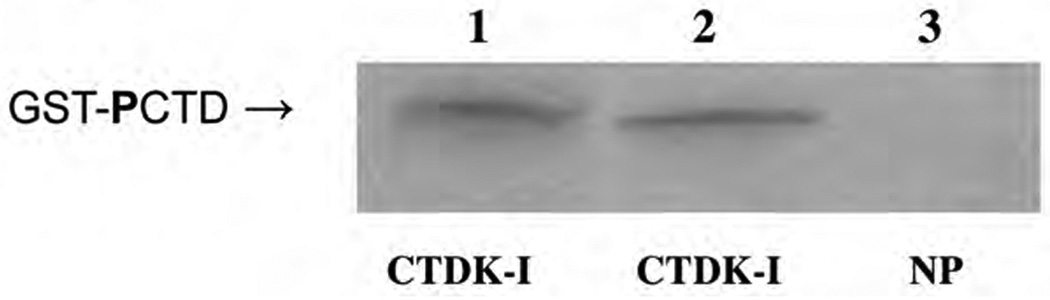
Fig. 2. “Reverse” Far Western blot probed with labeled N-terminus of human Topo I
The blot was prepared by SDS PAGE of 1 µg of unlabeled phosphorylated or non-phosphorylated GST-CTD fusion protein per lane, followed by blotting to nitrocellulose [8]. The protein segment comprising amino acids 1–199 of human Topo I was labeled by 32P with casein kinase II and used as a probe. Lanes 1 and 2: GST-CTD fusion protein phosphorylated by CTDK-I; lane 3: non-phosphorylated GST-CTD fusion protein.
Fig. 3
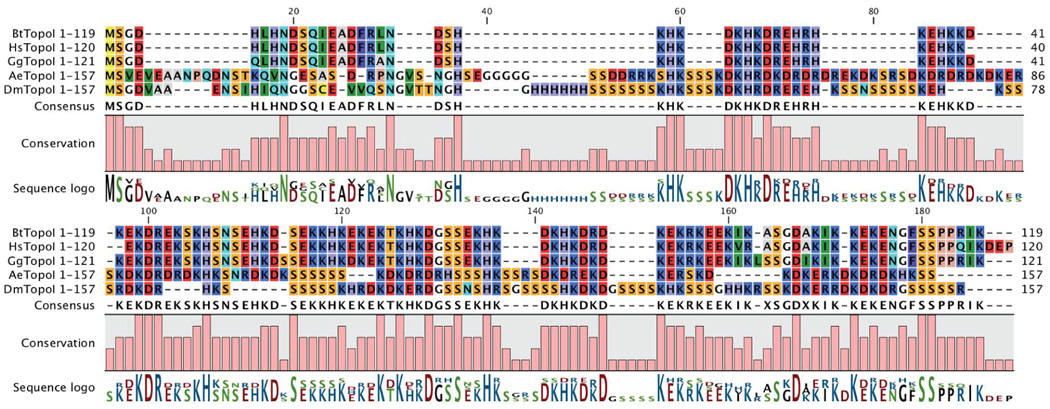
Fig. 3. N-terminal segments of Topoisomerases I aligned
The indicated segments of Topo I from Bos taurus (Bt), Homo sapiens (Hs), Gallus gallus (Gg), Aedes aegypti (Ae), and Drosophila melanogaster (Dm) were aligned using the Alignment program within CLC Combined Workbench, v 3.0.3 www.clcbio.com, using a Gap open cost of 6, a Gap extension cost of 0.2, and an End gap cost of Free.

References

    1. Gilmour DS, Pflugfelder G, Wang JC, Lis JT. Topoisomerase I interacts with transcribed regions in Drosophila cells. Cell. 1986;44:401–407. - PubMed
    1. Gilmour DS, Elgin SC. Association of topoisomerase I with transcriptionally active loci in Drosophila. Nci Monogr. 1987;1987:17–21. - PubMed
    1. Shaiu WL, Hsieh TS. Targeting to transcriptionally active loci by the hydrophilic N-terminal domain of Drosophila DNA topoisomerase I. Mol Cell Biol. 1998;18:4358–4367. - PMC - PubMed
    1. Carty SM, Greenleaf AL. Hyperphosphorylated C-terminal repeat domain-associating proteins in the nuclear proteome link transcription to DNA/chromatin modification and RNA processing. Mol Cell Proteomics. 2002;1:598–610. - PubMed
    1. Phatnani HP, Jones JC, Greenleaf AL. Expanding the Functional Repertoire of CTD Kinase I and RNA Polymerase II: Novel PhosphoCTD-Associating Proteins in the Yeast Proteome. BIOCHEMISTRY. 2004;43:15702–15719. - PMC - PubMed

Publication types

Substances

LinkOut - more resources