


Adaptive phase I study of OROS methylphenidate treatment of attention deficit hyperactivity disorder with epilepsy
- PMID: 20493783
- PMCID: PMC2902631
- DOI: 10.1016/j.yebeh.2010.02.022
Adaptive phase I study of OROS methylphenidate treatment of attention deficit hyperactivity disorder with epilepsy
Abstract
Objective: The goal of this study was to pilot a randomized controlled trial of OROS methylphenidate (OROS-MPH) to treat attention deficit hyperactivity disorder (ADHD) plus epilepsy.
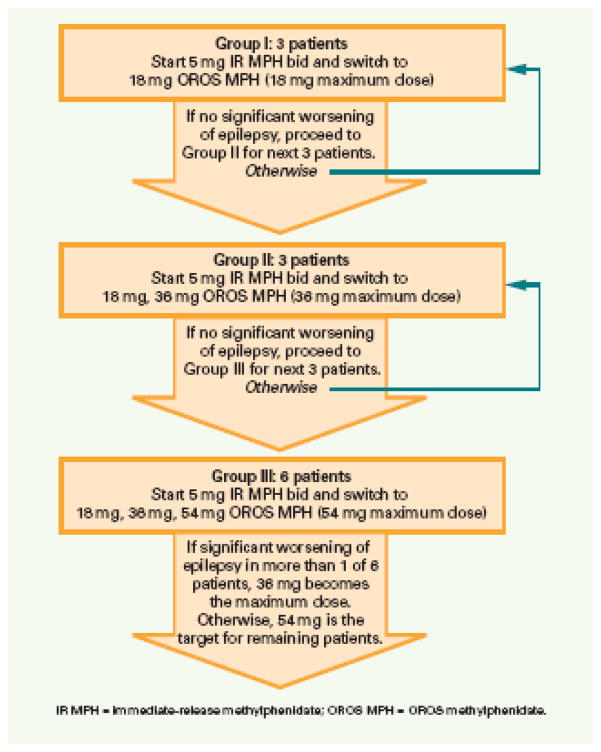
Methods: Thirty-three patients, 6-18years of age, taking antiepileptic drugs and with a last seizure 1-60months prior were assigned to a maximum daily dose of 18, 36, or 54mg of OROS-MPH in a double-blind placebo-controlled crossover trial.
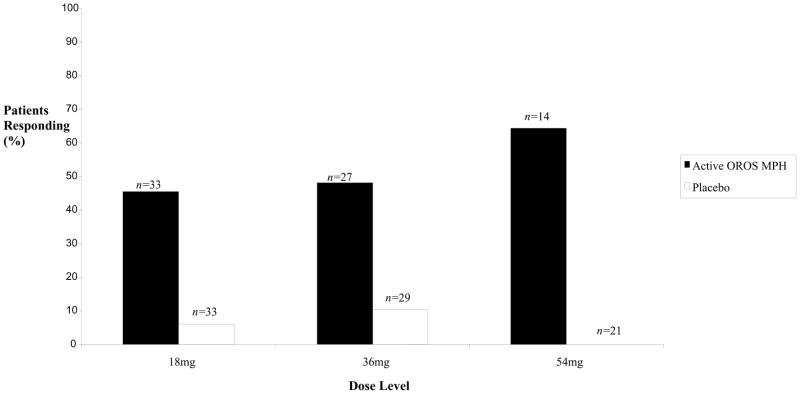
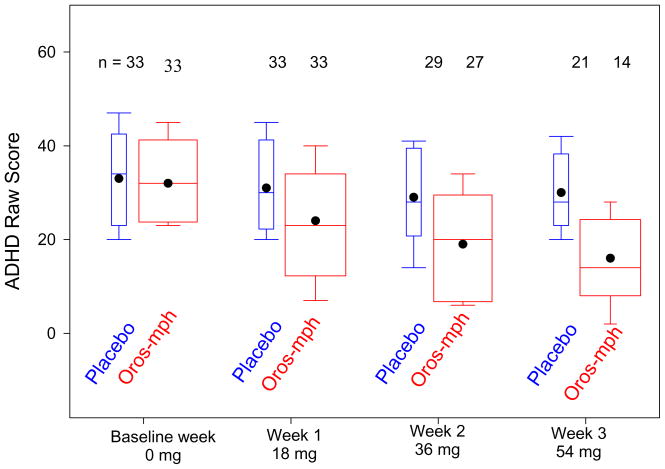
Results: There were no serious adverse events and no carryover effects in the crossover trial. OROS-MPH reduced ADHD symptoms more than did placebo treatment. There were too few seizures during the active (5) and placebo arms (3) to confidently assess seizure risk; however, considering exposure time, we observed an increased daily risk of seizures with increasing dose of OROS-MPH, suggesting that potential safety concerns require further study.
Conclusion: A larger study to assess the effect of OROS-MPH on seizure risk is needed. A crossover design including subjects with frequent seizures could maximize power and address high patient heterogeneity and recruitment difficulties.
Copyright 2010 Elsevier Inc. All rights reserved.
Figures
References
-
- Hauser WA, Annegers JF, Rocca WA. Descriptive epidemiology of epilepsy: contributions of population-based studies from Rochester, Minnesota. Mayo Clinic Proceedings l. 1996;71:576–86. - PubMed
-
- Eriksson KJ, Koivikko MJ. Prevalence, classification, and severity of epilepsy and epileptic syndromes in children. Epilepsia. 1997;38:1275–82. - PubMed
-
- Sidenvall R, Forsgren L, Heijbel J. Prevalence and characteristics of epilepsy in children in northern Sweden. Seizure. 1996;5:139–46. - PubMed
-
- Bell GS, Sander JW. The epidemiology of epilepsy: the size of the problem. Seizure. 2001;10:306–14. quiz 315–6. - PubMed
-
- Waaler PE, Blom BH, Skeidsvoll H, Mykletun A. Prevalence, classification, and severity of epilepsy in children in western Norway. Epilepsia. 2000;41:802–10. - PubMed
