


Thermodynamic and kinetic considerations for the reaction of semiquinone radicals to form superoxide and hydrogen peroxide
- PMID: 20493944
- PMCID: PMC2936108
- DOI: 10.1016/j.freeradbiomed.2010.05.009
Thermodynamic and kinetic considerations for the reaction of semiquinone radicals to form superoxide and hydrogen peroxide
Abstract
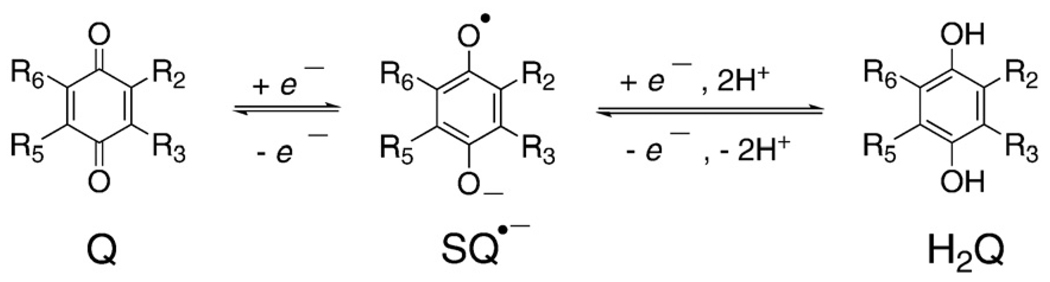
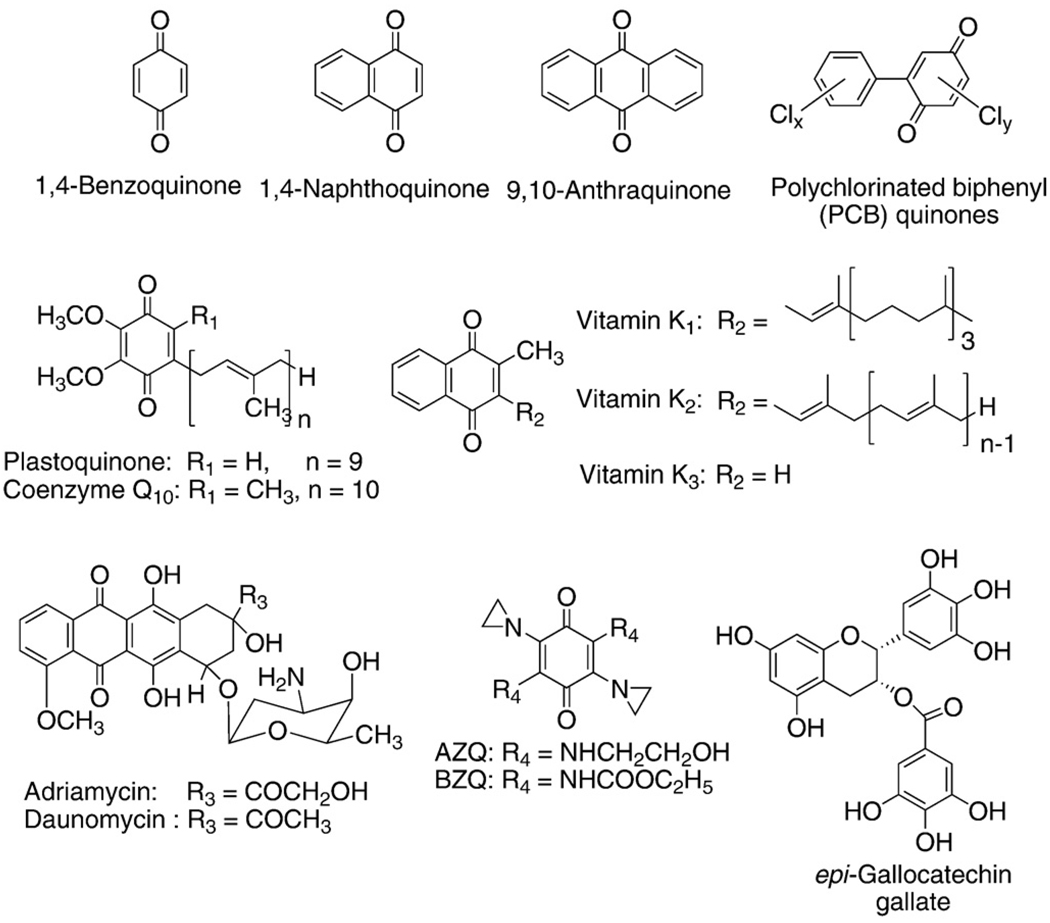
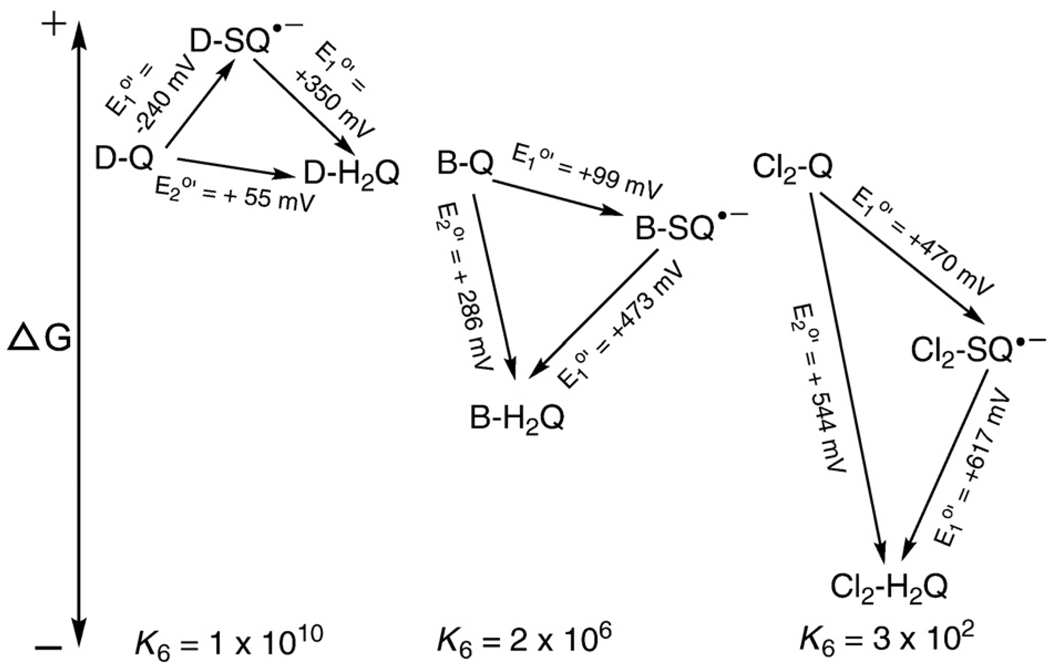
The quinone/semiquinone/hydroquinone triad (Q/SQ(*-)/H(2)Q) represents a class of compounds that has great importance in a wide range of biological processes. The half-cell reduction potentials of these redox couples in aqueous solutions at neutral pH, E degrees ', provide a window to understanding the thermodynamic and kinetic characteristics of this triad and their associated chemistry and biochemistry in vivo. Substituents on the quinone ring can significantly influence the electron density "on the ring" and thus modify E degrees' dramatically. E degrees' of the quinone governs the reaction of semiquinone with dioxygen to form superoxide. At near-neutral pH the pK(a)'s of the hydroquinone are outstanding indicators of the electron density in the aromatic ring of the members of these triads (electrophilicity) and thus are excellent tools to predict half-cell reduction potentials for both the one-electron and two-electron couples, which in turn allow estimates of rate constants for the reactions of these triads. For example, the higher the pK(a)'s of H(2)Q, the lower the reduction potentials and the higher the rate constants for the reaction of SQ(*-) with dioxygen to form superoxide. However, hydroquinone autoxidation is controlled by the concentration of di-ionized hydroquinone; thus, the lower the pK(a)'s the less stable H(2)Q to autoxidation. Catalysts, e.g., metals and quinone, can accelerate oxidation processes; by removing superoxide and increasing the rate of formation of quinone, superoxide dismutase can accelerate oxidation of hydroquinones and thereby increase the flux of hydrogen peroxide. The principal reactions of quinones are with nucleophiles via Michael addition, for example, with thiols and amines. The rate constants for these addition reactions are also related to E degrees'. Thus, pK(a)'s of a hydroquinone and E degrees ' are central to the chemistry of these triads.
Copyright 2010 Elsevier Inc. All rights reserved.
Figures
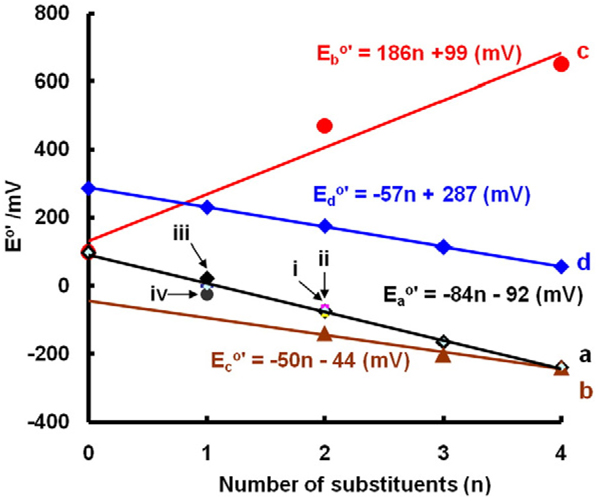
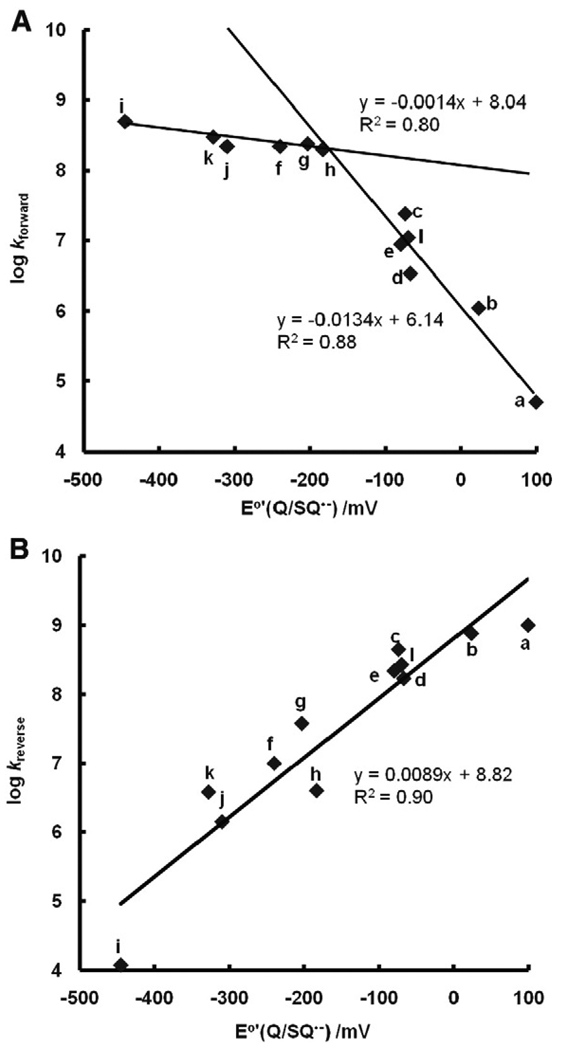
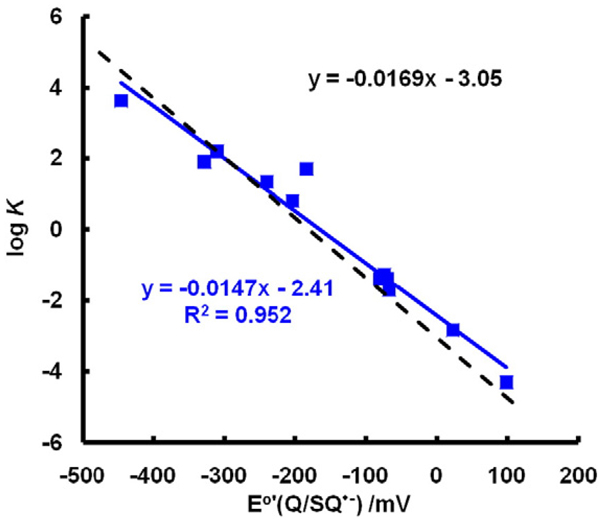
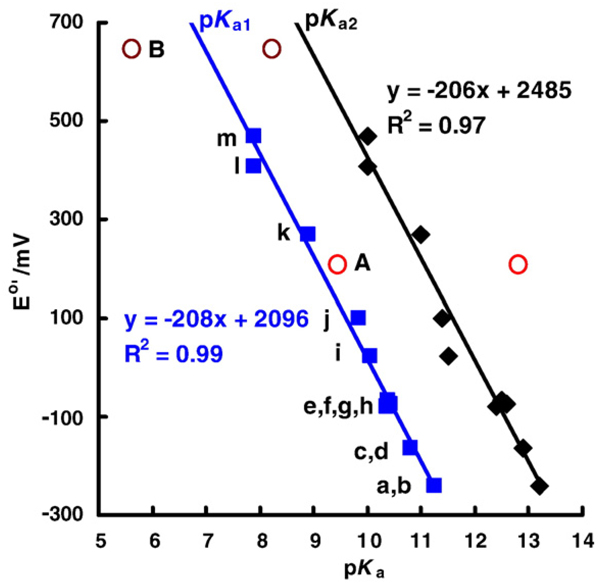
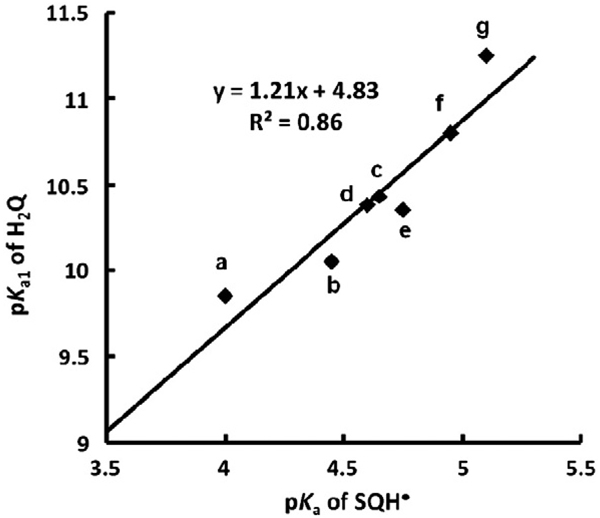
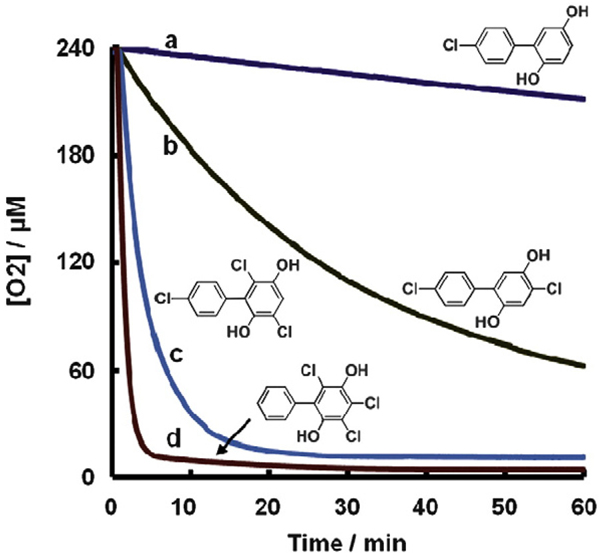
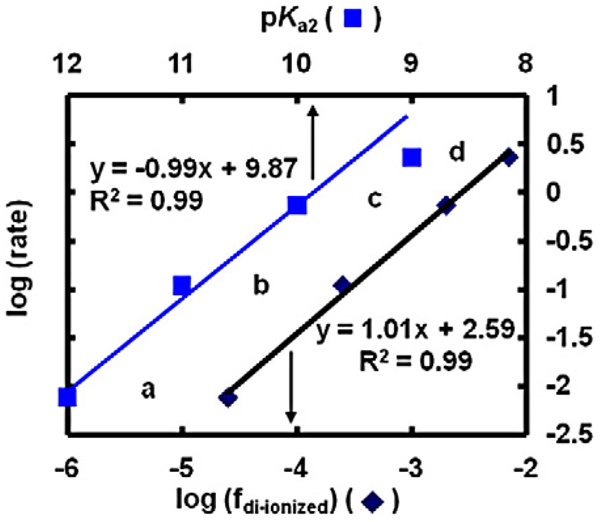
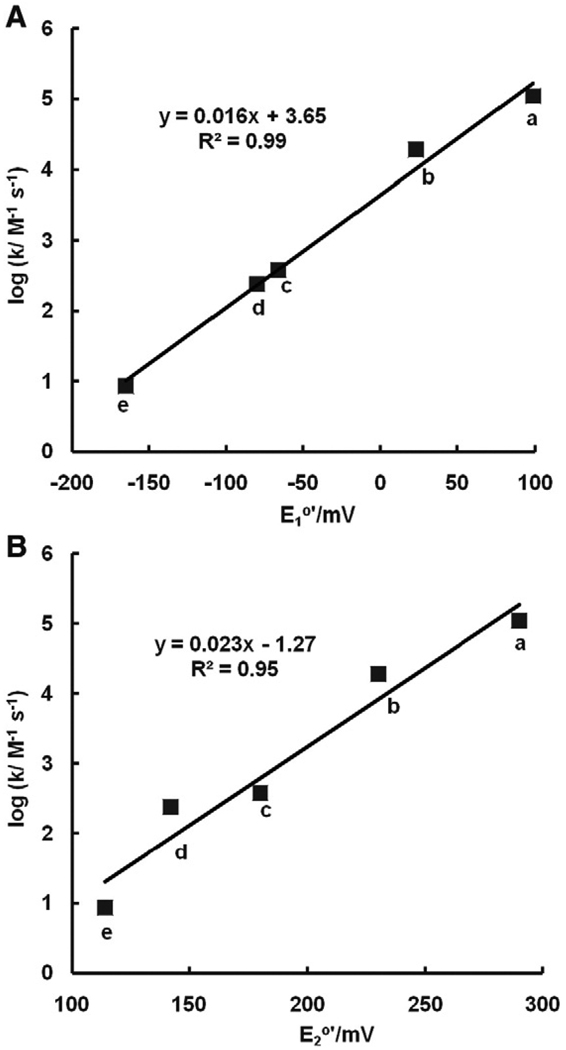
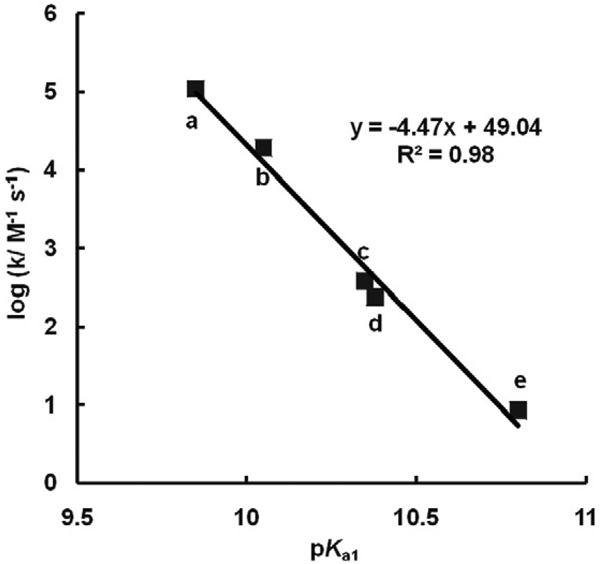
 , blue) are the first pKa of a particular hydroquinone; the diamonds (◆, black) are the second pKa of the hydroquinone; pKa's are from [11,12,39]. The para-quinones/hydroquinones a–m show a linear relationship between the one-electron reduction potential of the quinone (E°′(Q/SQ•−)) and the first and second pKa's of the corresponding hydroquinone. The one-electron reduction potentials for quinones k and l have been estimated from Fig. 4; compounds A (catechol) and B (tetrachloro-1,4-hydroquinone) are not included in the linear regression of the two lines. We anticipate that ortho-hydroquinones would behave similarly to para-hydroquinones, but there would most likely be a systematic offset relative to the plots for para-hydroquinones. (A note on tetrachloro-1,4-hydroquinone: E°′(Q/SQ•−) for tetrachloro-1,4-hydroquinone (B) has been estimated from the correlation of the reduction potentials determined in methyl cyanide [40,78]; knowing that pKa1 for tetrachloro-1,4-hydroquinone is 5.6 [12] suggests that the one-electron reduction potential is actually about +800 mV in aqueous solution.) The compounds are: a. ubiquionol-1, coenzyme Q-1; b, tetramethyl-1,4-hydroquinone; c, 2,3,5-trimethyl-1,4-hydroquinone; d, plastoquinol-1; e, 2,6-dimethyl-1,4-hydroquinone; f, 2-methyl-5-isopropyl-1,4-hydroquinone; g, 2,3-dimethyl-1,4-hydroquinone; h, 2,5-dimethyl-1,4-hydroquinone; i, 2-methyl-1,4-hydroquinone; j, 1,4-hydroquinone; k, 2-chloro-1,4-hydroquinone; l, 2,6-dichloro-1,4-hydroquinone; m, 2,5-dichloro-1,4-hydroquinone; A, catechol; B, tetrachloro-1,4-hydroquinone.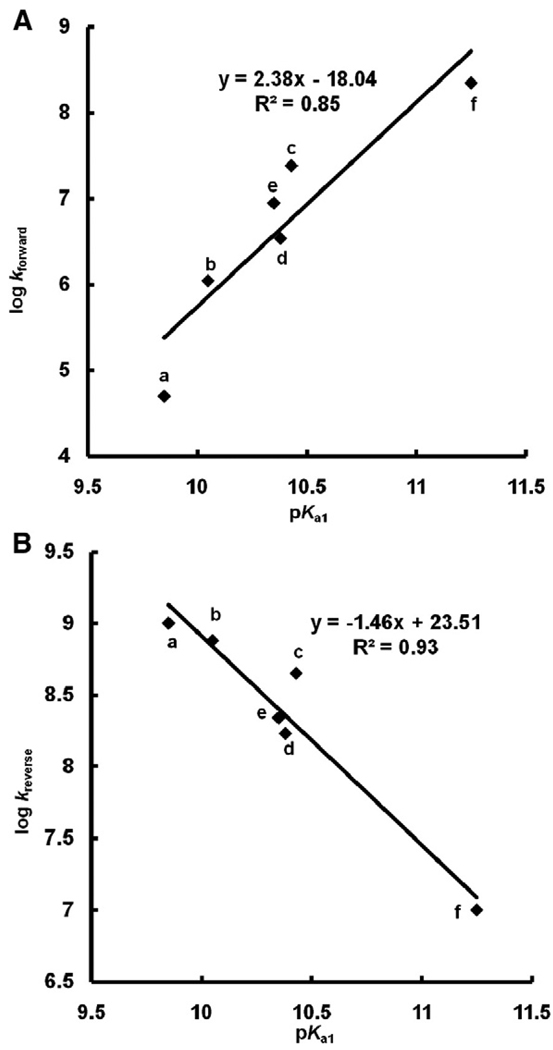
References
-
- Krueger FR, Werther W, Kissel J, Schmidt ER. Assignment of quinone derivatives as the main compound class composing ‘interstellar’ grains based on both polarity ions detected by the ‘Cometary and Interstellar Dust Analyser’ (CIDA) onboard the spacecraft STARDUST. Rapid Commun. Mass Spectrom. 2004;18:103–111. - PubMed
-
- Trumpower BL. The protonmotive Q cycle. Energy transduction by coupling of proton translocation to electron transfer by the cytochrome bc1 complex. J. Biol. Chem. 1990;265:11409–11412. - PubMed
-
- Tiemann R, Renger G, Gräber P, Witt HT. The plastoquinone pool as possible hydrogen pump in photosynthesis. Biochim. Biophys. Acta. 1979;546:498–519. - PubMed
-
- Odom AL, Hatwig CA, Stanley JS, Benson AM. Biochemical determinants of Adriamycin toxicity in mouse liver, heart and intestine. Biochem. Pharmacol. 1992;43(4):831–836. - PubMed
Publication types
MeSH terms
Substances
Grants and funding
LinkOut - more resources
Full Text Sources
Other Literature Sources
