Mechanisms linking socioeconomic status to smoking cessation: a structural equation modeling approach
- PMID: 20496980
- PMCID: PMC2922845
- DOI: 10.1037/a0019285
Mechanisms linking socioeconomic status to smoking cessation: a structural equation modeling approach
Abstract
Objective: Although there has been a socioeconomic gradient in smoking prevalence, cessation, and disease burden for decades, these disparities have become even more pronounced over time. The aim of the current study was to develop and test a conceptual model of the mechanisms linking socioeconomic status (SES) to smoking cessation.
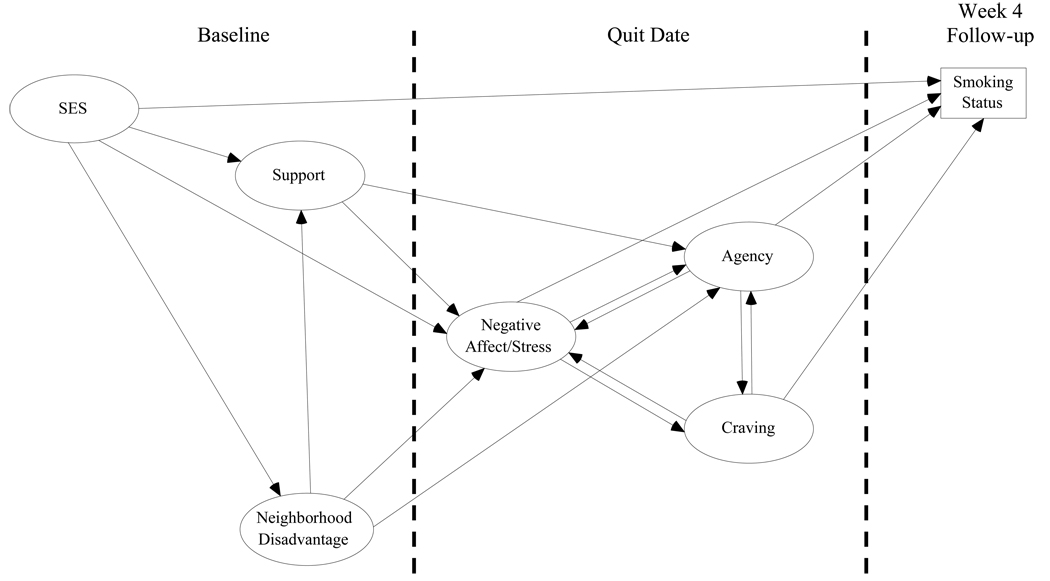
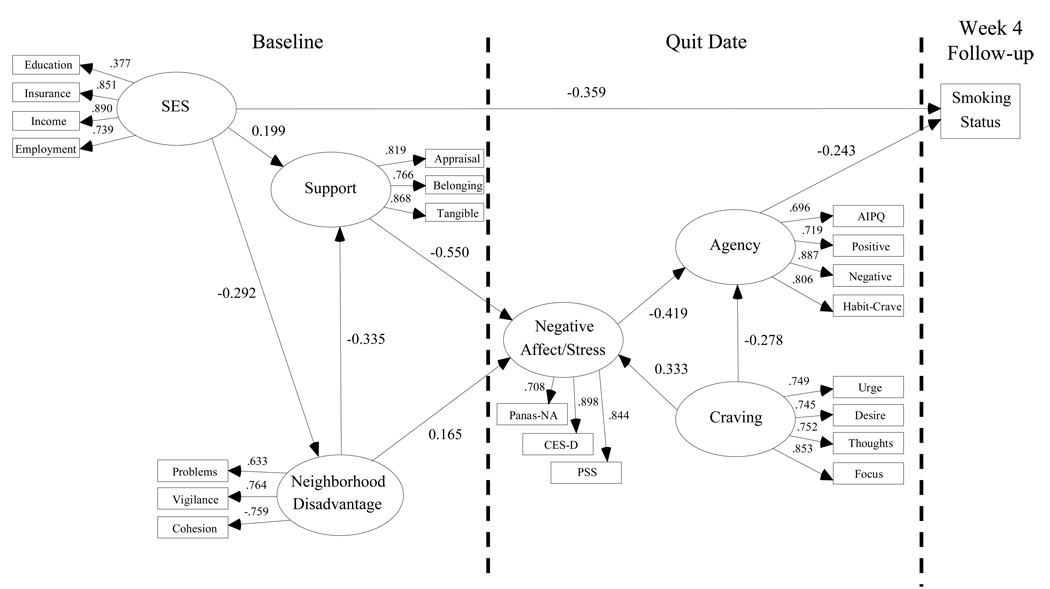
Design: The conceptual model was evaluated using a latent variable modeling approach in a sample of 424 smokers seeking treatment (34% African American; 33% Latino; 33% White). Hypothesized mechanisms included social support, neighborhood disadvantage, negative affect/stress, agency, and craving.
Main outcome measure: The primary outcome was Week 4 smoking status.
Results: As was hypothesized, SES had significant direct and indirect effects on cessation. Specifically, neighborhood disadvantage, social support, negative affect/stress, and agency mediated the relation between SES and smoking cessation. A multiple group analysis indicated that the model was a good fit across racial/ethnic groups.
Conclusion: The present study yielded one of the more comprehensive models illuminating the specific mechanisms that link SES and smoking cessation. Policy, community, and individual-level interventions that target low SES smokers and address the specific pathways identified in the current model could potentially attenuate the impact of SES on cessation.
(c) 2010 APA, all rights reserved.
Figures
References
-
- Adler NE, Ostrove JM. Socioeconomic status and health: What we know and what we don't. Annals of the New York Academy of Sciences. 1999;896:3–15. - PubMed
-
- Ayanian JZ, Weissman JS, Schneider EC, Ginsburg JA, Zaslavsky AM. Unmet health needs of uninsured adults in the United States. Journal of the American Medical Association. 2000;284(16):2061–2069. - PubMed
-
- Baer JS, Holt CS, Lichtenstein E. Self-efficacy and smoking reexamined: Construct validity and clinical utility. Journal of Consulting & Clinical Psychology. 1986;54(6):846–852. - PubMed
-
- Bagot KS, Heishman SJ, Moolchan ET. Tobacco craving predicts lapse to smoking among adolescent smokers in cessation treatment. Nicotine & Tobacco Research. 2007;9(6):647–652. - PubMed
MeSH terms
Grants and funding
LinkOut - more resources
Full Text Sources
Medical
Research Materials