


Review
doi: 10.1161/HYPERTENSIONAHA.109.140186.
Epub 2010 May 24.
Sympathetic nervous system and blood pressure in humans: individualized patterns of regulation and their implications
Affiliations
- PMID: 20497993
- PMCID: PMC2891078
- DOI: 10.1161/HYPERTENSIONAHA.109.140186
Item in Clipboard
Review
Sympathetic nervous system and blood pressure in humans: individualized patterns of regulation and their implications
Hypertension.
2010 Jul.
No abstract available
Figures
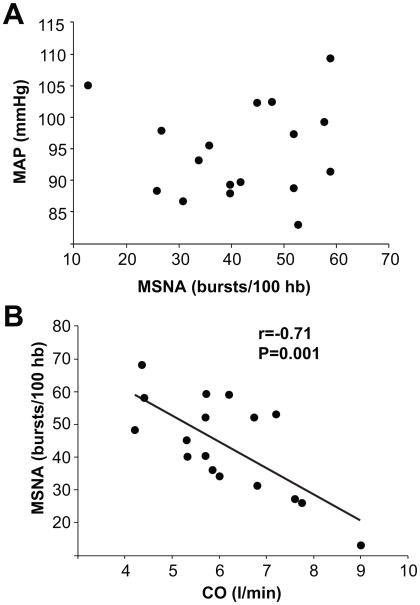
Panel A demonstrates the relationship between muscle sympathetic nerve activity (MSNA) and mean arterial pressure in a group of young healthy males. Panel B demonstrates the reciprocal relationship between MSNA and cardiac output in the subjects. This relationship helps explain why blood pressure is not consistently higher in subjects with high levels of MSNA. (Figure from ref 5)
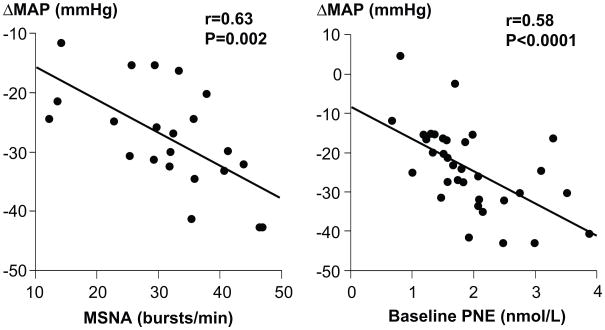
Relationship between several indices of sympathetic neural activity and the fall in blood pressure during ganglionic blockade in a combined cohort of young and old males. The left panel shows that individuals with higher baseline levels of MSNA experience a larger fall in blood pressure during ganglionic blockade. The right panel is a similar comparison between the change in blood pressure and plasma norepinephrine (PNE). Together these data show that individuals with high levels of baseline sympathetic activity have increased autonomic support of their blood pressure. (Figure adapted from ref 14)
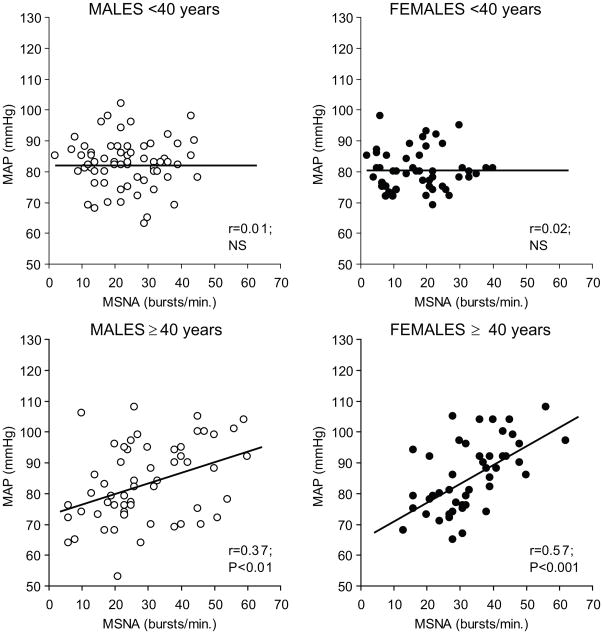
Relationship between baseline MSNA and mean arterial pressure in a large group of young males, young females, older males and older females. In both men and women <40 no relationship between MSNA and mean arterial pressure was seen. By contrast, in the older men there was a modest relationship between MSNA and blood pressure. This positive relationship was more pronounced in the older women. (Figure from ref 25)
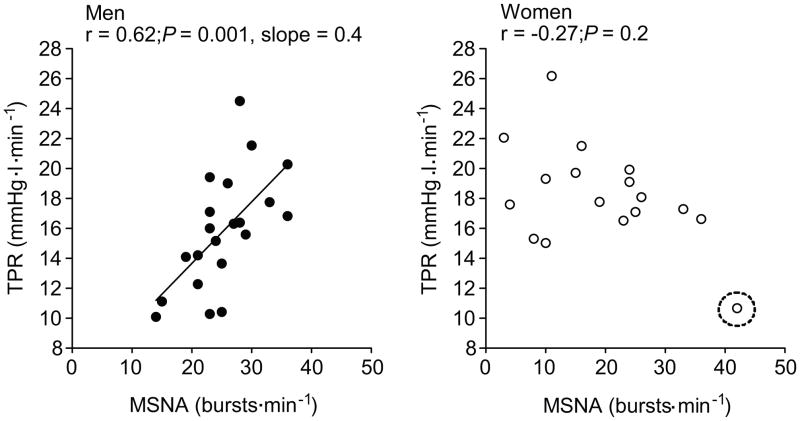
Relationship between MSNA and total peripheral resistance (TPR) in a group of normotensive young male subjects (left panel) and a group of normotensive young female subjects (right panel). The relationship between MSNA and TPR seen in the young men was absent in the young women. (Figure from ref 8)
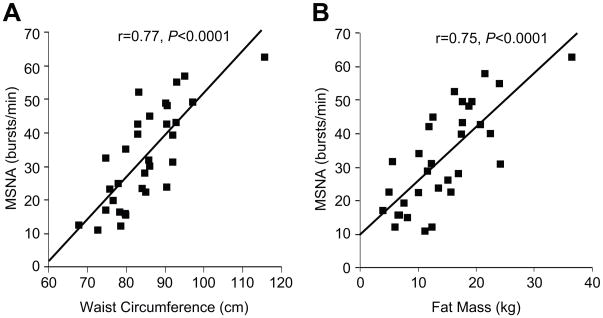
Relationship between waist circumference (left panel) or fat mass (right panel) and baseline MSNA in a large group of young and old male subjects. (Figure from ref 36)
Comment in
-
Sympathetic activity, blood volume, and smoking.Hypertension. 2010 Oct;56(4):e41; author reply e42. doi: 10.1161/HYPERTENSIONAHA.110.158618. Epub 2010 Aug 23. Hypertension. 2010. PMID: 20733086 No abstract available.
References
-
- Wallin BG, Charkoudian N. Sympathetic neural control of integrated cardiovascular function: insights from measurement of human sympathetic nerve activity. Muscle Nerve. 2007;36:595–614. - PubMed
-
- Cowley AW, Jr, Liard JF, Guyton AC. Role of the baroreceptor reflex in daily control of arterial blood pressure and other variables in dogs. Circ Res. 1973;32:564–576. - PubMed
Publication types
MeSH terms
Grants and funding
LinkOut - more resources
Full Text Sources
