


Regulation of invasive behavior by vascular endothelial growth factor is HEF1-dependent
- PMID: 20498643
- PMCID: PMC2921319
- DOI: 10.1038/onc.2010.185
Regulation of invasive behavior by vascular endothelial growth factor is HEF1-dependent
Abstract
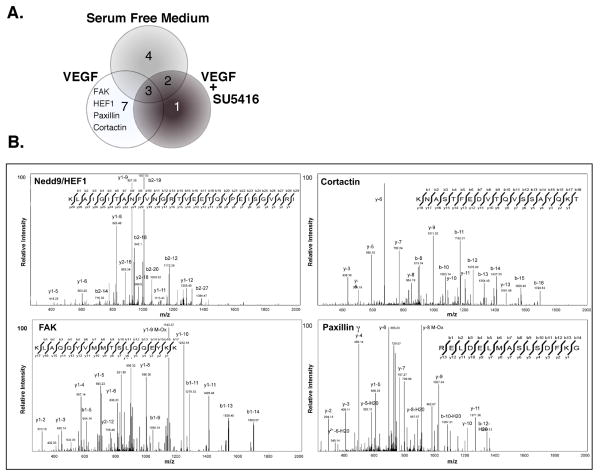
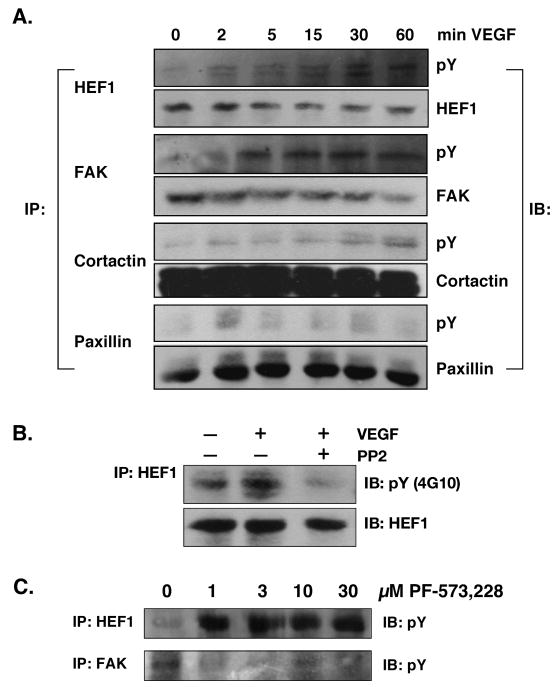
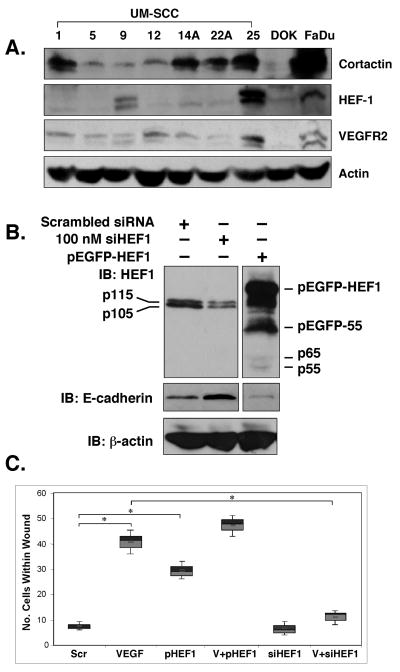
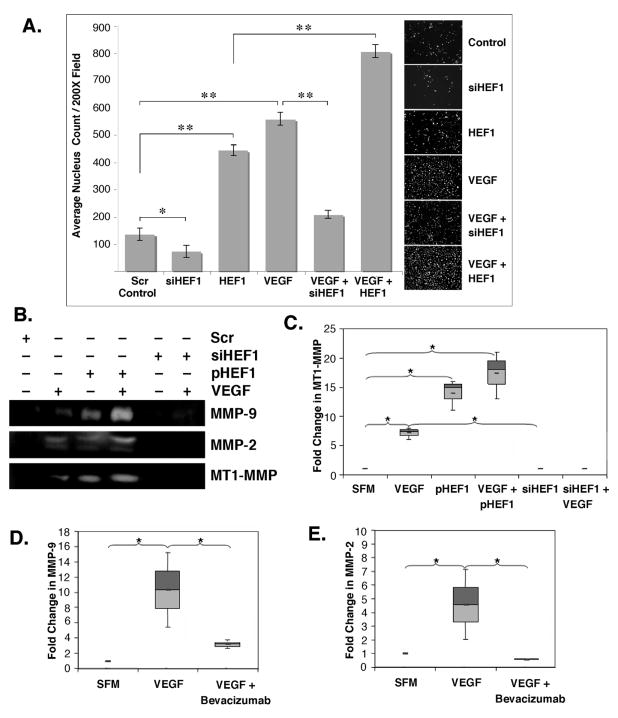
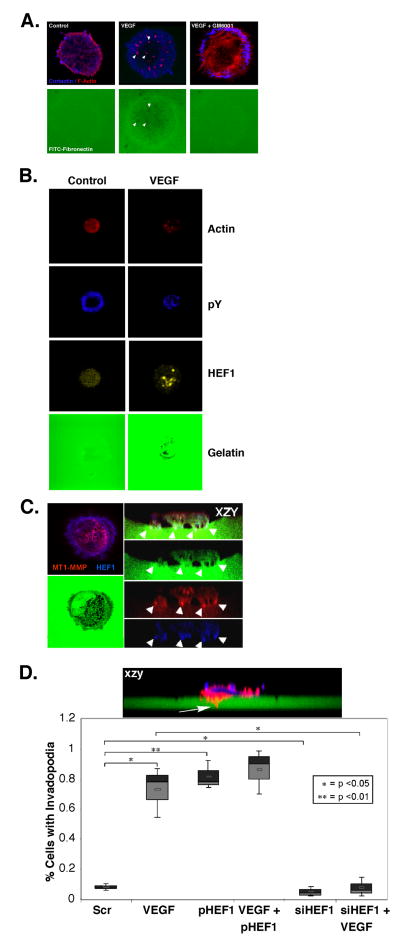
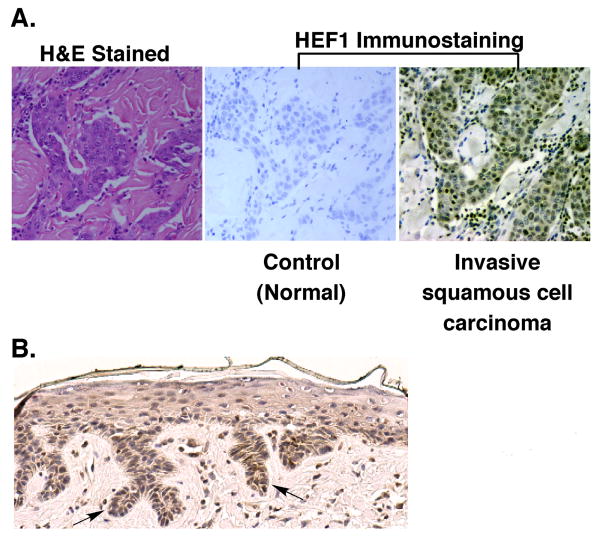
We previously reported a vascular endothelial growth factor (VEGF) autocrine loop in head and neck squamous cell carcinoma (HNSCC) cell lines, supporting a role for VEGF in HNSCC tumorigenesis. Using a phosphotyrosine proteomics approach, we screened the HNSCC cell line, squamous cell carcinoma-9 for effectors of VEGFR2 signaling. A cluster of proteins involved in cell migration and invasion, including the p130Cas paralog, human enhancer of filamentation 1 (HEF1/Cas-L/Nedd9) was identified. HEF1 silencing and overexpression studies revealed a role for VEGF in regulating cell migration, invasion and matrix metalloproteinase (MMP) expression in a HEF1-dependent manner. Moreover, cells plated on extracellular matrix-coated coverslips showed enhanced invadopodia formation in response to VEGF that was HEF1-dependent. Immunolocalization revealed that HEF1 colocalized to invadopodia with MT1-MMP. Analysis of HNSCC tissue microarrays for HEF1 immunoreactivity revealed a 6.5-fold increase in the odds of having a metastasis with a high HEF1 score compared with a low HEF1 score. These findings suggest that HEF1 may be prognostic for advanced stage HNSCC. They also show for the first time that HEF1 is required for VEGF-mediated HNSCC cell migration and invasion, consistent with HEF1's recent identification as a metastatic regulator. These results support a strategy targeting VEGF:VEGFR2 in HNSCC therapeutics.
Conflict of interest statement
Figures
References
-
- Arold ST, Hoellerer MK, Noble MEM. The Structural Basis of Localization and Signaling by the Focal Adhesion Targeting Domain. Structure. 2002;10:319–327. - PubMed
-
- Ayala I, Baldassarre M, Giacchetti G, Caldieri G, Tete S, Luini A, et al. Multiple regulatory inputs converge on cortactin to control invadopodia biogenesis and extracellular matrix degradation. J Cell Sci. 2008;121:369–78. - PubMed
-
- Bachelder RE, Lipscomb EA, Lin X, Wendt MA, Chadborn NH, Eickholt BJ, et al. Competing autocrine pathways involving alternative neuropilin-1 ligands regulate chemotaxis of carcinoma cells. Cancer Res. 2003;63:5230–3. - PubMed
Publication types
MeSH terms
Substances
Grants and funding
LinkOut - more resources
Full Text Sources
Medical
