


Human Th1 cells that express CD300a are polyfunctional and after stimulation up-regulate the T-box transcription factor eomesodermin
- PMID: 20498708
- PMCID: PMC2869357
- DOI: 10.1371/journal.pone.0010636
Human Th1 cells that express CD300a are polyfunctional and after stimulation up-regulate the T-box transcription factor eomesodermin
Abstract
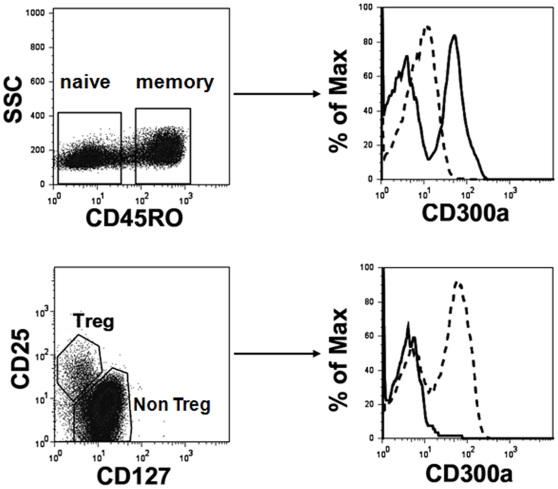
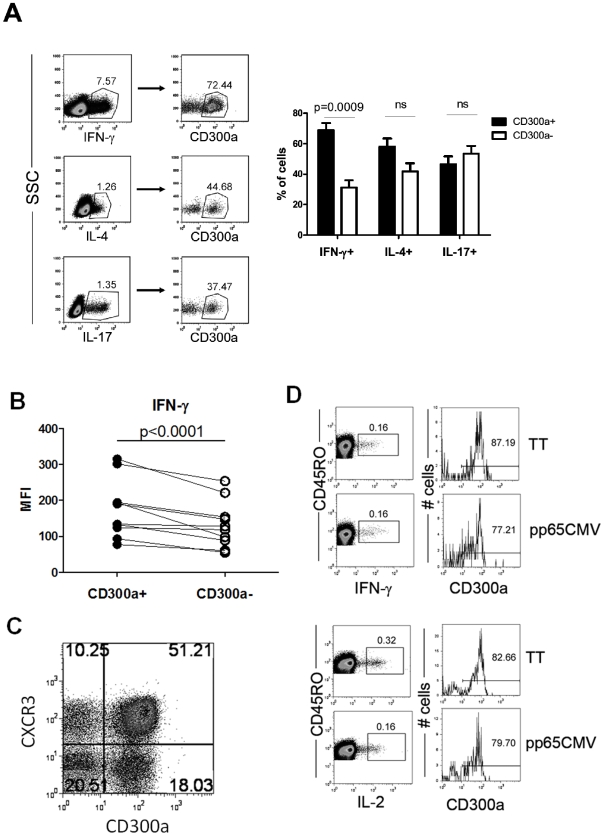
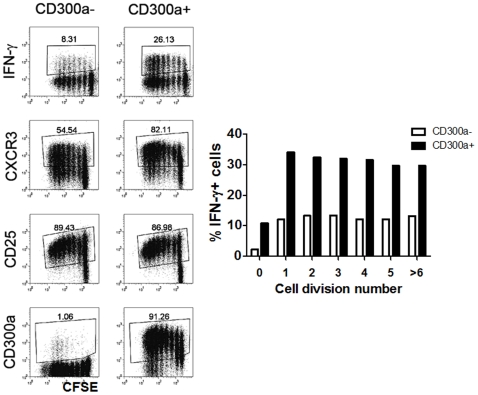
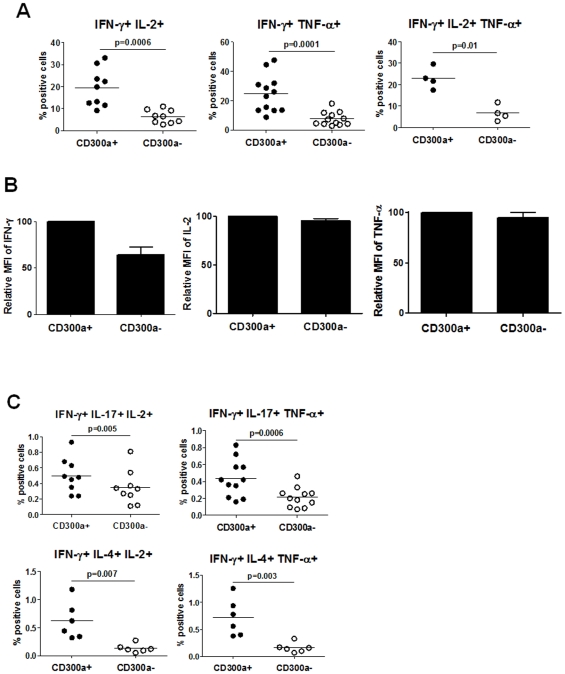
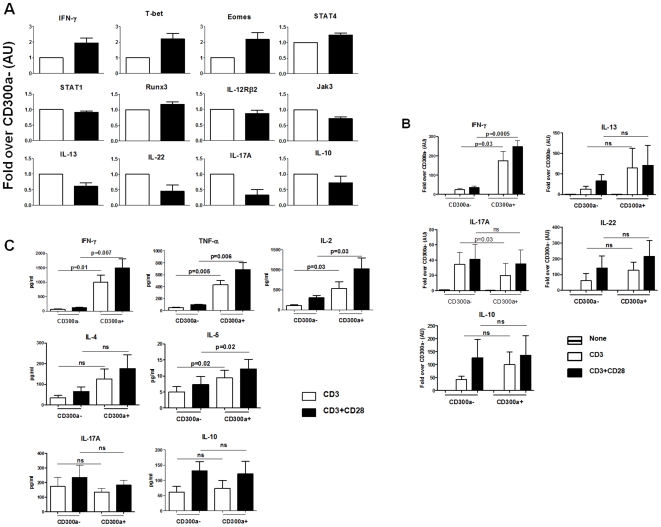
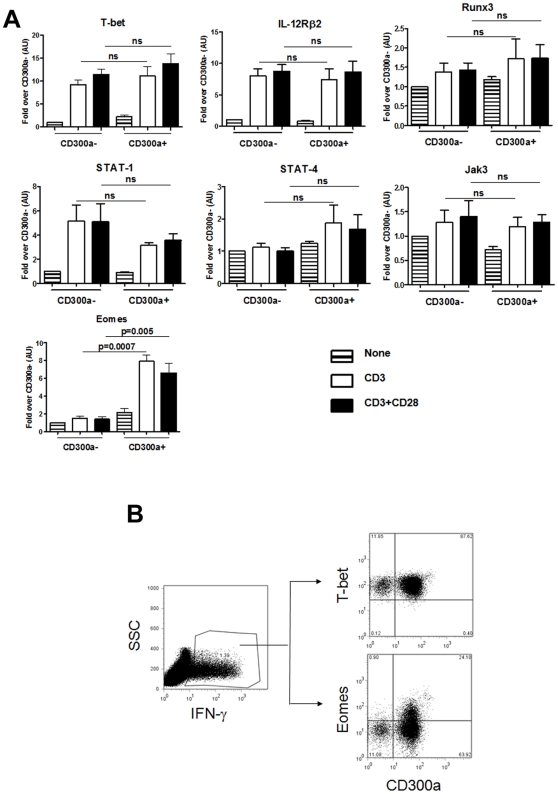
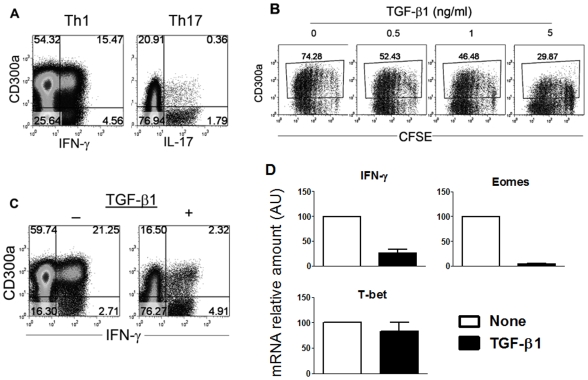
Human naïve CD4 T cells express low levels of the immunomodulatory receptor CD300a, whereas effector/memory CD4 cells can be either CD300a(+) or CD300a(-). This suggested that CD300a expression could define a specific subset within the effector/memory CD4 T cell subpopulations. In fact, ex vivo analysis of the IFN-gamma producing CD4 T cells showed that they are enriched in the CD300a(+) subset. Moreover, stimulated CD4 T cells producing TNF-alpha and IL-2 besides IFN-gamma (polyfunctional) are predominantly CD300a(+). In addition to producing markedly higher levels of Th1-associated cytokines, the stimulated CD300a(+) CD4 T cells are distinguished by a striking up-regulation of the T-box transcription factor eomesodermin (Eomes), whereas T-bet is up-regulated in both CD300a(+) and CD300a(-) activated CD4 T cells to similar levels. The pleiotropic cytokine TGF-beta1 has a determinant role in dictating the development of this Th1 subset, as its presence inhibits the expression of CD300a and down-regulates the expression of Eomes and IFN-gamma. We conclude that CD300a(+) human Th1 cells tend to be polyfunctional and after stimulation up-regulate Eomes.
Conflict of interest statement
Figures
References
-
- Foulds KE, Wu CY, Seder RA. Th1 memory: implications for vaccine development. Immunol Rev. 2006;211:58–66. - PubMed
-
- Tang J, Zhu W, Silver PB, Su SB, Chan CC, et al. Autoimmune uveitis elicited with antigen-pulsed dendritic cells has a distinct clinical signature and is driven by unique effector mechanisms: initial encounter with autoantigen defines disease phenotype. J Immunol. 2007;178:5578–5587. - PubMed
-
- Georas SN, Guo J, De Fanis U, Casolaro V. T-helper cell type-2 regulation in allergic disease. Eur Respir J. 2005;26:1119–1137. - PubMed
Publication types
MeSH terms
Substances
Grants and funding
LinkOut - more resources
Full Text Sources
Molecular Biology Databases
Research Materials
