


Genetic influences on incidence and case-fatality of infectious disease
- PMID: 20498716
- PMCID: PMC2871036
- DOI: 10.1371/journal.pone.0010603
Genetic influences on incidence and case-fatality of infectious disease
Abstract
Background: Family, twin and adoption studies suggest that genetic susceptibility contributes to familial aggregation of infectious diseases or to death from infections. We estimated genetic and shared environmental influences separately on the risk of acquiring an infection (incidence) and on dying from it (case fatality).
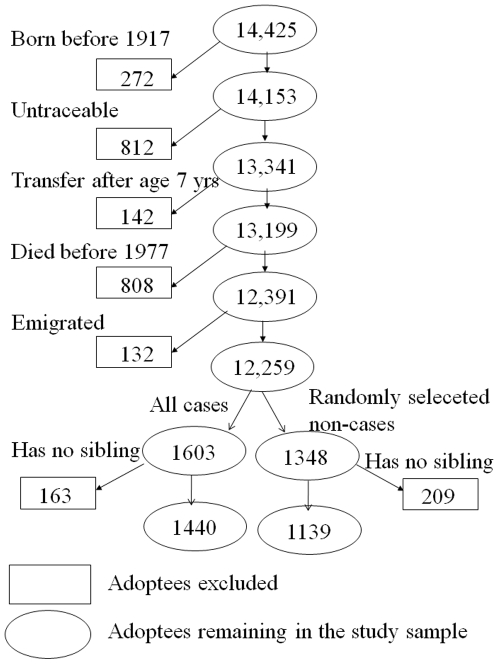
Methods: Genetic influences were estimated by the association between rates of hospitalization for infections and between case-fatality rates of adoptees and their biological full- and half- siblings. Familial environmental influences were investigated in adoptees and their adoptive siblings. Among 14,425 non-familial adoptions, granted in Denmark during the period 1924-47, we selected 1,603 adoptees, who had been hospitalized for infections and/or died with infection between 1977 and 1993. Their siblings were considered predisposed to infection, and compared with non-predisposed siblings of randomly selected 1,348 adoptees alive in 1993 and not hospitalized for infections in the observation period. The risk ratios presented were based on a Cox regression model.
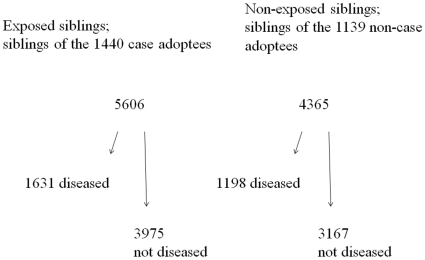
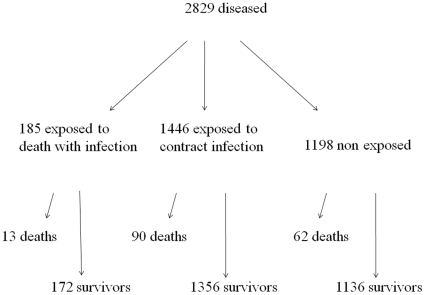
Results: Among 9971 identified siblings, 2829 had been hospitalised for infections. The risk of infectious disease was increased among predisposed compared with non-predisposed in both biological (1.18; 95% confidence limits 1.03-1.36) and adoptive siblings (1.23; 0.98-1.53). The risk of a fatal outcome of the infections was strongly increased (9.36; 2.94-29.8) in biological full siblings, but such associations were not observed for the biological half siblings or for the adoptive siblings.
Conclusion: Risk of getting infections appears to be weakly influenced by both genetically determined susceptibility to infection and by family environment, whereas there appears to be a strong non-additive genetic influence on risk of fatal outcome.
Conflict of interest statement
Figures
References
-
- Tuite A, Gros P. The impact of genomics on the analysis of host resistance to infectious disease. Microbes and Infection. 2006;8:1647–1653. - PubMed
-
- Motsinger AA, Haas DW, Hulgan T, Ritchie MD. Human genomic association studies: a primer for the infectious disease specialst. JID. 2007;195:1737–44. - PubMed
-
- Brouwer MC, de Gans J, Heckenberg SGB, Zwinderman AH, van der Poll T, et al. Host genetic susceptibility to pneumococcal and meningococcal disease: a systematic review and meta-analysis. Lancet. 2009;9:31–44. - PubMed
Publication types
MeSH terms
LinkOut - more resources
Full Text Sources
