


The renin phenotype: roles and regulation in the kidney
- PMID: 20502328
- PMCID: PMC3079389
- DOI: 10.1097/MNH.0b013e32833aff32
The renin phenotype: roles and regulation in the kidney
Abstract
Purpose of review: Renin cells are fundamental for the control of blood pressure, fluid electrolyte homeostasis and kidney development. This review discusses recent discoveries regarding the mechanisms that control the identity and fate of renin cells and their role in the maintenance of kidney architecture and function.
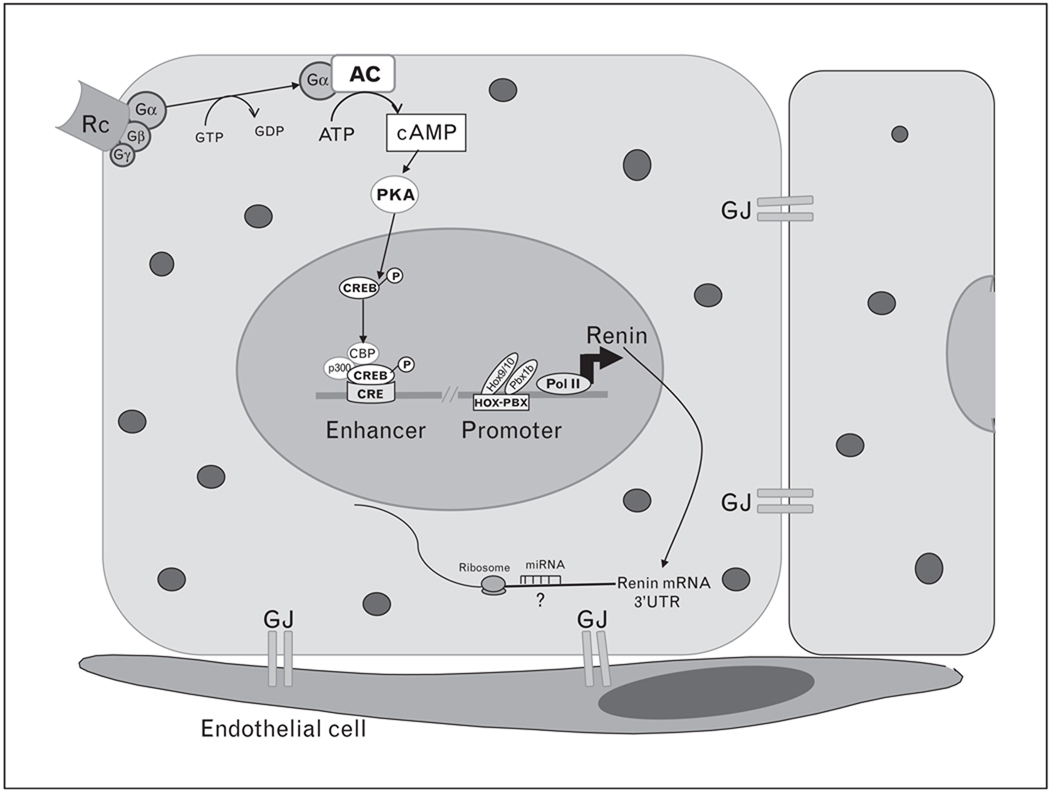
Recent findings: It is now established that cyclic AMP is a crucial factor for the regulation of the renin phenotype. Furthermore, additional factors such as microRNAs and gap junctions have recently emerged as key regulators for the maintenance and proper functioning of renin cells.
Summary: Experiments described in this review will hopefully raise new questions regarding the mechanisms that control the identity, plasticity and function of renin cells.
Figures
References
-
- Reddi V, Zaglul A, Pentz ES, Gomez RA. Renin-expressing cells are associated with branching of the developing kidney vasculature. J Am Soc Nephrol. 1998;9:63–71. - PubMed
-
- Sequeira Lopez ML, Gomez RA. The role of angiotensin II in kidney embryogenesis and kidney abnormalities. Curr Opin Nephrol Hypertens. 2004;13:117–122. - PubMed
-
- Gomez RA, Chevalier RL, Sturgill BC, et al. Maturation of the intrarenal renin distribution in Wistar–Kyoto rats. J Hypertens. 1986;4:s31–s33.
-
- Sequeira Lopez ML, Pentz ES, Robert B, et al. Embryonic origin and lineage of juxtaglomerular cells. Am J Physiol Renal Physiol. 2001;281:F345–F356. - PubMed
-
- Sequeira Lopez ML, Pentz ES, Nomasa T, et al. Renin cells are precursors for multiple cell types that switch to the renin phenotype when homeostasis is threatened. Dev Cell. 2004;6:719–728. - PubMed
Publication types
MeSH terms
Substances
Grants and funding
LinkOut - more resources
Full Text Sources
Miscellaneous
