


Mental Illness and Mental Health: The Two Continua Model Across the Lifespan
- PMID: 20502508
- PMCID: PMC2866965
- DOI: 10.1007/s10804-009-9082-y
Mental Illness and Mental Health: The Two Continua Model Across the Lifespan
Abstract
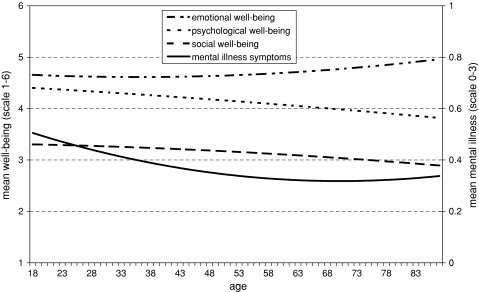
Mental health has long been defined as the absence of psychopathologies, such as depression and anxiety. The absence of mental illness, however, is a minimal outcome from a psychological perspective on lifespan development. This article therefore focuses on mental illness as well as on three core components of positive mental health: feelings of happiness and satisfaction with life (emotional well-being), positive individual functioning in terms of self-realization (psychological well-being), and positive societal functioning in terms of being of social value (social well-being). The two continua model holds that mental illness and mental health are related but distinct dimensions. This model was studied on the basis of a cross-sectional representative internet survey of Dutch adults (N = 1,340; 18-87 years). Mental illness was measured with the Brief Symptom Inventory and mental health with the Mental Health Continuum Short Form. It was found that older adults, except for the oldest-old, scored lower on psychopathological symptoms and were less likely to be mentally ill than younger adults. Although there were fewer age differences for mental health, older adults experienced more emotional, similar social and slightly lower psychological well-being. In sum, today's older adults have fewer mental illness problems, but they are not in a better positive mental health than today's younger adults. These findings support the validity of the two continua model in adult development.
Figures
References
-
- Andrews FM, Withey SB. Social indicators of well-being: Americans’ perceptions of life quality. New York: Plenum; 1976.
-
- Bradburn NM. The structure of psychological well-being. Chicago: Aldine; 1969.
-
- Campbell A, Converse PE, Rodgers WL. The quality of American life: Perceptions, evaluations and satisfactions. New York: Russell Sage; 1976.
LinkOut - more resources
Full Text Sources