


Influence of arsenate and arsenite on signal transduction pathways: an update
- PMID: 20502880
- PMCID: PMC2911141
- DOI: 10.1007/s00204-010-0554-4
Influence of arsenate and arsenite on signal transduction pathways: an update
Abstract
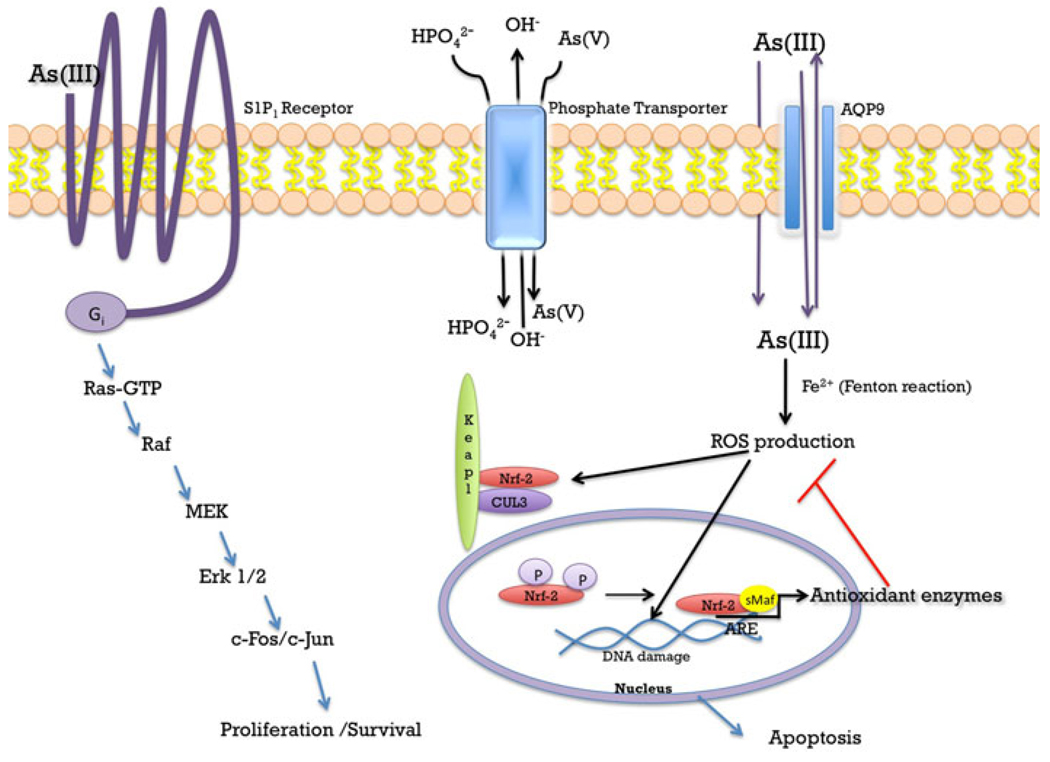
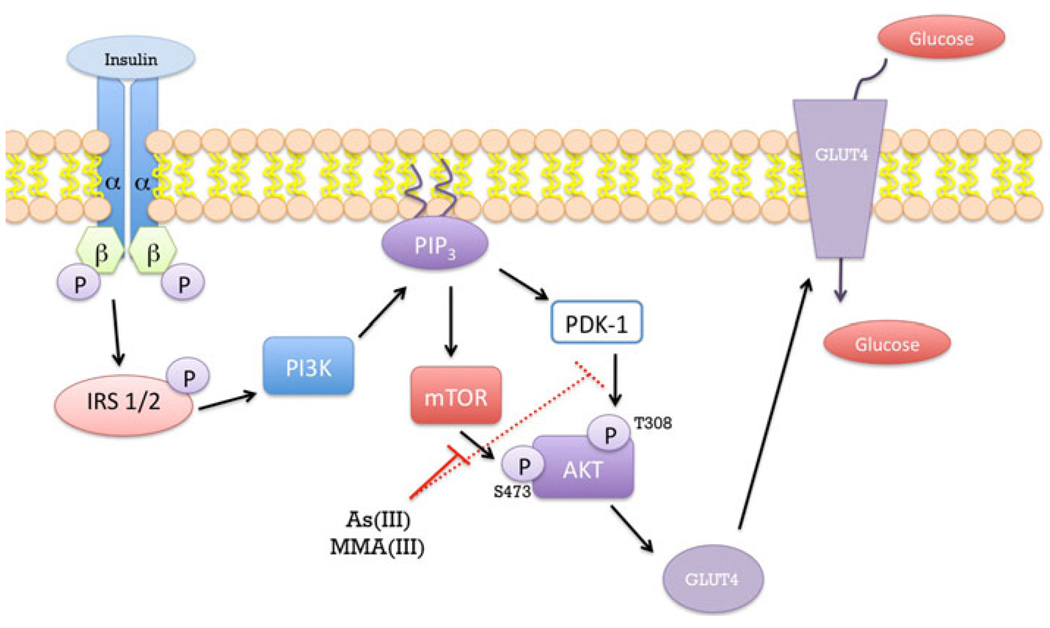
Arsenic has been a recognized contaminant and toxicant, as well as a medicinal compound throughout human history. Populations throughout the world are exposed to arsenic and these exposures have been associated with a number of human cancers. Not much is known about the role of arsenic as a human carcinogen and more recently its role in non-cancerous diseases, such as cardiovascular disease, hypertension and diabetes mellitus have been uncovered. The health effects associated with arsenic are numerous and the association between arsenic exposure and human disease has intensified the search for molecular mechanisms that describe the biological activity of arsenic in humans and leads to the aforementioned disease states. Arsenic poses a human health risk due in part to the regulation of cellular signal transduction pathways and over the last few decades, some cellular mechanisms that account for arsenic toxicity, as well as, signal transduction pathways have been discovered. However, given the ubiquitous nature of arsenic in the environment, making sense of all the data remains a challenge. This review will focus on our knowledge of signal transduction pathways that are regulated by arsenic.
Figures
Comment in
-
Severe arsenic poisoning: one of the largest man-made catastrophies.Arch Toxicol. 2010 Aug;84(8):583-4. doi: 10.1007/s00204-010-0575-z. Arch Toxicol. 2010. PMID: 20625701 No abstract available.
References
-
- Achanzar WE, Brambila EM, Diwan BA, Webber MM, Waalkes MP. Inorganic arsenite-induced malignant transformation of human prostate epithelial cells. J Natl Cancer Inst. 2002;94:1888–1891. - PubMed
-
- Alessi DR, James SR, Downes CP, Holmes AB, Gaffney PR, Reese CB, Cohen P. Characterization of a 3-phosphoinositide-dependent protein kinase which phosphorylates and activates protein kinase Balpha. Curr Biol. 1997;7:261–269. - PubMed
-
- Benbrahim-Tallaa L, Waterland RA, Styblo M, Achanzar WE, Webber MM, Waalkes MP. Molecular events associated with arsenic-induced malignant transformation of human prostatic epithelial cells: aberrant genomic DNA methylation and K-Ras oncogene activation. Toxicol Appl Pharmacol. 2005;206:288–298. - PubMed
-
- Bennett RL, Malamy MH. Arsenate resistant mutants of Escherichia coli and phosphate transport. Biochem Biophys Res Commun. 1970;40:496–503. - PubMed
Publication types
MeSH terms
Substances
Grants and funding
LinkOut - more resources
Full Text Sources
