


Structure of the human BK channel Ca2+-activation apparatus at 3.0 A resolution
- PMID: 20508092
- PMCID: PMC3022345
- DOI: 10.1126/science.1190414
Structure of the human BK channel Ca2+-activation apparatus at 3.0 A resolution
Abstract
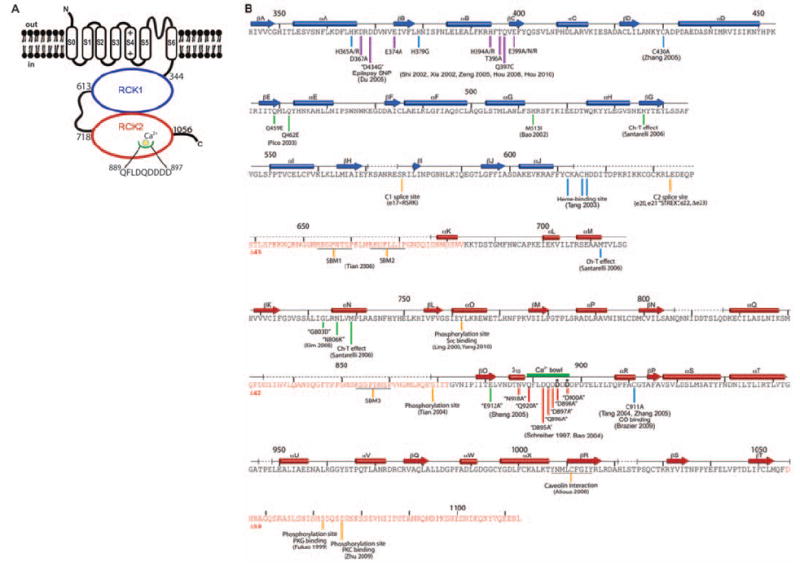
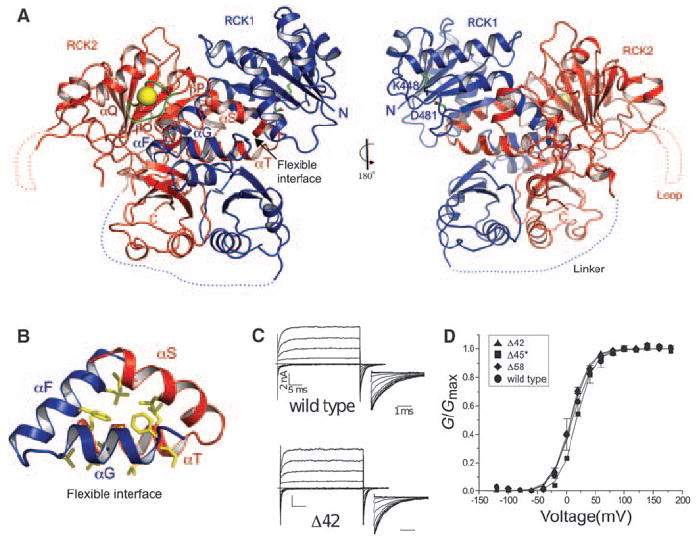
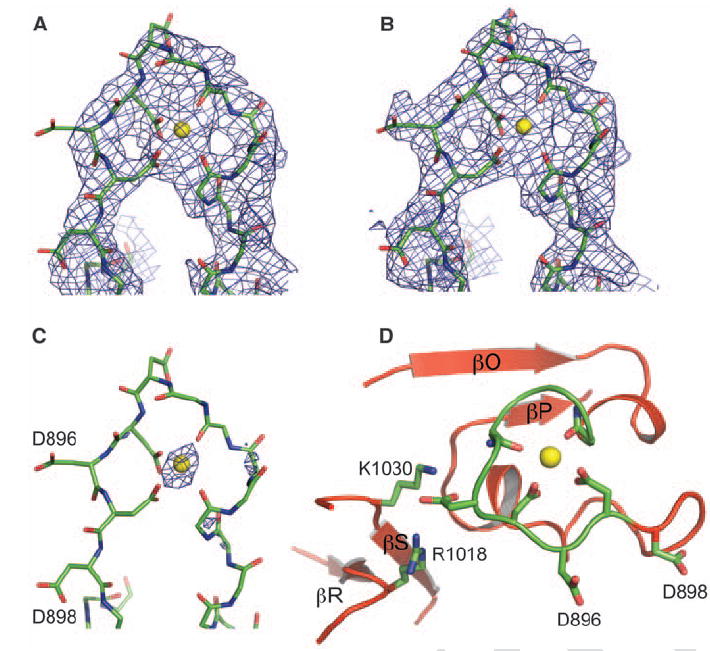
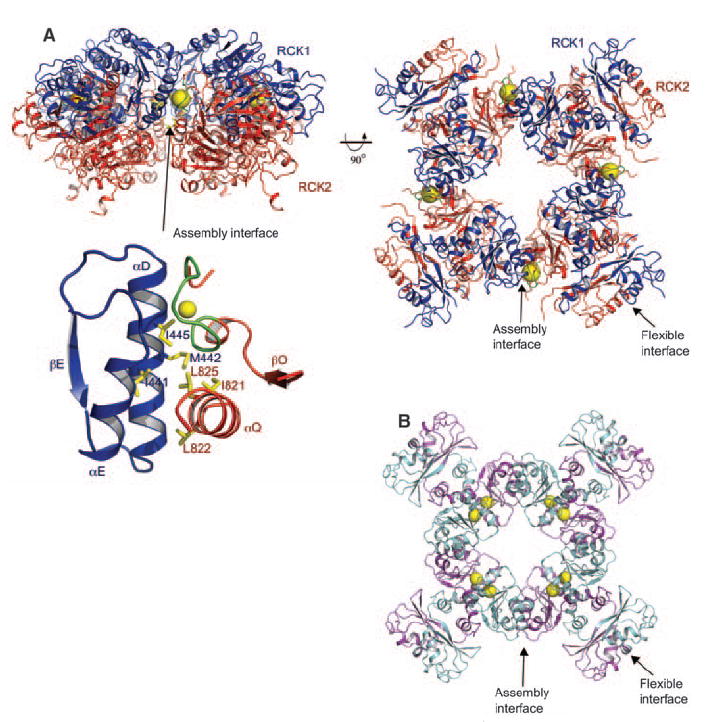
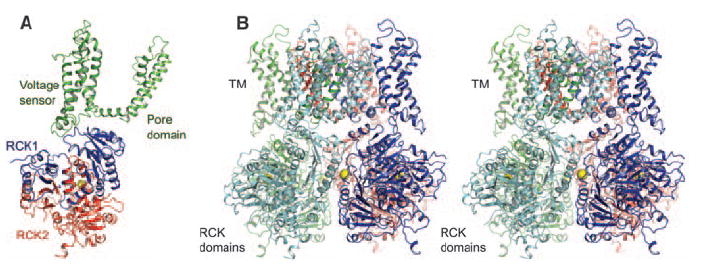
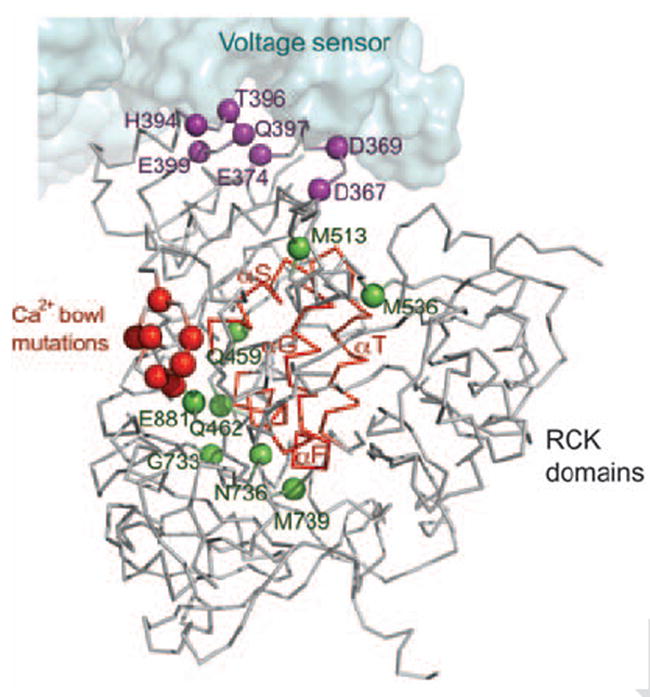
High-conductance voltage- and Ca2+-activated K+ (BK) channels encode negative feedback regulation of membrane voltage and Ca2+ signaling, playing a central role in numerous physiological processes. We determined the x-ray structure of the human BK Ca2+ gating apparatus at a resolution of 3.0 angstroms and deduced its tetrameric assembly by solving a 6 angstrom resolution structure of a Na+-activated homolog. Two tandem C-terminal regulator of K+ conductance (RCK) domains from each of four channel subunits form a 350-kilodalton gating ring at the intracellular membrane surface. A sequence of aspartic amino acids that is known as the Ca2+ bowl, and is located within the second of the tandem RCK domains, creates four Ca2+ binding sites on the outer perimeter of the gating ring at the "assembly interface" between RCK domains. Functionally important mutations cluster near the Ca2+ bowl, near the "flexible interface" between RCK domains, and on the surface of the gating ring that faces the voltage sensors. The structure suggests that the Ca2+ gating ring, in addition to regulating the pore directly, may also modulate the voltage sensor.
Figures
Comment in
-
Biochemistry. Old gate gets a new look.Science. 2010 Jul 9;329(5988):151-2. doi: 10.1126/science.1192680. Science. 2010. PMID: 20616256 No abstract available.
References
Publication types
MeSH terms
Substances
Associated data
- Actions
Grants and funding
LinkOut - more resources
Full Text Sources
Other Literature Sources
Molecular Biology Databases
Miscellaneous
