


Impact of blood glucose self-monitoring errors on glucose variability, risk for hypoglycemia, and average glucose control in type 1 diabetes: an in silico study
- PMID: 20513321
- PMCID: PMC2901032
- DOI: 10.1177/193229681000400309
Impact of blood glucose self-monitoring errors on glucose variability, risk for hypoglycemia, and average glucose control in type 1 diabetes: an in silico study
Abstract
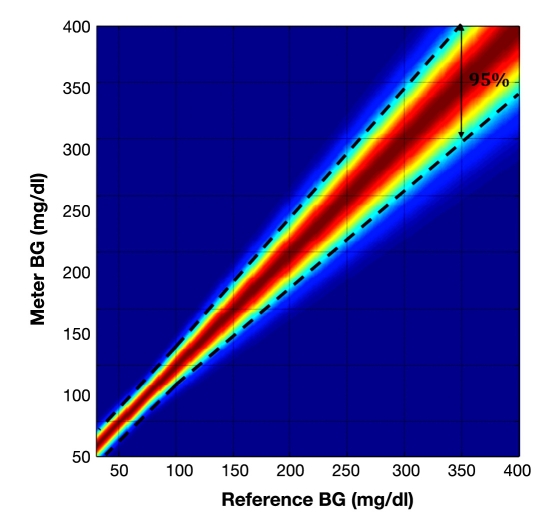
Background: Clinical trials assessing the impact of errors in self-monitoring of blood glucose (SMBG) on the quality of glycemic control in diabetes are inherently difficult to execute. Consequently, the objectives of this study were to employ realistic computer simulation based on a validated model of the human metabolic system and to provide potentially valuable information about the relationships among SMBG errors, risk for hypoglycemia, glucose variability, and long-term glycemic control.
Methods: Sixteen thousand computer simulation trials were conducted using 100 simulated adults with type 1 diabetes. Each simulated subject was used in four simulation experiments aiming to assess the impact of SMBG errors on detection of hypoglycemia (experiment 1), risk for hypoglycemia (experiment 2), glucose variability (experiment 3), and long-term average glucose control, i.e., estimated hemoglobin A1c (HbA1c)(experiment 4). Each experiment was repeated 10 times at each of four increasing levels of SMBG errors: 5, 10, 15, and 20% deviation from the true blood glucose value.
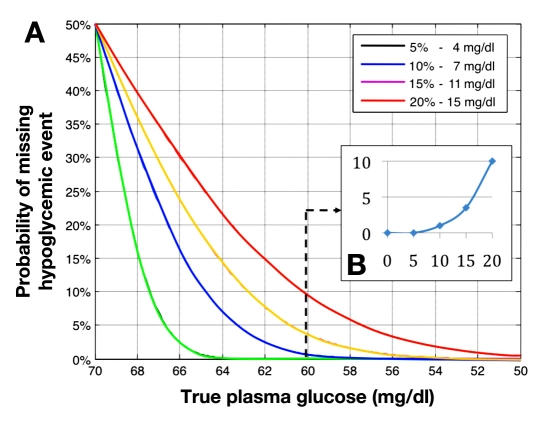
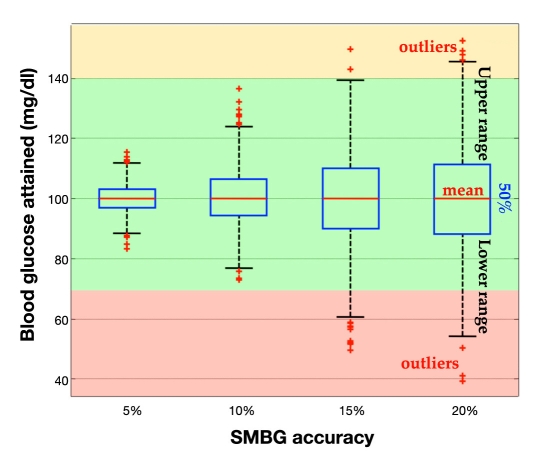
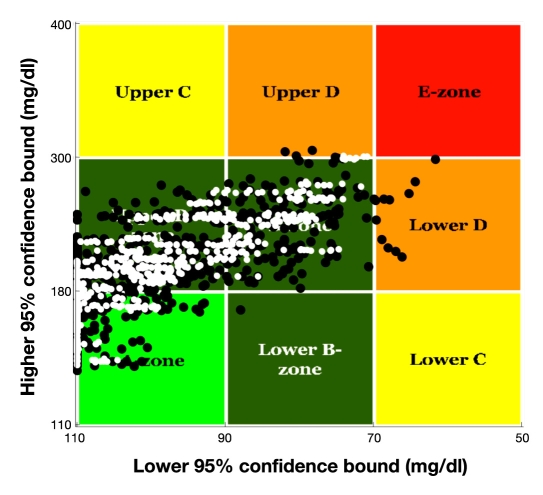
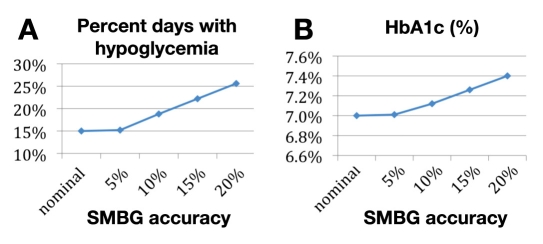
Results: When the permitted SMBG error increased from 0 to 5-10% to 15-20%-the current level allowed by International Organization for Standardization 15197-(1) the probability for missing blood glucose readings of 60 mg/dl increased from 0 to 0-1% to 3.5-10%; (2) the incidence of hypoglycemia, defined as reference blood glucose <or=70 mg/dl, changed from 0 to 0-0% to 0.1-5.5%; (3) glucose variability increased as well, as indicated by control variability grid analysis; and (4) the incidence of hypoglycemia increased from 15.0 to 15.2-18.8% to 22-25.6%. When compensating for this increase, glycemic control deteriorated with HbA1c increasing gradually from 7.00 to 7.01-7.12% to 7.26-7.40%.
Conclusions: A number of parameters of glycemic control deteriorated substantially with the increase of permitted SMBG errors, as revealed by a series of computer simulations (e.g., in silico) experiments. A threshold effect apparent between 10 and 15% permitted SMBG error for most parameters, except for HbA1c, which appeared to be increasing relatively linearly with increasing SMBG error above 10%.
(c) 2010 Diabetes Technology Society.
Figures
References
-
- The Diabetes Control Complications Trial Research Group. The effect of intensive treatment of diabetes on the development and progression of long-term complications of insulin-dependent diabetes mellitus. N Engl J Med. 1993;329(14):977–986. - PubMed
-
- Reichard P, Phil M. Mortality and treatment side effects during long-term intensified conventional insulin treatment in the Stockholm Diabetes Intervention study. Diabetes. 1994;43(2):313–317. - PubMed
-
- UK Prospective Diabetes Study Group (UKPDS) Intensive blood-glucose control with sulphonylureas or insulin compared with conventional treatment and risk of complications in patients with type 2 diabetes. Lancet. 1998;352(9131):837–853. - PubMed
-
- White NH, Skor DA, Cryer PE, Levandoski L, Santiago JV. Identification of type I diabetic patients at increased risk for hypo-glycemia during intensive therapy. N Engl J Med. 1983;308(9):485–491. - PubMed
-
- Cryer PE, Gerich JE. Glucose counterregulation, hypoglycemia, and intensive therapy of diabetes mellitus. N Engl J Med. 1985;313(4):232–241. - PubMed
Publication types
MeSH terms
Substances
Grants and funding
LinkOut - more resources
Full Text Sources
Other Literature Sources
Medical
