Cost-effectiveness of guided self-help treatment for recurrent binge eating
- PMID: 20515208
- PMCID: PMC2880825
- DOI: 10.1037/a0018982
Cost-effectiveness of guided self-help treatment for recurrent binge eating
Abstract
Objective: Adoption of effective treatments for recurrent binge-eating disorders depends on the balance of costs and benefits. Using data from a recent randomized controlled trial, we conducted an incremental cost-effectiveness analysis (CEA) of a cognitive-behavioral therapy guided self-help intervention (CBT-GSH) to treat recurrent binge eating compared to treatment as usual (TAU).
Method: Participants were 123 adult members of an HMO (mean age = 37.2 years, 91.9% female, 96.7% non-Hispanic White) who met criteria for eating disorders involving binge eating as measured by the Eating Disorder Examination (C. G. Fairburn & Z. Cooper, 1993). Participants were randomized either to treatment as usual (TAU) or to TAU plus CBT-GSH. The clinical outcomes were binge-free days and quality-adjusted life years (QALYs); total societal cost was estimated using costs to patients and the health plan and related costs.
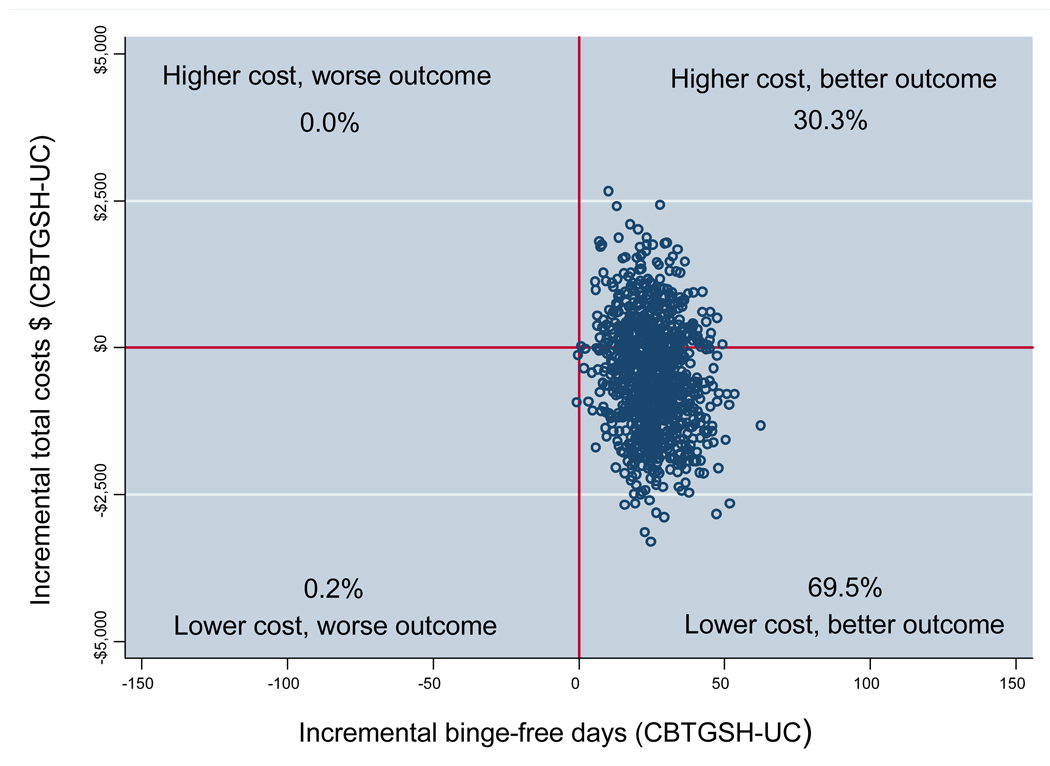
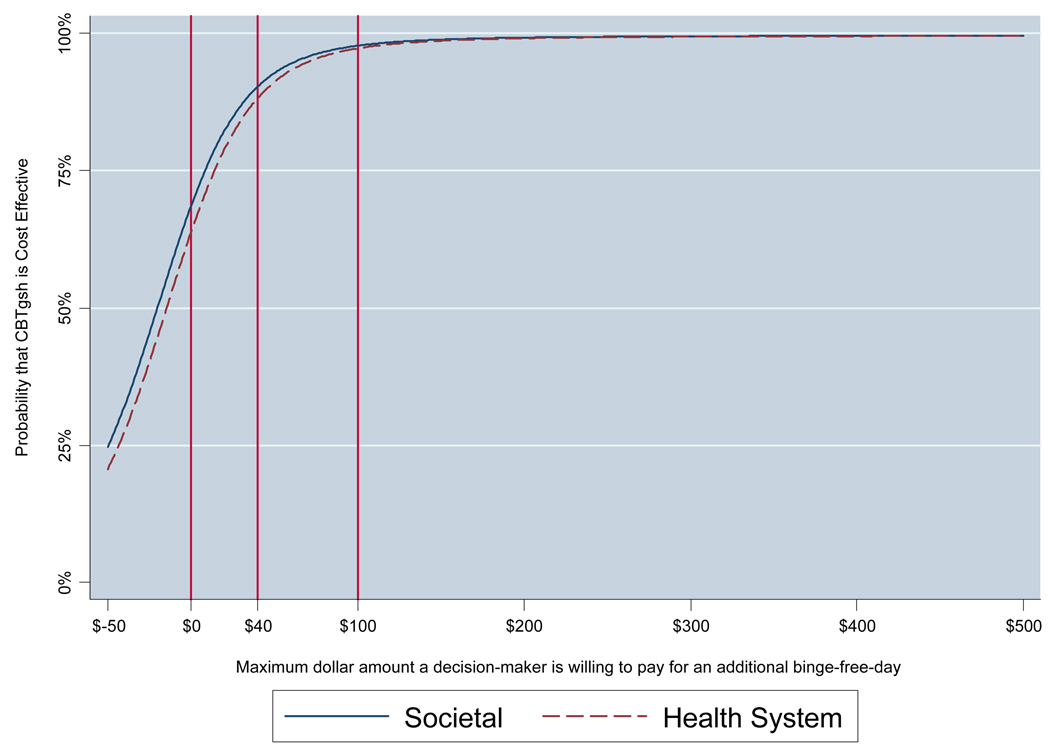
Results: Compared to those receiving TAU only, those who received TAU plus CBT-GSH experienced 25.2 more binge-free days and had lower total societal costs of $427 over 12 months following the intervention (incremental CEA ratio of -$20.23 per binge-free day or -$26,847 per QALY). Lower costs in the TAU plus CBT-GSH group were due to reduced use of TAU services in that group, resulting in lower net costs for the TAU plus CBT group despite the additional cost of CBT-GSH.
Conclusions: Findings support CBT-GSH dissemination for recurrent binge-eating treatment.
Trial registration: ClinicalTrials.gov NCT00158340.
Figures
References
-
- Agras WS. The consequences and costs of the eating disorders. The Psychiatric Clinics of North America. 2001;24:371–379. - PubMed
-
- Anderson P, Chisholm D, Fuhr DC. Effectiveness and cost-effectiveness of policies and programmes to reduce the harm caused by alcohol. Lancet. 2009 Jun 27;373(9682):2234–2246. - PubMed
-
- Banasiak SJ, Paxton SJ, Hay PJ. Perceptions of cognitive behavioural guided self-help treatment for bulimia nervosa in primary care. Eating Disorders. 2007;15:23–40. - PubMed
-
- Brazier J. Measuring and valuing mental health for use in economic evaluation. Journal of Health Services Research & Policy. 2008;13 Suppl. 3:70–75. - PubMed
Publication types
MeSH terms
Associated data
Grants and funding
LinkOut - more resources
Full Text Sources
Medical
Miscellaneous