Depression, craving, and substance use following a randomized trial of mindfulness-based relapse prevention
- PMID: 20515211
- PMCID: PMC3280693
- DOI: 10.1037/a0019172
Depression, craving, and substance use following a randomized trial of mindfulness-based relapse prevention
Abstract
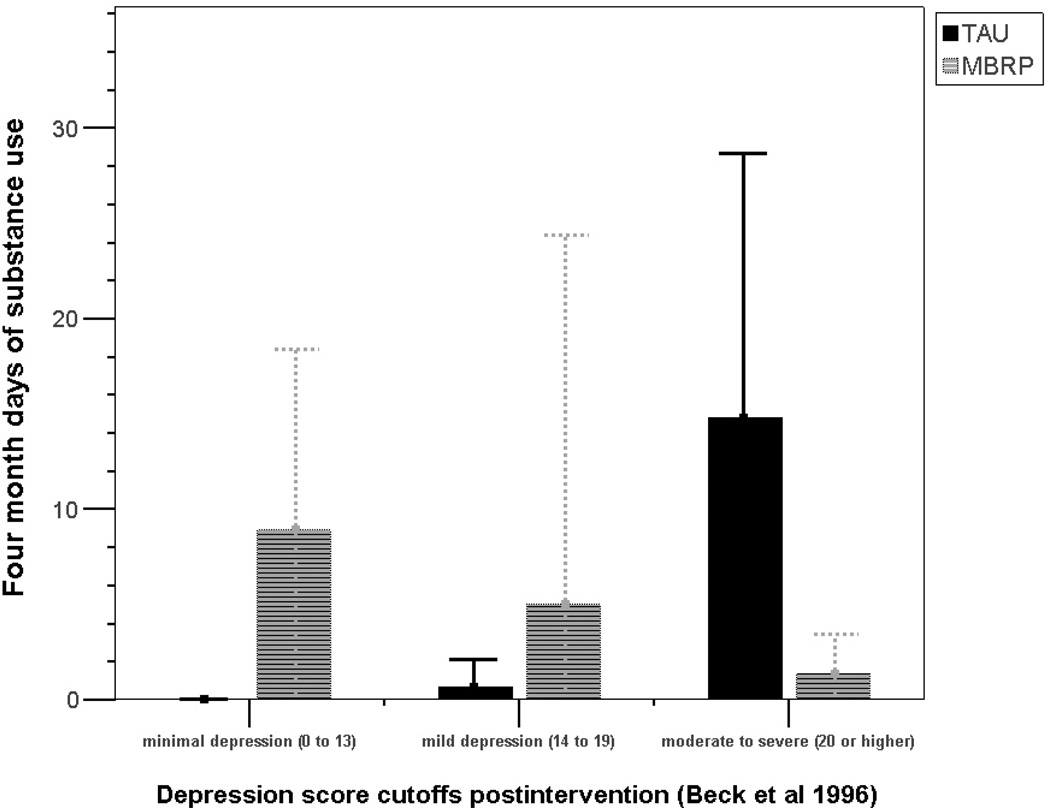
Objective: A strong relation between negative affect and craving has been demonstrated in laboratory and clinical studies, with depressive symptomatology showing particularly strong links to craving and substance abuse relapse. Mindfulness-based relapse prevention (MBRP), shown to be efficacious for reduction of substance use, uses mindfulness-based practices to teach alternative responses to emotional discomfort and lessen the conditioned response of craving in the presence of depressive symptoms. The goal in the current study was to examine the relation between measures of depressive symptoms, craving, and substance use following MBRP.
Method: Individuals with substance use disorders (N = 168; mean age 40.45 years, SD = 10.28; 36.3% female; 46.4% non-White) were recruited after intensive stabilization, then randomly assigned to either 8 weekly sessions of MBRP or a treatment-as-usual control group. Approximately 73% of the sample was retained at the final 4-month follow-up assessment.
Results: Results confirmed a moderated-mediation effect, whereby craving mediated the relation between depressive symptoms (Beck Depression Inventory) and substance use (Timeline Follow-Back) among the treatment-as-usual group but not among MBRP participants. MBRP attenuated the relation between postintervention depressive symptoms and craving (Penn Alcohol Craving Scale) 2 months following the intervention (f(2) = .21). This moderation effect predicted substance use 4 months following the intervention (f(2) = .18).
Conclusion: MBRP appears to influence cognitive and behavioral responses to depressive symptoms, partially explaining reductions in postintervention substance use among the MBRP group. Although results are preliminary, the current study provides evidence for the value of incorporating mindfulness practice into substance abuse treatment and identifies a potential mechanism of change following MBRP.
Figures
References
-
- Aiken LS, West SG. Multiple Regression: Testing and interpreting interactions. Newbury Park, CA: Sage; 1991.
-
- Armeli S, Feinn R, Tennen H, Kranzler HR. The effects of naltrexone on alcohol consumption and affect reactivity to daily interpersonal events among heavy drinkers. Experimental and Clinical Psychopharmacology. 2006;14:199–208. - PubMed
-
- Babor TF, Steinberg K, Anton R, Del Boca F. Talk is cheap: measuring drinking outcomes in clinical trials. Journal of Studies on Alcohol. 2000;61:55–63. - PubMed
-
- Baer RA, Hopkins J, Krietemeyer J, Smith GT, Toney L. Using self-report assessment methods to explore facets of mindfulness. Assessment. 2006;13:27–45. - PubMed
-
- Baker TB, Piper ME, McCarthy DE, Majeskie MR, Fiore MC. Addiction motivation reformulated: An affective processing model of negative reinforcement. Psychological Review. 2004;11:33–51. - PubMed