


Distinct genomic alterations in prostate cancers in Chinese and Western populations suggest alternative pathways of prostate carcinogenesis
- PMID: 20516122
- PMCID: PMC2896548
- DOI: 10.1158/0008-5472.CAN-09-4074
Distinct genomic alterations in prostate cancers in Chinese and Western populations suggest alternative pathways of prostate carcinogenesis
Abstract
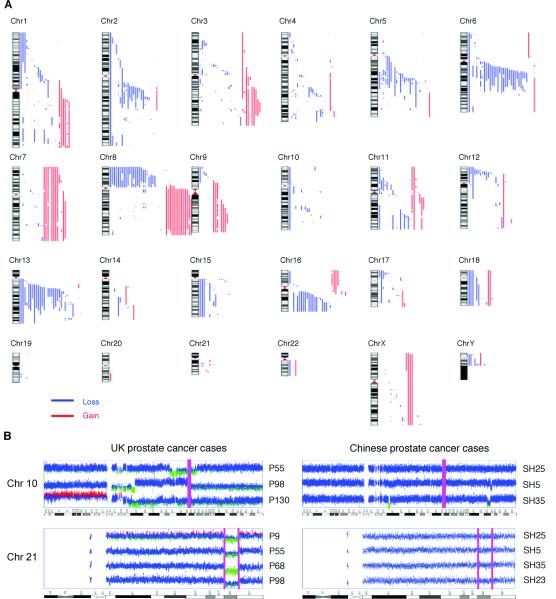
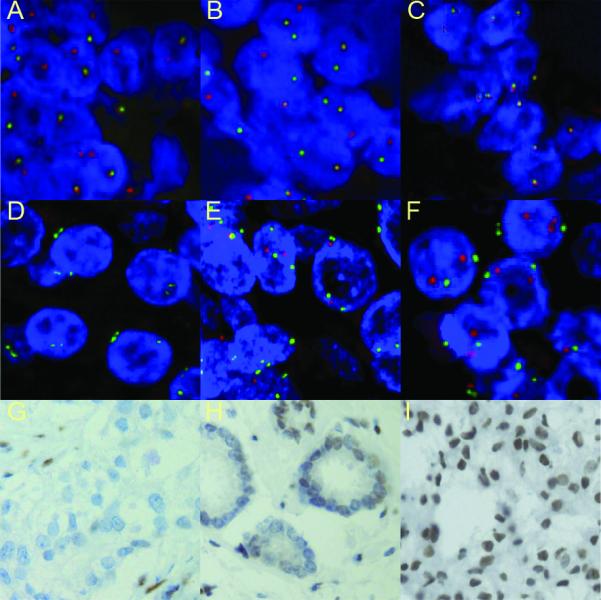
Prostate cancer is significantly more common in Western men than in Asian men, but the basis for this difference remains unknown. Because genomic studies of Asian prostate cancer are very limited, we used a genome-wide approach to reveal the genomic alterations in Chinese prostate cancers. We found a significant reduction in the frequency of certain somatic genomic changes that are commonly found in Western prostate cancers, including the 21q22.2-22.3 deletion, which involves the TMPRSS2:ERG fusion gene, and 10q deletion, which causes PTEN inactivation. Array results were confirmed by PCR-based molecular copy-number counting in selected samples. The different frequencies of these genomic changes were further evaluated by fluorescent in situ hybridization and immunohistochemistry analyses of tissue microarray samples. These alterations might be key genetic changes underlying the regional/ethnic difference in clinical incidence and might be induced by specific environmental and/or genetic risk factors that Western men are exposed to. Our findings suggest that tumors arise in Western and Chinese populations by alternative pathogenetic mechanisms.
Copyright 2010 AACR.
Figures
References
-
- Gronberg H. Prostate cancer epidemiology. Lancet. 2003;361:859–64. - PubMed
-
- Sim HG, Cheng CW. Changing demography of prostate cancer in Asia. Eur J Cancer. 2005;41:834–45. - PubMed
-
- Williams H, Powell IJ. Epidemiology, pathology, and genetics of prostate cancer among African Americans compared with other ethnicities. Methods Mol Biol. 2009;472:439–53. - PubMed
-
- Lapointe J, Li C, Giacomini CP, et al. Genomic profiling reveals alternative genetic pathways of prostate tumorigenesis. Cancer Res. 2007;67:8504–10. - PubMed
-
- Mitelman F, Johansson B, Mertens F. The impact of translocations and gene fusions on cancer causation. Nat Rev Cancer. 2007;7:233–45. - PubMed
Publication types
MeSH terms
Substances
Grants and funding
LinkOut - more resources
Full Text Sources
Other Literature Sources
Medical
Molecular Biology Databases
Research Materials
