Medication treatment of different types of alcoholism
- PMID: 20516163
- PMCID: PMC2939449
- DOI: 10.1176/appi.ajp.2010.08101500
Medication treatment of different types of alcoholism
Abstract
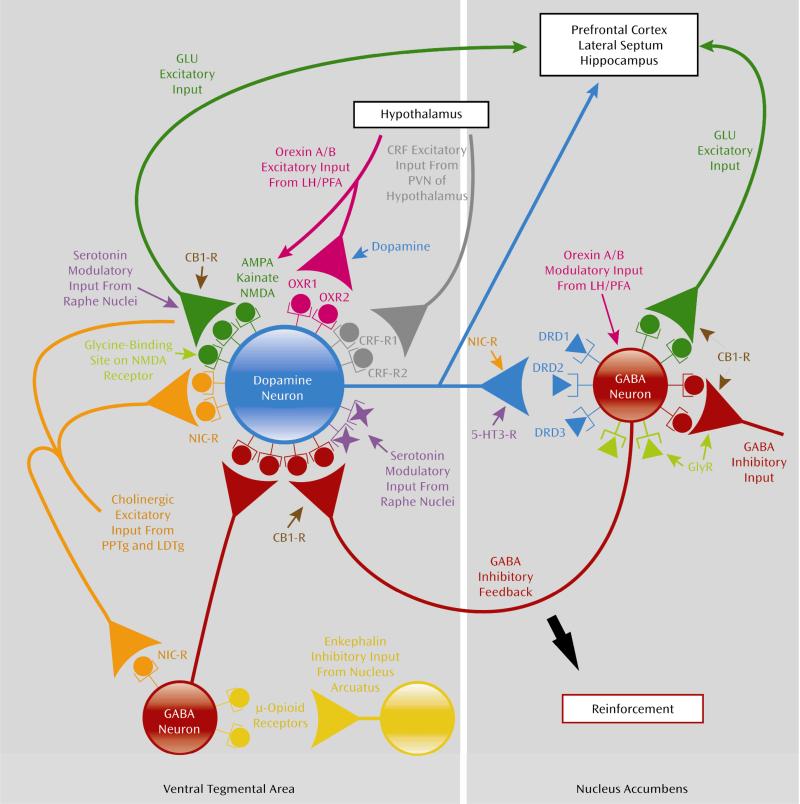
Alcoholism remains a serious cause of morbidity and mortality despite progress through neurobiological research in identifying new pharmacological strategies for its treatment. Drugs that affect neural pathways that modulate the activity of the cortico-mesolimbic dopamine system have been shown to alter drinking behavior, presumably because this dopaminergic system is closely associated with rewarding behavior. Ondansetron, naltrexone, topiramate, and baclofen are examples. Subtyping alcoholism in adults into an early-onset type, with chronic symptoms and a strong biological predisposition to the disease, and a late-onset type, typically brought on by psychosocial triggers and associated with mood symptoms, may help in the selection of optimal therapy. Emerging adults with binge drinking patterns also might be aided by selective treatments. Although preliminary work on the pharmacogenetics of alcoholism and its treatment has been promising, the assignment to treatment still depends on clinical assessment. Brief behavioral interventions that encourage the patient to set goals for a reduction in heavy drinking or abstinence also are part of optimal therapy.
Figures
Comment in
-
Treatments for alcohol dependence: rethinking the role of comorbidity and clinical subtypes.Am J Psychiatry. 2010 Jun;167(6):620-2. doi: 10.1176/appi.ajp.2010.10030309. Am J Psychiatry. 2010. PMID: 20516159 No abstract available.
-
Naltrexone effects in patients with dementia.Am J Psychiatry. 2010 Oct;167(10):1278-9. doi: 10.1176/appi.ajp.2010.09111630. Am J Psychiatry. 2010. PMID: 20889669 No abstract available.
-
Disulfiram: an anticraving substance?Am J Psychiatry. 2011 Jan;168(1):98; author reply 98-9. doi: 10.1176/appi.ajp.2010.10070943. Am J Psychiatry. 2011. PMID: 21205816 No abstract available.
References
-
- U.S. Department of Health and Human Services Bethesda, MD: National Institutes of Health, National Institute on Alcohol Abuse and Alcoholism; 2000. 10th Special Report to the U.S. Congress on Alcohol and Health.
-
- McLellan AT, Lewis DC, O'Brien CP, Kleber HD. Drug dependence, a chronic medical illness: implications for treatment, insurance, and outcomes evaluation. JAMA. 2000;284:1689–1695. - PubMed
-
- Swift RM. Drug therapy for alcohol dependence. N Engl J Med. 1999;340:1482–1490. - PubMed
-
- Finney JW, Hahn AC, Moos RH. The effectiveness of inpatient and outpatient treatment for alcohol abuse: the need to focus on mediators and moderators of setting effects. Addiction. 1996;91:1773–1796. - PubMed
-
- Johnson BA, DiClemente CC, Ait-Daoud N, Stoks SM. In: Brief Behavioral Compliance Enhancement Treatment (BBCET) manual, in Handbook of clinical alcoholism treatment. Johnson BA, Ruiz P, Galanter M, editors. Lippincott Williams & Wilkins; Baltimore, MD: 2003. pp. 282–301.
Publication types
MeSH terms
Substances
Grants and funding
- 7 U10 AA011776-10/AA/NIAAA NIH HHS/United States
- R01 AA013964/AA/NIAAA NIH HHS/United States
- R01 AA012964/AA/NIAAA NIH HHS/United States
- 5 R01 AA012964-06/AA/NIAAA NIH HHS/United States
- R01 AA010522/AA/NIAAA NIH HHS/United States
- 5 R01 AA014628-04/AA/NIAAA NIH HHS/United States
- R01 AA014628/AA/NIAAA NIH HHS/United States
- 7 R01 AA010522-12/AA/NIAAA NIH HHS/United States
- 5 R01 AA013964-05/AA/NIAAA NIH HHS/United States
- U10 AA011776/AA/NIAAA NIH HHS/United States
- 2 R01 AA010522-13/AA/NIAAA NIH HHS/United States
- M01 RR00847/RR/NCRR NIH HHS/United States
- M01 RR000847/RR/NCRR NIH HHS/United States
LinkOut - more resources
Full Text Sources
Medical