Transient ATM kinase inhibition disrupts DNA damage-induced sister chromatid exchange
- PMID: 20516478
- PMCID: PMC3261617
- DOI: 10.1126/scisignal.2000758
Transient ATM kinase inhibition disrupts DNA damage-induced sister chromatid exchange
Abstract
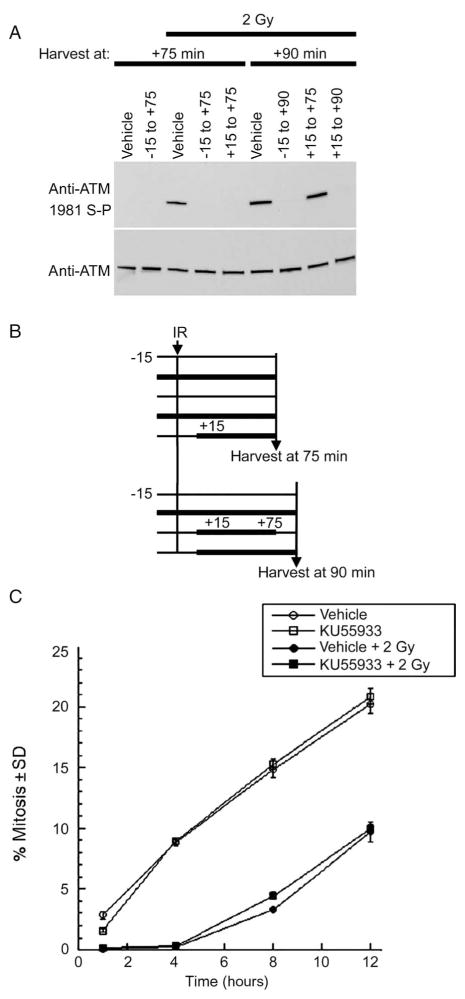
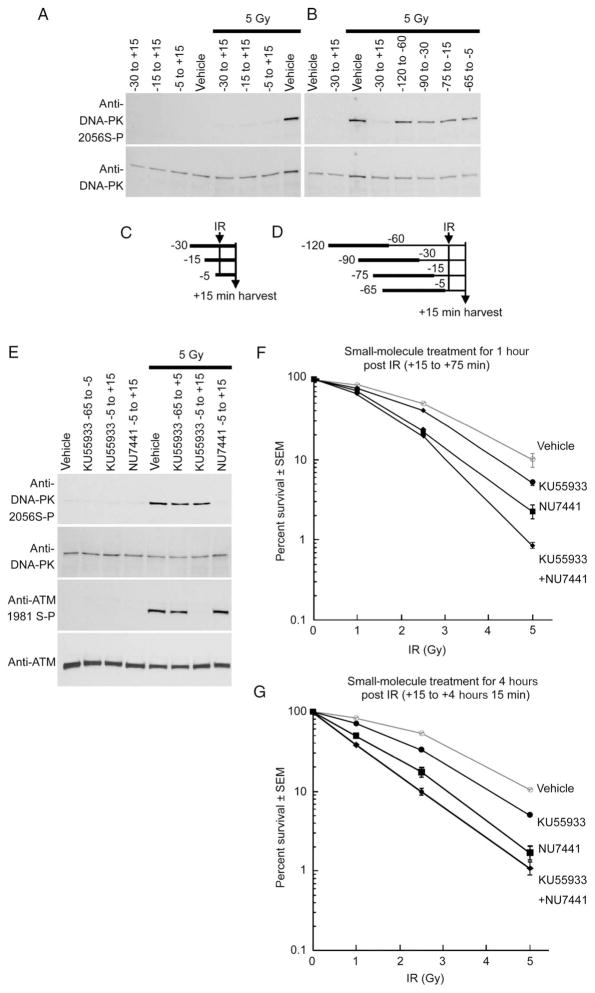
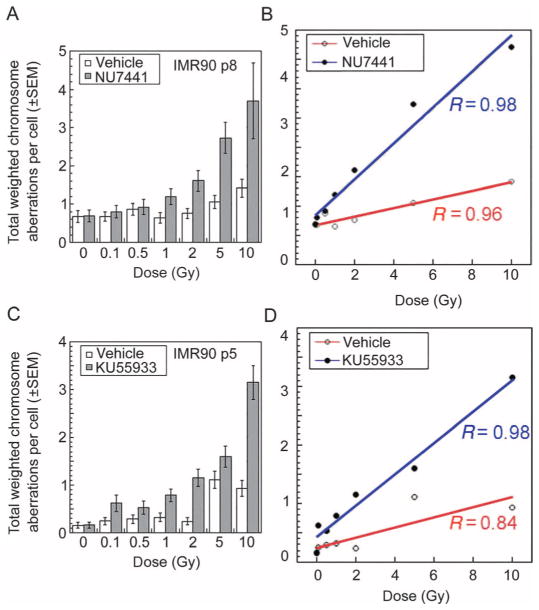
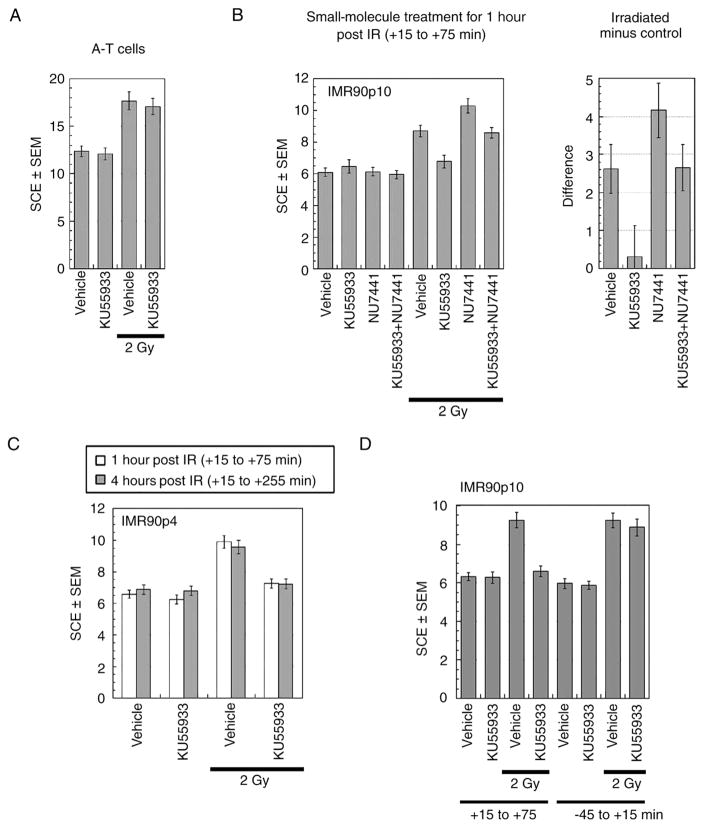
Cells derived from ataxia telangiectasia (A-T) patients exhibit defective cell cycle checkpoints because of mutations in the gene encoding ATM (ataxia telangiectasia mutated). After exposure to ionizing radiation (IR), A-T cells exhibit sensitivity to IR-induced cellular damage that results in increased chromosome aberrations and cell death (radiosensitivity). ATM is a member of a family of kinases that become activated in response to DNA damage. We showed that even transient inhibition of ATM kinase for 1 hour, initiated 15 minutes after cellular irradiation, resulted in an accumulation of persistent chromosome aberrations and increased cell death. Using reversible inhibitors of DNA-PK (DNA-dependent protein kinase), another kinase involved in responding to DNA damage, and ATM, we showed that these two kinases acted through distinct DNA repair mechanisms: ATM resolved DNA damage through a mechanism involving sister chromatid exchange (SCE), whereas DNA-PK acted through nonhomologous end joining. Furthermore, because DNA damage-induced SCE occurred in A-T fibroblasts that lack functional ATM protein, and the inhibitors of ATM kinase had no effect on DNA damage-induced SCE in A-T fibroblasts, we showed that the consequences of short-term inhibition of the kinase activity of ATM and adaptation to ATM protein disruption were distinct. This suggests that A-T fibroblasts have adapted to the loss of ATM and have alternative mechanisms to initiate SCE.
Figures

References
-
- Savitsky K, Bar-Shira A, Gilad S, Rotman G, Ziv Y, Vanagaite L, Tagle DA, Smith S, Uziel T, Sfez S, Ashkenazi M, Pecker I, Frydman M, Harnik R, Patanjali SR, Simmons A, Clines GA, Sartiel A, Gatti RA, Chessa L, Sanal O, Lavin MF, Jaspers NG, Taylor AM, Arlett CF, Miki T, Weissman SM, Lovett M, Collins FS, Shiloh Y. A single ataxia telangiectasia gene with a product similar to PI-3 kinase. Science. 1995;268:1749–1753. - PubMed
-
- Gilad S, Khosravi R, Shkedy D, Uziel T, Ziv Y, Savitsky K, Rotman G, Smith S, Chessa L, Jorgensen TJ, Harnik R, Frydman M, Sanal O, Portnoi S, Goldwicz Z, Jaspers NG, Gatti RA, Lenoir G, Lavin MF, Tatsumi K, Wegner RD, Shiloh Y, Bar-Shira A. Predominance of null mutations in ataxia-telangiectasia. Hum Mol Genet. 1996;5:433–439. - PubMed
-
- Banin S, Moyal L, Shieh S, Taya Y, Anderson CW, Chessa L, Smorodinsky NI, Prives C, Reiss Y, Shiloh Y, Ziv Y. Enhanced phosphorylation of p53 by ATM in response to DNA damage. Science. 1998;281:1674–1677. - PubMed
-
- Canman CE, Lim DS, Cimprich KA, Taya Y, Tamai K, Sakaguchi K, Appella E, Kastan MB, Siliciano JD. Activation of the ATM kinase by ionizing radiation and phosphorylation of p53. Science. 1998;281:1677–1679. - PubMed
MeSH terms
Substances
Grants and funding
LinkOut - more resources
Full Text Sources
Research Materials
Miscellaneous