


SPLUNC1 expression reduces surface levels of the epithelial sodium channel (ENaC) in Xenopus laevis oocytes
- PMID: 20519934
- PMCID: PMC2975823
- DOI: 10.4161/chan.4.4.12255
SPLUNC1 expression reduces surface levels of the epithelial sodium channel (ENaC) in Xenopus laevis oocytes
Abstract
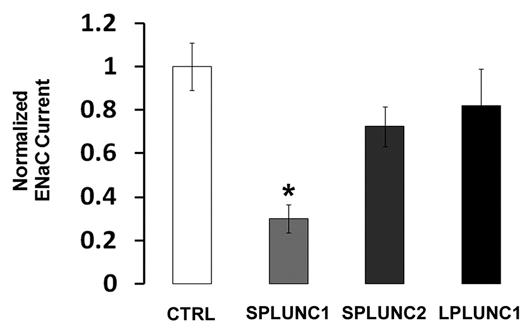
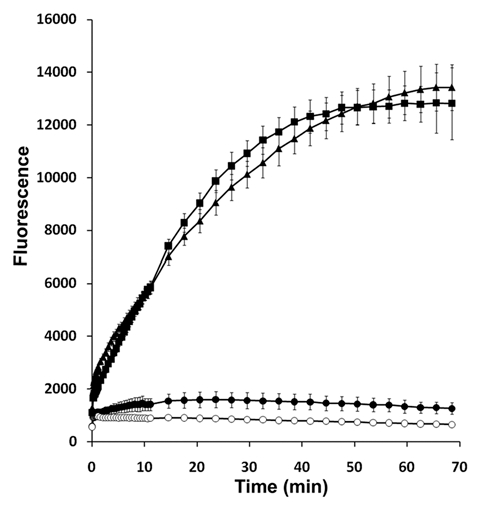
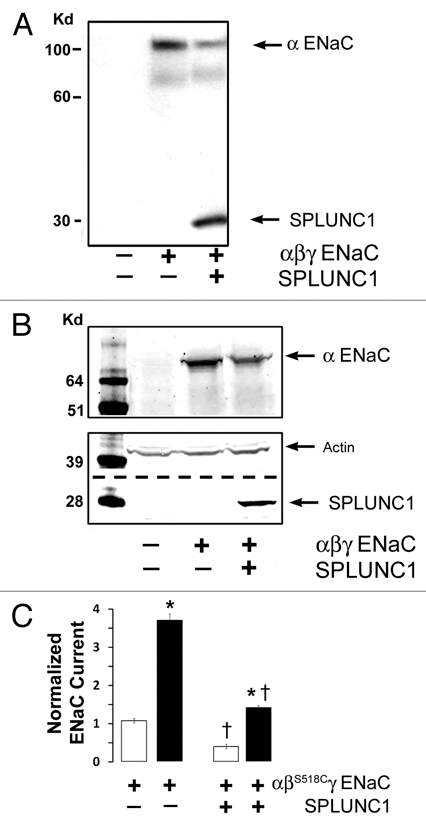
Throughout the body, the epithelial Na(+) channel (ENaC) plays a critical role in salt and liquid homeostasis. In cystic fibrosis airways, for instance, improper regulation of ENaC results in hyperabsorption of sodium that causes dehydration of airway surface liquid. This dysregulation then contributes to mucus stasis and chronic lung infections. ENaC is known to undergo proteolytic cleavage, which is required for its ability to conduct Na(+) ions. We have previously shown that the short, palate lung and nasal epithelial clone (SPLUNC1) binds to and inhibits ENaC in both airway epithelia and in Xenopus laevis oocytes. In this study, we found that SPLUNC1 was more potent at inhibiting ENaC than either SPLUNC2 or long PLUNC1 (LPLUNC1), two other PLUNC family proteins that are also expressed in airway epithelia. Furthermore, we were able to shed light on the potential mechanism of SPLUNC1's inhibition of ENaC. While SPLUNC1 did not inhibit proteolytic activity of trypsin, it significantly reduced ENaC currents by reducing the number of ENaCs in the plasma membrane. A better understanding of ENaC's regulation by endogenous inhibitors may aid in the development of novel therapies designed to inhibit hyperactive ENaC in cystic fibrosis epithelia.
Figures
Comment on
-
SPLUNC1 regulates airway surface liquid volume by protecting ENaC from proteolytic cleavage.Proc Natl Acad Sci U S A. 2009 Jul 7;106(27):11412-7. doi: 10.1073/pnas.0903609106. Epub 2009 Jun 18. Proc Natl Acad Sci U S A. 2009. PMID: 19541605 Free PMC article.
References
Publication types
MeSH terms
Substances
Grants and funding
LinkOut - more resources
Full Text Sources
Other Literature Sources
Miscellaneous
