


A susceptibility gene for kidney disease in an obese mouse model of type II diabetes maps to chromosome 8
- PMID: 20520596
- PMCID: PMC3998677
- DOI: 10.1038/ki.2010.160
A susceptibility gene for kidney disease in an obese mouse model of type II diabetes maps to chromosome 8
Abstract
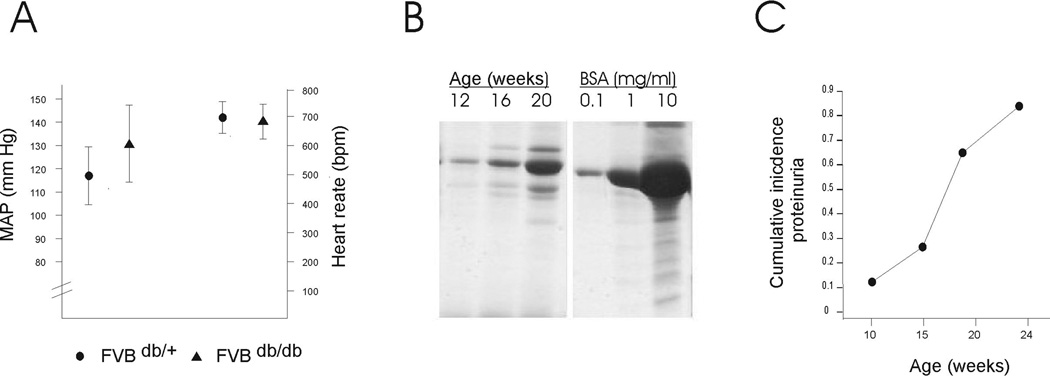
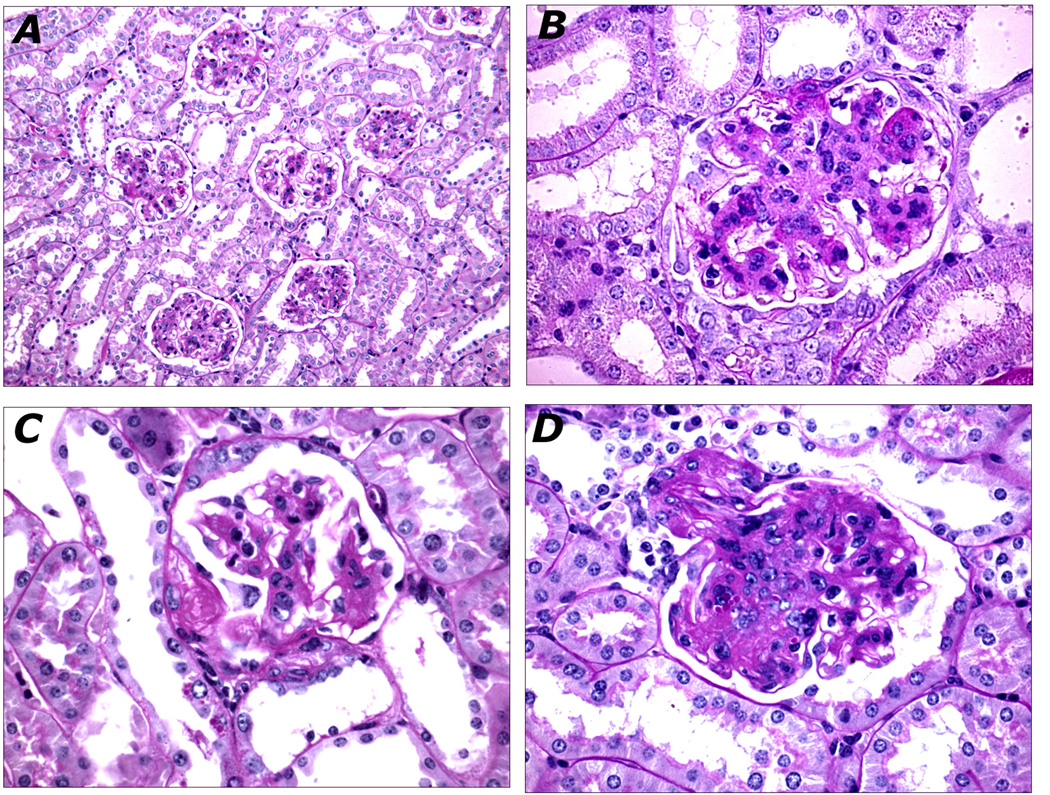
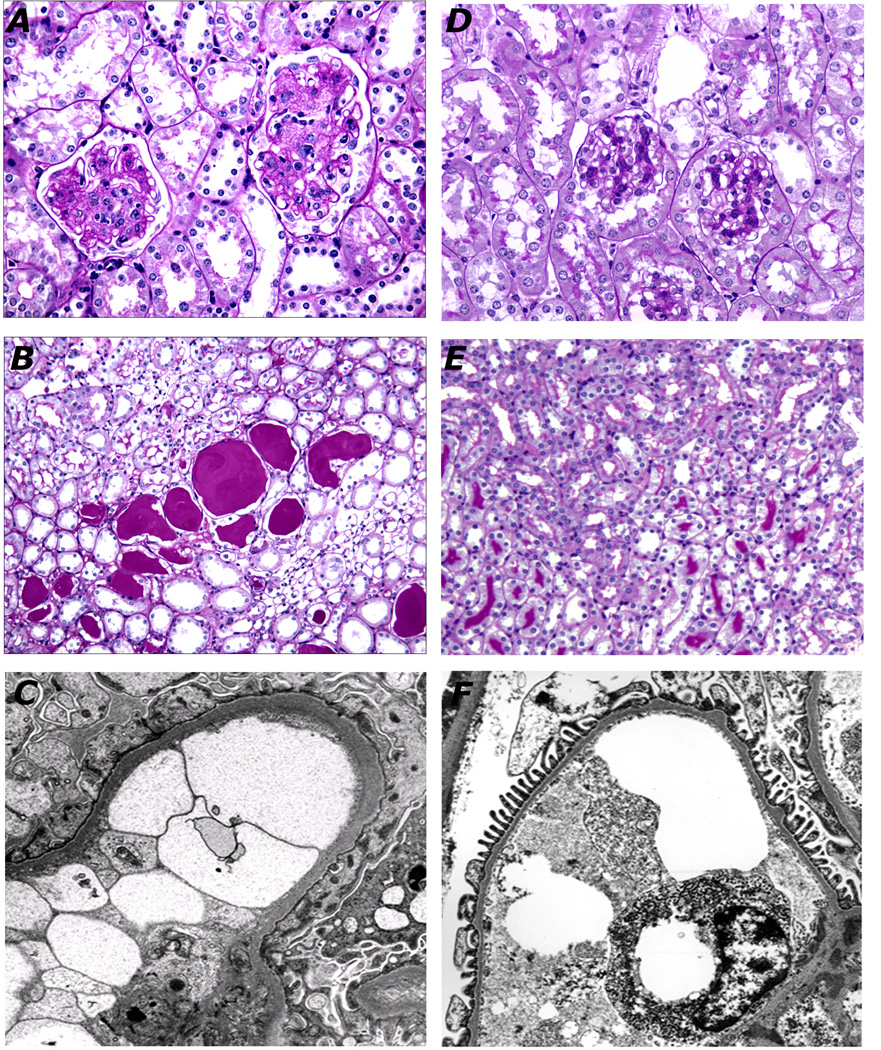
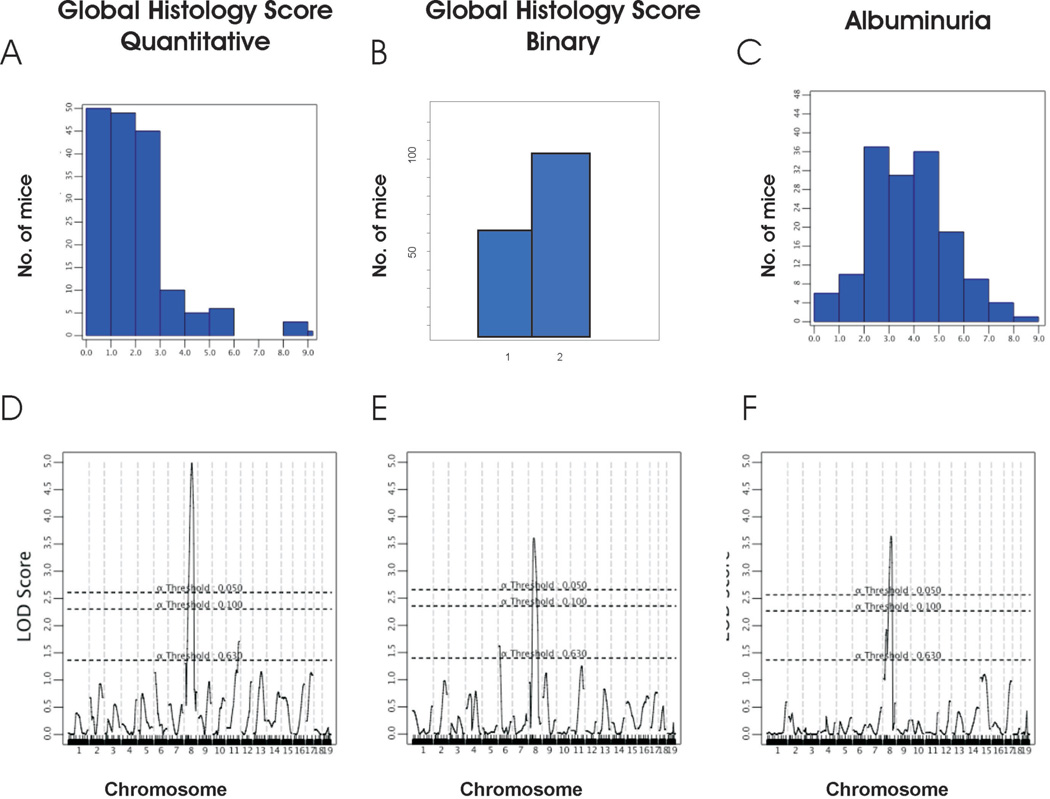
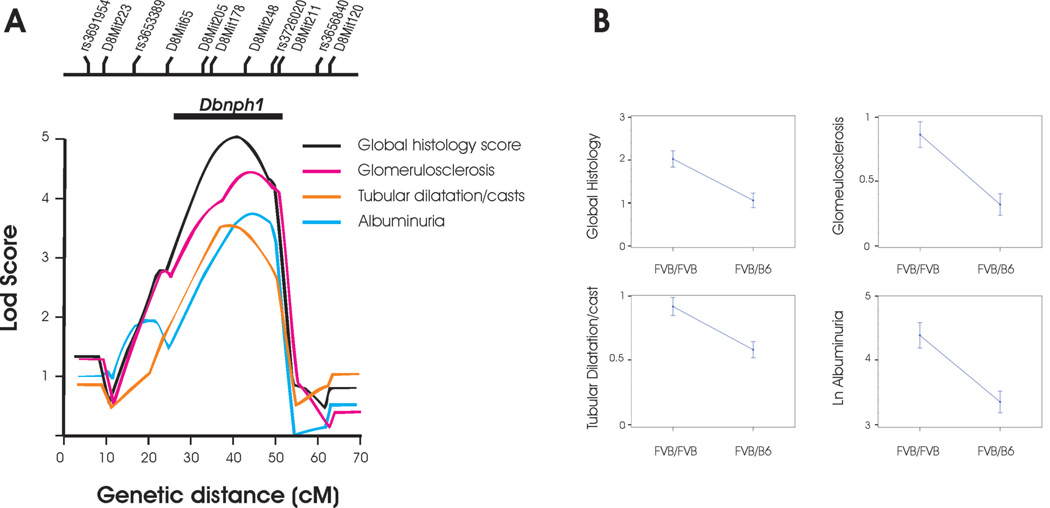
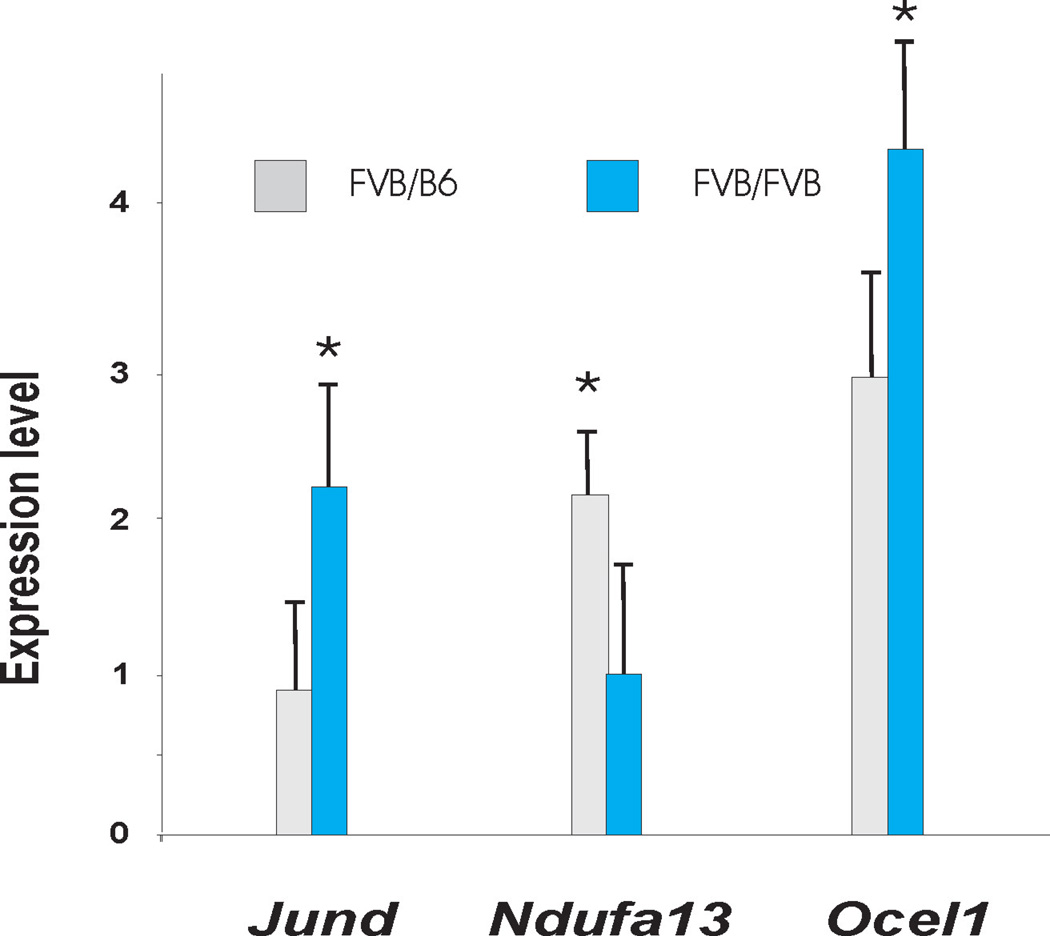
Most mouse models of diabetes do not fully reproduce features of human diabetic nephropathy, limiting their utility in inferring mechanisms of human disease. Here we performed detailed phenotypic and genetic characterization of leptin-receptor (Lepr) deficient mice on the FVB/NJ background (FVB(db/db)), an obese model of type II diabetes, to determine their suitability to model human diabetic nephropathy. These mice have sustained hyperglycemia, significant albuminuria and characteristic diabetic renal findings including mesangial sclerosis and nodular glomerulosclerosis after 6 months of age. In contrast, equally obese, hyperglycemic Lepr/Sur1 deficient C57BL/6J (Sur1 has defective insulin secretion) mice have minimal evidence of nephropathy. A genome-wide scan in 165 Lepr deficient backcross progeny derived from FVB/NJ and C57BL/6J identified a major locus influencing nephropathy and albuminuria on chromosome 8B1-C5 (Dbnph1 locus, peak lod score 5.0). This locus was distinct from those contrasting susceptibility to beta cell hypertrophy and HIV-nephropathy between the same parental strains, indicating specificity to diabetic kidney disease. Genome-wide expression profiling showed that high and low risk Dbnph1 genotypes were associated with significant enrichment for oxidative phosphorylation and lipid clearance, respectively; molecular pathways shared with human diabetic nephropathy. Hence, we found that the FVB(db/db) mouse recapitulates many clinical, histopathological and molecular features of human diabetic nephropathy. Identifying underlying susceptibility gene(s) and downstream dysregulated pathways in these mice may provide insight into the disease pathogenesis in humans.
Figures
Comment in
-
Susceptible mice: identifying a diabetic nephropathy disease locus using a murine model.Kidney Int. 2010 Sep;78(5):431-2. doi: 10.1038/ki.2010.199. Kidney Int. 2010. PMID: 20706214 Free PMC article.
References
-
- Maisonneuve P, et al. Distribution of primary renal diseases leading to end-stage renal failure in the United States, Europe, and Australia/New Zealand: results from an international comparative study. Am J Kidney Dis. 2000;35:157–165. - PubMed
-
- Sheetz MJ, King GL. Molecular understanding of hyperglycemia's adverse effects for diabetic complications. Jama. 2002;288:2579–2588. - PubMed
-
- Moczulski DK, Rogus JJ, Antonellis A, Warram JH, Krolewski AS. Major susceptibility locus for nephropathy in type 1 diabetes on chromosome 3q: results of novel discordant sib-pair analysis. Diabetes. 1998;47:1164–1169. - PubMed
-
- Vardarli I, et al. Gene for susceptibility to diabetic nephropathy in type 2 diabetes maps to 18q22.3-23. Kidney Int. 2002;62:2176–2183. - PubMed
-
- Osterholm AM, et al. Genome-wide scan for type 1 diabetic nephropathy in the Finnish population reveals suggestive linkage to a single locus on chromosome 3q. Kidney Int. 2007;71:140–145. - PubMed
Publication types
MeSH terms
Grants and funding
LinkOut - more resources
Full Text Sources
Medical
Molecular Biology Databases
Miscellaneous
