


Genomic diversity and introgression in O. sativa reveal the impact of domestication and breeding on the rice genome
- PMID: 20520727
- PMCID: PMC2875394
- DOI: 10.1371/journal.pone.0010780
Genomic diversity and introgression in O. sativa reveal the impact of domestication and breeding on the rice genome
Abstract
Background: The domestication of Asian rice (Oryza sativa) was a complex process punctuated by episodes of introgressive hybridization among and between subpopulations. Deep genetic divergence between the two main varietal groups (Indica and Japonica) suggests domestication from at least two distinct wild populations. However, genetic uniformity surrounding key domestication genes across divergent subpopulations suggests cultural exchange of genetic material among ancient farmers.
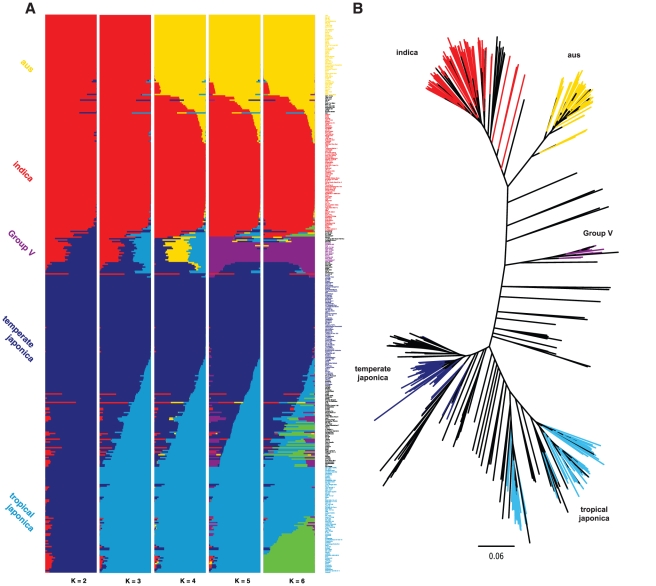
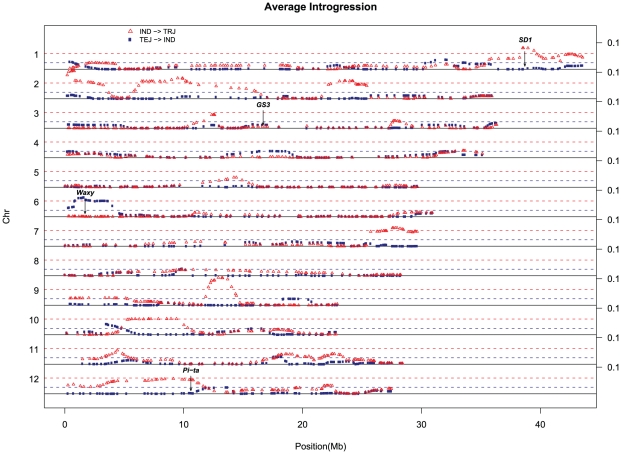
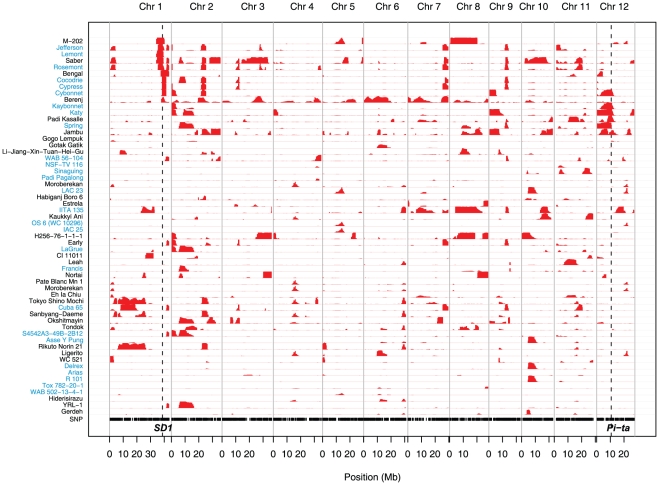
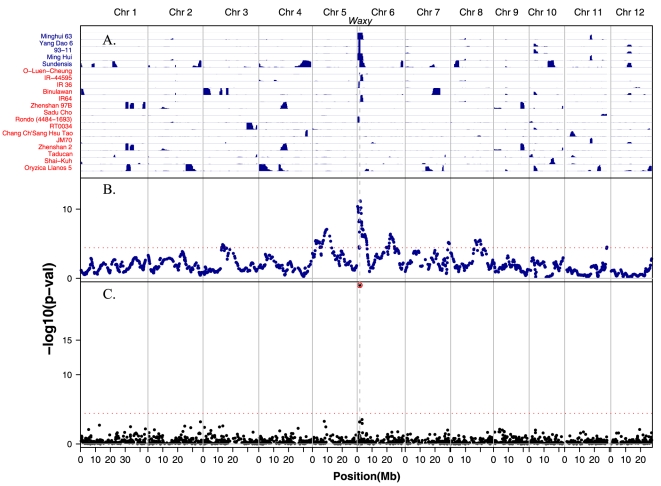
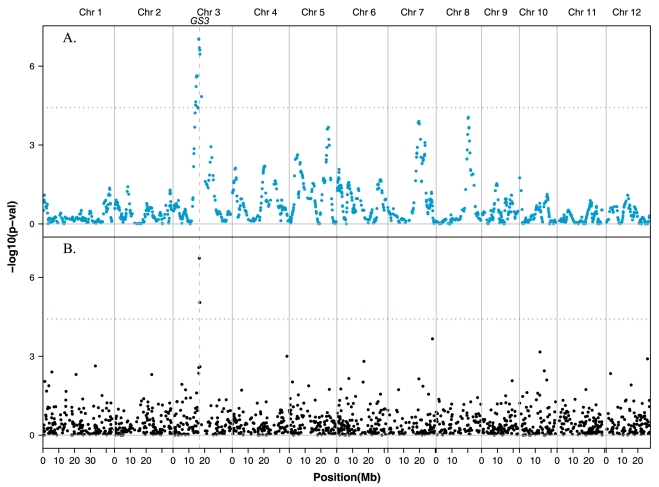
Methodology/principal findings: In this study, we utilize a novel 1,536 SNP panel genotyped across 395 diverse accessions of O. sativa to study genome-wide patterns of polymorphism, to characterize population structure, and to infer the introgression history of domesticated Asian rice. Our population structure analyses support the existence of five major subpopulations (indica, aus, tropical japonica, temperate japonica and GroupV) consistent with previous analyses. Our introgression analysis shows that most accessions exhibit some degree of admixture, with many individuals within a population sharing the same introgressed segment due to artificial selection. Admixture mapping and association analysis of amylose content and grain length illustrate the potential for dissecting the genetic basis of complex traits in domesticated plant populations.
Conclusions/significance: Genes in these regions control a myriad of traits including plant stature, blast resistance, and amylose content. These analyses highlight the power of population genomics in agricultural systems to identify functionally important regions of the genome and to decipher the role of human-directed breeding in refashioning the genomes of a domesticated species.
Conflict of interest statement
Figures
References
-
- Liu L, Lee GA, Jiang L, Zhang J. The earliest rice domestication in China. Antiquity. 2007;81:313.
-
- Chang T-T. Origin, domestication, and diversification. In: Smith CW, Dilday RH, editors. Rice: origin, history, technology, and production. New Jersey USA: J. Wiley and Sons, Inc; 2003. pp. 3–25.
-
- Khush GS, Brar DS, Virk PS, Tang SX, Malik SS, et al. IRRI, editor. IRRI Discussion Paper Series No 46. Los Banos: International Rice Research Institute; 2006. Classifying rice germplasm by isozyme polymorphism and origin of cultivated rice.279
-
- Second G. Origin of the genic diversity of cultivated rice (Oryza spp.): study of the polymorphism scored at 40 isozyme loci. Jap J Genet. 1982;57:25–57.
-
- Glaszmann JC. Isozymes and classification of Asian rice varieties. Theor Appl Genet. 1987;74:21–30. - PubMed
Publication types
MeSH terms
Substances
LinkOut - more resources
Full Text Sources
Other Literature Sources
Research Materials
